Full Article
about Hoyales De Roa
Ocultar artículo Leer artículo completo
The View that Starts at 900 Metres
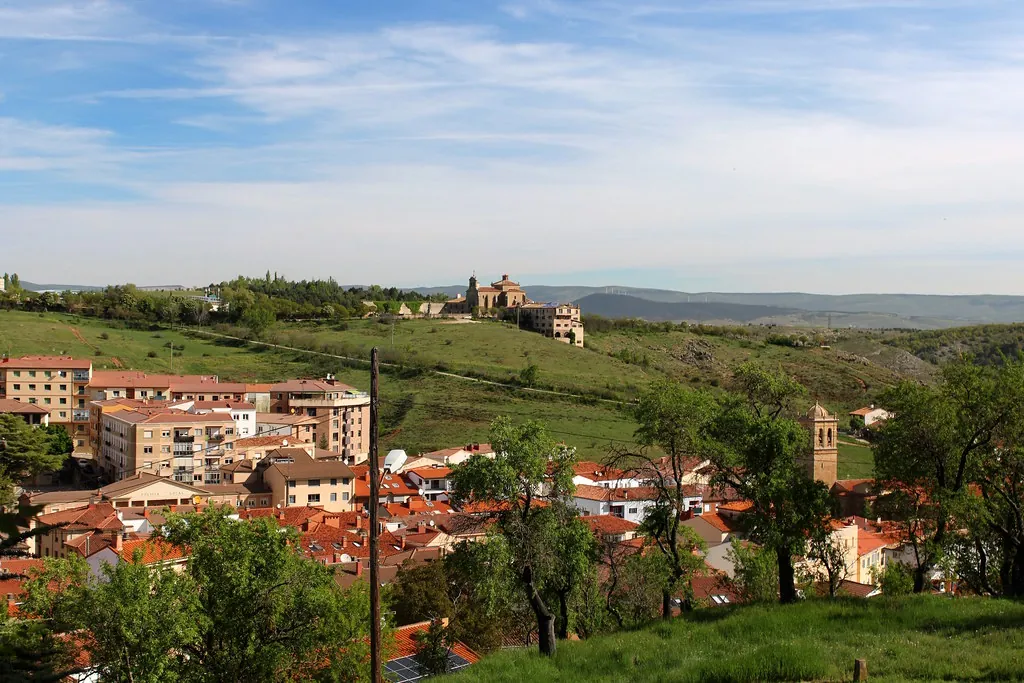
Stand on the ridge above Hoyales de Roa and the Meseta rolls south like a corrugated-iron roof. The village sits at 912 m, high enough for the air to carry a snap of mountain clarity even in July. Below, the Duero valley spreads into a chessboard of tempranillo vines, each square clipped by hand so the grapes catch the late-afternoon sun. On a clear evening you can pick out the tower of Peñafiel castle 25 km away; at night the only lights are the blinking beacons on distant wind turbines and the Milky Way poured across the sky. Guests in the converted grain-loft off Calle Real repeatedly call the silence “the best sleep aid money can’t buy”—a useful antidote if you’ve flown in from Gatwick at dawn.
A Village that Works for a Living
Hoyales is not postcard-pretty; it is a working hamlet of seventy souls where agricultural diesel still perfumes the morning. Stone houses, their mortar the colour of burnt cream, line two short streets that meet at the 16th-century church of San Bartolomé. There is no gift shop, no interpretative centre, no artisan ice-cream. Instead you get a communal bread oven fired twice a month, a tractor-repair yard that doubles as the mayor’s office, and a noticeboard advertising “cordero al horno, encargar antes del jueves”. The effect is oddly grounding: you realise you are staying inside the vineyard rather than looking at it through a tasting-room window.
The surrounding plots belong to families who have grafted vines onto wild American rootstock since phylloxera swept through in the 1890s. Walk the dirt track eastwards and you’ll meet Domingo trimming shoots by eye, his secateurs clicking like knitting needles. He will tell you—slowly, in Castilian thickened by cold winters—that the 2022 frost wiped out 40 % of his yield, yet he still refuses to install wind machines. “El vino ya es tecnología suficiente,” he shrugs. It is hard to argue when you taste his crianza: black cherry, tobacco and enough acidity to slice through the local morcilla.
Walking the High Plateau without a Guidebook
Footpaths radiate from the village like spokes, each one graded by use rather than bureaucracy. The most straightforward leaves the church, crosses the Arroyo de la Vega and climbs 150 m onto the páramo. From the crest you can loop south through three kilometres of vine rows, then cut back along the sheep-track that follows the medieval water ditch. Total time: ninety minutes; navigation: keep the Sierra de la Demanda on your left. Spring brings acid-green vine shoots and larks overhead; October turns the leaves into a slow-motion firework that British photographers try, mostly fail, to capture without using the word “vibrant”.
Cyclists favour the tarmac lane to Roa de Duero, 4 km north-east. The gradient never tops 4 %, but at 850 m above sea level your thighs notice the thin air. Turn round when the road drops into the Duero gorge and freewheel back for a second breakfast of tostada smeared with fresh cheese and honey. Road bikes work fine; mountain bikes are overkill unless you plan to continue to Aranda along the GR-14, a 23 km haul that ends with a deserved lechazo lunch.
Wine without the Theme-Park Price Tag
Hoyales itself has no bodega open to the public, yet you are inside the Ribera del Duero denominación, Spain’s third-most-visited wine route after Jerez and Rioja. The difference is that tastings here still feel like being shown round a friend’s garage. Drive ten minutes to Pagos de Anguix and Mariví Iturriaga will pour her limited-edition “Alaya” tempranillo while apologising that the labelling machine is broken. The wine costs €18 a bottle—half the equivalent in Laguardia—and the only souvenir is the slight light-headedness that comes from tasting at altitude. Book by WhatsApp the day before; if you turn up unannounced she will probably let you in anyway, but you’ll feel awkward interrupting the forklift.
What to Eat when the Village has No Restaurant
There is no eatery in Hoyales, a fact that catches out British visitors who assume every Spanish village hides a Michelin-listed secret. Self-catering is the norm. Stop in Aranda de Duero (15 km) for supplies: Campo de Peñafiel for vacuum-packed lechazo, half a kilo of cured sheep cheese that is milder than Manchego, and a bottle of local verdejo to drink while the red breathes. Most rural houses come with a brick barbecue and a wood-fired oven; ignition blocks are sold in the petrol station on the A-11, last fuel before the village. If you’d rather be cooked for, book a table at Félix Palencia in Roa—roast lamb for two, €46, potatoes fried in lamb fat, bottle of house crianza €14. Last orders 21:30 sharp; they will not stretch it, even if you mention the long drive from Yorkshire.
Seasons Spelled Out
April and May bring fresh green cover crop between the vines, daytime 18 °C and nights cold enough for the central-heating timer. September to mid-October is harvest: tractors nose along the lanes at 7 a.m., grape bins rattling like hollow drums. The spectacle is hypnotic but the roads clog briefly; allow an extra ten minutes if you have a flight out of Valladolid. November dawns hover at 0 °C; most holiday cottages switch on the wood-burner backup and leave a wicker basket of oak logs. January is brutal—bright, beautiful, empty—and the closest Spain comes to a Yorkshire moorland winter. Snow is rare but frost can glaze the windscreen; pack a scraper along with the suncream.
The Logistics no One Mentions
Fly to Valladolid (VLL) before 14:00 and you can be unlocking the village house by 16:00. Madrid works too, but the M-40 ring adds forty minutes of white-knuckle lane-switching. A car is non-negotiable: there is no bus, and a taxi from the airport clocks in at €120 each way. Fill the tank in Aranda; Hoyales has no petrol pump, and the village shop closed in 2008. Mobile coverage is patchy—Vodafone picks up by the church, EE prefers the northern corner of the cemetery. Finally, road signs still carry medieval variants such as “Ogiales”; trust the sat-nav coordinates, not the map, or you’ll spend half an hour circling a wheat field wondering where the houses went.
Leaving without the Hard Sell
Stay three nights and you will have walked the vines, tasted straight from the barrel and learnt that Castilian soup is basically garlic, paprika and a poached egg—comfort food for high plains. Stay longer and you risk noticing how thin the entertainment menu becomes once the harvest ends. Hoyales de Roa does not beg you to remain; it simply gets on with pruning. Drive away at dawn and the only farewell is the echo of stones under tyres and a horizon that stays in the rear-view mirror longer than expected.