Full Article
about Huermeces
Ocultar artículo Leer artículo completo
Twenty Minutes North of Burgos
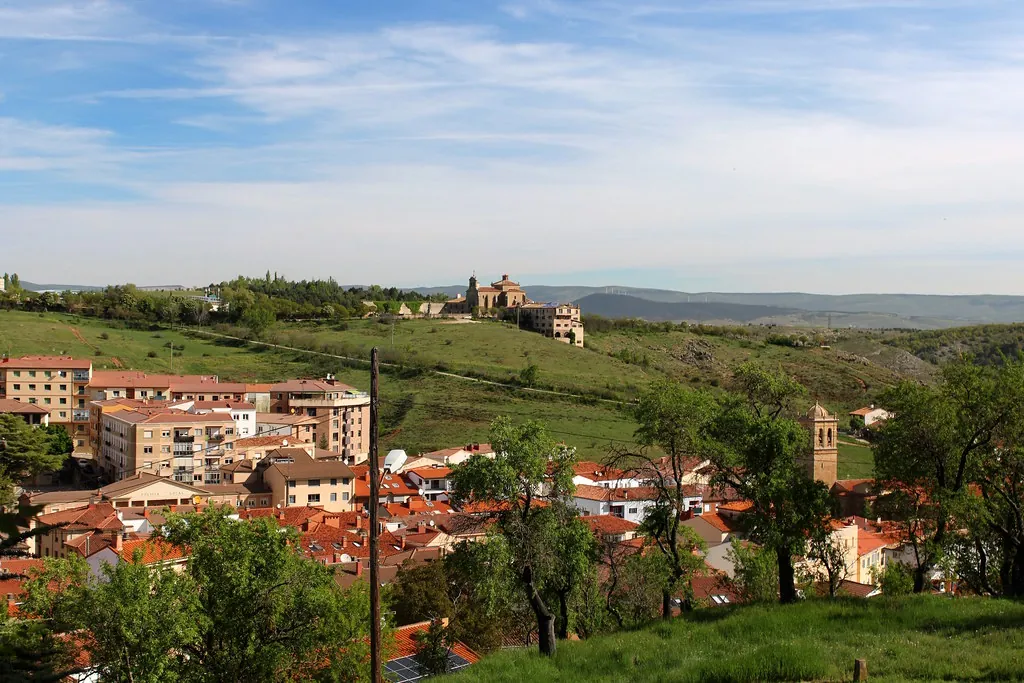
The road climbs gently from the provincial capital, leaving behind the cathedral spires and tapas bars that most British travellers know. Twenty minutes later, the landscape flattens into an ocean of wheat that stretches to every horizon. Huermeces appears almost unexpectedly—a cluster of stone houses huddled against the vastness, its church tower the only vertical punctuation in 360 degrees of horizontal.
At 900 metres above sea level, the village sits high enough to notice the difference. Summer mornings start cool even when Burgos swelters, and winter brings proper frost that crunches underfoot. The air carries that particular clarity found only on the Spanish plateau, where distance becomes meaningless and clouds cast shadows the size of counties.
Walking Through Working Spain
The weekly market in Plaza Mayor happens every Tuesday, though calling it a market flatters it. Two vegetable stalls, a van selling kitchenware, and Miguel's mobile butcher service draw the same elderly residents who've shopped this way since Franco died. Nothing here caters to tourists because, frankly, there aren't any. The British voices one hears in nearby Santo Domingo de Silos or Frías—those cathedral towns with guidebooks entries—simply don't reach Huermeces.
This is working Spain, agricultural and stubborn. The houses demonstrate it: stone ground floors where animals once lived, adobe upper storeys painted ochre or weathered grey, wooden balconies sagging under geraniums that somehow survive the winter frosts. Doorways still show the curved stone arches of medieval builders, though most were widened centuries ago to accommodate tractors rather than donkeys.
The parish church of San Juan Bautista dominates the modest skyline, its Romanesque foundations visible in the squat tower and narrow windows. Inside, the afternoon light filters through alabaster, throwing honey-coloured pools across the flagged floor. The carved capitals deserve attention—particularly the ones showing what appears to be a medieval dentist at work, though local historians insist it's symbolic rather than documentary. Services still happen every Sunday at eleven, filling the nave with the same families whose names appear on First World War memorials outside.
The Colour Calendar
Visit in April and the surrounding fields glow almost unnaturally green, young wheat rippling like water in the constant wind. By June, everything turns gold—not the gentle gold of English countryside brochures, but the harsh metallic gold that hurts to look at directly. The harvest happens in July, when enormous combines work through the night, their lights moving like slow UFOs across the darkness.
Autumn strips everything back to essentials. The fields lie ploughed, rich chocolate-brown furrows creating graphic patterns against the pale earth. This is when photographers appear, though they're usually Spanish and invariably male, with expensive cameras and serious expressions. They stand on the village's slight elevation, capturing the minimalist landscape that probably reminds them of their grandfather's farms.
Winter brings snow perhaps twice, though it never lasts. More common is the hard frost that turns every surface silver until midday, when the sun burns through and the world resumes its normal colours. The wind, constant as breathing, carries the smell of wood smoke from houses that still heat this way.
Practicalities for the Curious
Getting here requires a car. Buses from Burgos run twice daily except Sundays, but they deposit you on the main road with a twenty-minute walk into the village proper. Hire cars from Burgos airport cost around £35 daily, and the drive takes you through countryside that makes the Meseta's reputation for monotony seem unfair. Yes, it's flat, but the quality of light transforms everything, and the occasional medieval bridge or dovecote provides punctuation.
Accommodation means choosing between two options, both on the main street. Casa Mayor occupies a converted manor house with eight rooms and a restaurant serving roast lamb that falls off the bone. Rural Los Faroles offers simpler rooms but better wine, including a robust tempranillo that tastes of the local soil. Both charge under £70 nightly, breakfast included, and neither accepts groups larger than six—this isn't the place for hen parties or cycling clubs.
Eating here follows agricultural rhythms. Lunch happens at two, dinner at nine, and trying to eat earlier marks you immediately as foreign. The bar on Plaza Mayor serves tortilla that's thick as a paperback book, and the weekly special on Thursdays is cocido—a stew substantial enough to see farmers through until supper. Vegetarians struggle, though the local cheese, queso de Burgos, appears with every meal and tastes of the high pastures where the sheep graze.
The Countryside Proper
Walking tracks radiate from Huermeces like spokes, though none appear on tourist maps. The camino to Villagonzalo follows a Roman road for two kilometres, its stones worn smooth by twenty centuries of traffic. Another path leads to an abandoned village, its church roof collapsed and houses returning to earth, a reminder that rural Spain has been emptying for longer than most visitors realise.
Birdwatchers should bring binoculars. The plains support bustards and sandgrouse, while the church tower hosts a pair of storks that clack their bills like castanets from February onwards. At dusk, red kites gather to roost in the eucalyptus plantation north of the village, their forked tails distinctive against the fading sky.
When to Come, When to Stay Away
March brings mud and the peculiar Spanish wind called the cierzo, which blows for days and drives everyone slightly mad. August means heat that builds until four o'clock, when the village empties completely—everyone sleeps, even the dogs. November sees the first proper frosts and the smell of burning vines from gardens where people still make their own wine.
The best months are May and September, when temperatures hover around 21 degrees and the quality of light makes even the most mundane stone wall look photogenic. These are also the months when the village feels most alive, before the exodus to coastal second homes or the retreat into winter hibernation.
Huermeces offers no epiphanies, no Instagram moments that will make friends jealous. Instead, it provides something increasingly rare: the chance to see Spain as Spaniards live it, unfiltered by tourism departments or tour operators. The wheat grows, the church bells ring, the seasons turn. Nothing changes, and that's precisely the point.