Full Article
about Humada
Ocultar artículo Leer artículo completo
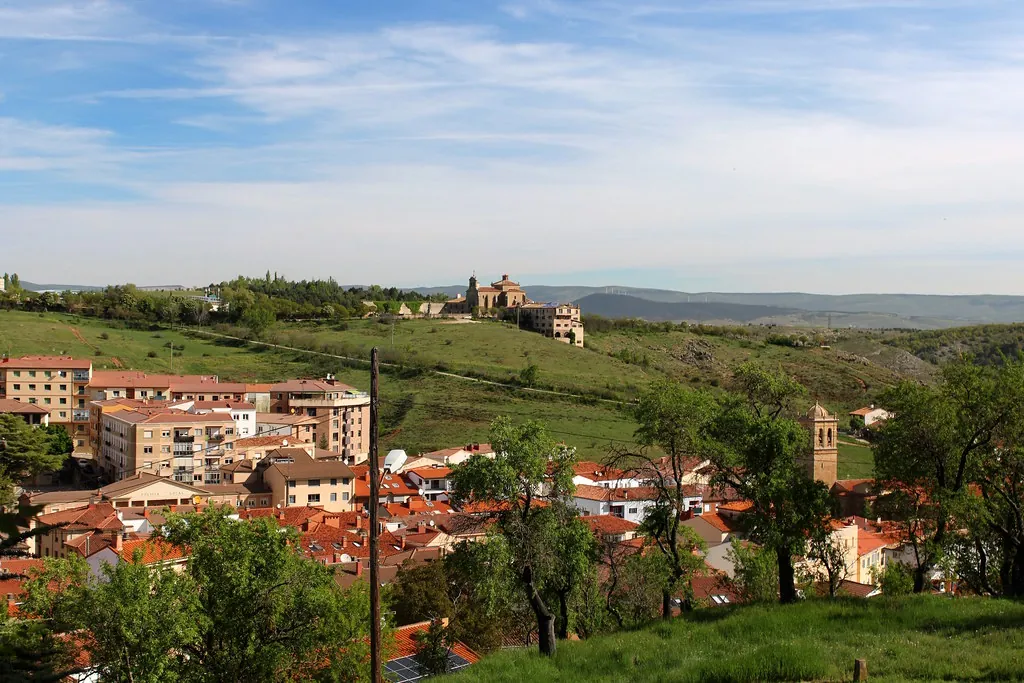
The church bell in Ordejón de Arriba strikes noon, and absolutely nothing changes. A tractor putters somewhere in the distance. A woman hangs washing between stone houses. The wheat fields stretch endlessly towards the Palentina mountains, their golden surface rippling like the sea that never reached this far inland. This is Humada at midday, when even the shadows seek shade.
This scattering of hamlets sits 900 metres above sea level in northern Burgos province, where the Meseta's vast cereal plains begin their gentle climb towards the Cantabrian range. The municipality comprises nine separate settlements—Ordejón de Arriba and Abajo, Rebolledo de Traspeña, Tabliega, Villanueva de Teba, each with its own church tower and communal washing place—connected by dirt tracks that turn to ochre mud after autumn rains. It's forty minutes by car from Burgos city, longer if you follow the old CL-632 and stop to watch the harriers gliding over the wheat.
Stone and Silence
The architecture here speaks of practicality rather than grandeur. San Pedro's church in Ordejón de Arriba squats solidly against the wind, its square tower built from local limestone that weathers to honey-colour in late afternoon light. Inside, the air carries centuries of incense and candle wax; the altarpiece dates from 1647, though you'd need to track down the key-keeper to see it properly. She's usually found at number 14, opposite the bread oven that hasn't fired up since the baker's daughter moved to Valladolid.
Traditional houses blend into the landscape through sheer stubbornness. Two-storey structures of stone and adobe, their wooden balconies painted the traditional Burgos green, huddle around irregular plazas where elderly men still play dominoes with the intensity of chess masters. Palomars—dovecotes—stand redundant in several gardens, their nesting holes now home to sparrows rather than the pigeons that once provided both fertilizer and Sunday dinner. Planning regulations remain sensible: new builds must use local materials and respect the vernacular scale, preventing the concrete horrors that blight many Spanish villages.
The surrounding countryside operates on agricultural time. Wheat and barley dominate, rotated with sunflowers that turn their heads to follow the sun across that enormous sky. Old threshing floors—erales—dot the higher ground, circular stone platforms where farmers once beat their grain by hand. Walk the tracks between settlements at dawn and you'll understand why Castilian writers speak of horizontal landscapes; the earth seems to curve here, the horizon impossibly distant.
Walking Without Waymarks
Humada offers no organised hiking routes, no visitor centre with glossy leaflets. This is walking at its most honest: following the sunken lanes that connected these communities for centuries, navigating by church tower and instinct. The GR-1 long-distance path passes nearby, but within the municipality you're on your own resources—OSM maps recommended, as Google tends to show farm tracks as major highways.
A reasonable circuit connects Ordejón de Arriba to Rebolledo de Traspeña and back via Tabliega—about 12 kilometres with minimal climbing. The track passes through dehesa landscape where holm oaks provide shade for fighting bulls, their horns catching sunlight as they watch you pass. Spring brings calandria larks performing their vertical mating flights, while autumn sees common cranes migrating overhead in ragged V-formations. Summer walking requires an early start; by 11am the heat shimmers off the fields and the only movement comes from harvesting combines.
Winter transforms the plateau completely. At altitude, temperatures drop to -15°C when the northerly cierzo wind sweeps down from the Cantabrians. The wheat fields turn emerald green against dark soil, and local women wrap shawls around their heads like their grandmothers did. Access can prove problematic after heavy snow—neither the Ayuntamiento nor the provincial government prioritise clearing minor roads to villages of eighty inhabitants.
Eating with the Seasons
Food here follows the agricultural calendar without fuss or pretension. Lentil stew with chorizo appears on Thursdays year-round, made with legumes from nearby Briviesca. Spring means lechazo—milk-fed lamb roasted in wood-fired ovens until the skin crackles like parchment. Summer brings gazpacho and salads heavy with local tomatoes that actually taste of sunshine rather than polytunnel. Autumn is mushroom season; locals guard their porcini spots with the secrecy of state secrets.
The village bars—one per settlement, generally—open at 7am for the agricultural workers and close when the last customer leaves. Don't expect printed menus or vegetarian options beyond tortilla. At Bar Carmen in Ordejón de Abajo, the three-course menú del día costs €12 including wine, served at a Formica table while the television murmurs the agricultural news. Phone ahead if you're arriving after 3pm; they'll stay open, but you'll eat whatever Ana's cooking rather than choosing.
For self-catering, Burgos city offers the nearest proper supermarkets. Local shops in smaller towns stock basics: bread baked that morning, ultra-fresh milk in plastic bags, morcilla that stains rice black with paprika and onion. The Friday market in Medina de Pomar—twenty-five minutes drive—sells local cheese from small producers who'll let you taste before buying. Try the quesucos, small cylinder cheeses withProtected Designation of Origin, their rinds washed in local red wine.
When Silence Isn't Golden
Let's be honest about the drawbacks. Public transport barely exists; one bus daily from Burgos except Sundays, when there are none. Hire cars become essential rather than convenient, and the nearest petrol station closes at 9pm sharp. Mobile reception varies between patchy and non-existent depending on your provider—Vodafone users fare better than those on EE's Spanish partners.
August brings fiestas, which sounds delightful until you discover they're organised for locals rather than visitors. Accommodation options within the municipality total precisely zero; nearest hotels cluster around the A-1 motorway twenty minutes away, functional places catering to truck drivers and travelling salesmen. The countryside can feel almost oppressively empty if you're used to Britain's footpath-busy landscapes. That horizon, so photogenic at sunset, becomes monotonous after three days of wheat fields stretching to every compass point.
Yet for those seeking Spain beyond the costas and city breaks, Humada offers something increasingly rare: a landscape where human habitation feels temporary against geological time, where lunch conversations still centre on rainfall and wheat prices rather than property values. The village won't entertain you, but it might just slow you down to a speed where you notice the way sunset turns stone walls rose-pink, or how the wind sounds different through barley than wheat. Bring good walking boots, a Spanish phrasebook, and patience for the rhythms of agricultural time. The bell will strike noon again tomorrow, and absolutely nothing will change—and in Humada, that's precisely the point.