Full Article
about Hurones
Ocultar artículo Leer artículo completo
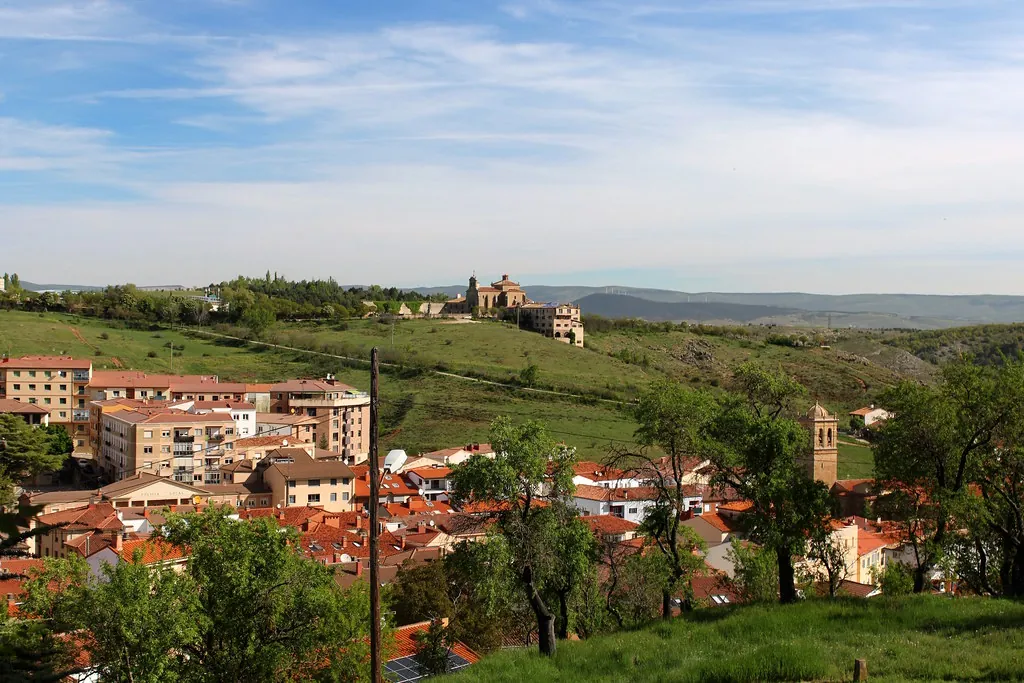
The church tower appears first, a stone finger pointing skywards above wheat fields that stretch until geography itself seems to surrender. From the provincial road between Burgos and nowhere in particular, Hurones announces itself with medieval brevity: one tower, a handful of terracotta roofs, and the understanding that you've left the gravitational pull of Spain's tourist orbit behind.
At 945 metres above sea level, this farming village operates on a different atmospheric pressure to the coastal Spain of British holiday brochures. The air carries the dry crackle of cereal crops and the mineral scent of stone warmed by centuries of sun. Winters here bite properly—temperatures frequently plummet below freezing from November through March—while summer brings the kind of heat that turns the surrounding wheat fields the colour of newly-minted pound coins.
The Architecture of Getting By
Hurones grew from necessity, not ambition. Its stone houses huddle together like survivors of a long siege, their walls thick enough to withstand both winter's edge and summer's furnace. The parish church of San Pedro sits at the village's highest point, not from any theological preference for altitude but because building upwards meant building away from the floods that occasionally turned the surrounding plains into a shallow inland sea.
Walk the two main streets—there are only two—and you'll spot the evolutionary adaptations of rural survival. Ground-floor windows sit high enough to deter bored livestock but low enough to catch precious winter light. Wooden doors bear the scars of generations: deep grooves where cartwheels scraped too close, darker patches where hands have pushed against oak for three hundred years. Some houses still retain their original bodegas, underground cellars dug into the earth where families once made wine strong enough to sterilise water and forget the harshness of Castilian life.
The village's 120 inhabitants haven't preserved these features for tourists—they simply never had the money to replace them. This accidental authenticity extends to the communal laundry slabs, fed by a spring that once provided Hurones' only reliable water source. Local women still gather here on Tuesday mornings, though now they exchange smartphone photos rather than village gossip while their sheets soak in the same stone basins their great-grandmothers used.
Walking Through Geography and Time
The cereal fields surrounding Hurones reveal their secrets only to those who abandon the rental car. A network of agricultural tracks—never designed for recreation but perfectly serviceable for it—radiates outward for miles in every direction. These caminos, wide enough for a tractor but no wider, follow the contours of land first ploughed during the Reconquista.
Spring walks here deliver an education in agricultural colour theory. From late April through May, the wheat progresses through impossible shades of green that would make a Farrow & Ball catalogue look timid. By June, the fields shift to gold with purple flashes of wild thistle. The horizon behaves strangely at this altitude—it curves away like the edge of a giant table, occasionally interrupted by stone farm buildings that appear to float above the crops like medieval aircraft carriers.
The lack of way-marking initially frustrates British walkers accustomed to Ordnance Survey precision. Local farmers respond to requests for directions with gestures rather than compass points: "Walk towards the poplar trees until you reach the stone pile, then turn left at the abandoned threshing floor." This navigation system works perfectly, provided you accept that getting temporarily lost constitutes part of the experience rather than a failure of planning.
The Culinary Reality Check
British visitors expecting tapas crawls and seafood platters need recalibrating. Hurones contains no restaurants, one bar, and a shop that opens when the owner's arthritis permits. The bar, Casa Cándido, serves as village nerve centre, information bureau, and gastronomic ambassador all at once. Here, £3.50 buys a plate of chorizo cured in the neighbouring mountains, served with bread baked that morning in the regional capital.
The local gastronomy evolved around three-month winters and agricultural poverty. Dishes arrive heavy, hot, and designed to make a little meat feel like a feast. Try the olla podrida—a stew of chickpeas, cabbage, and whatever meat the household could spare—which transforms leftover ingredients into something that tastes of survival and satisfaction. The wine, brought up from the Arlanza valley, costs less than a London coffee and carries enough tannin to strip varnish.
Food shopping requires planning. The village shop stocks essentials: tinned tomatoes, UHT milk, and those strange Spanish crisps that taste of jamón. For anything perishable, the 25-kilometre drive to Burgos becomes necessary. Smart visitors book accommodation with cooking facilities and treat the weekly market in Aranda de Duero—40 minutes away—as both supply run and cultural excursion.
When the Weather Makes the Decisions
Hurones operates on meteorological time rather than Greenwich Mean. Spring arrives late and sudden—usually during the first week of May—transforming brown fields to green overnight. This brief season, lasting roughly six weeks, offers the village at its most forgiving: warm days, cool nights, and that particular quality of light that makes even concrete agricultural buildings photograph like National Geographic features.
Summer brings genuine challenges. From mid-July through August, afternoon temperatures regularly exceed 35°C, turning stone houses into storage heaters and making the 400-metre walk to the church feel like a pilgrimage through a pizza oven. The village empties as locals flee to coastal family, leaving Hurones to the hardiest tourists and the swallows that nest under church eaves.
Autumn delivers the photographer's jackpot. September light turns cereal stubble fields the colour of antique gold, while October brings morning mists that make the village appear to float above an inland sea. Winter, though brutal, has its own stark beauty—when snow falls (typically two or three times between December and February), the surrounding plains transform into a minimalist painting of white and stone grey.
The Practicalities of Purposeful Isolation
Reaching Hurones requires accepting that convenience died with the railway. No trains stop within 30 kilometres; buses from Burgos run twice daily if you're optimistic, once if you're realistic. Car hire from Burgos airport costs around £35 daily and provides essential flexibility—the kind that lets you escape when three days of village life feels like three centuries.
Accommodation options remain limited but improving. Three village houses now operate as casas rurales, charging £60-80 nightly for two-bedroom properties with kitchens, Wi-Fi that works when the weather behaves, and heating systems that understand Castilian winters. Book directly—none appear on major platforms, and the owners prefer phone calls in Spanish, though they'll happily muddle through with determined hand gestures and Google Translate.
Visit for the silence that urban Britain has forgotten exists. Stay for the realisation that places still exist where time's passage feels optional rather than mandatory. Leave before the isolation that feels romantic for three days becomes oppressive by day four.
Hurones doesn't need saving, discovering, or promoting. It needs visitors who understand that some destinations offer subtraction rather than addition—removing noise, haste, and choice until what remains feels like the Spain that existed before tourism invented itself.