Full Article
about Iglesiarrubia
Ocultar artículo Leer artículo completo
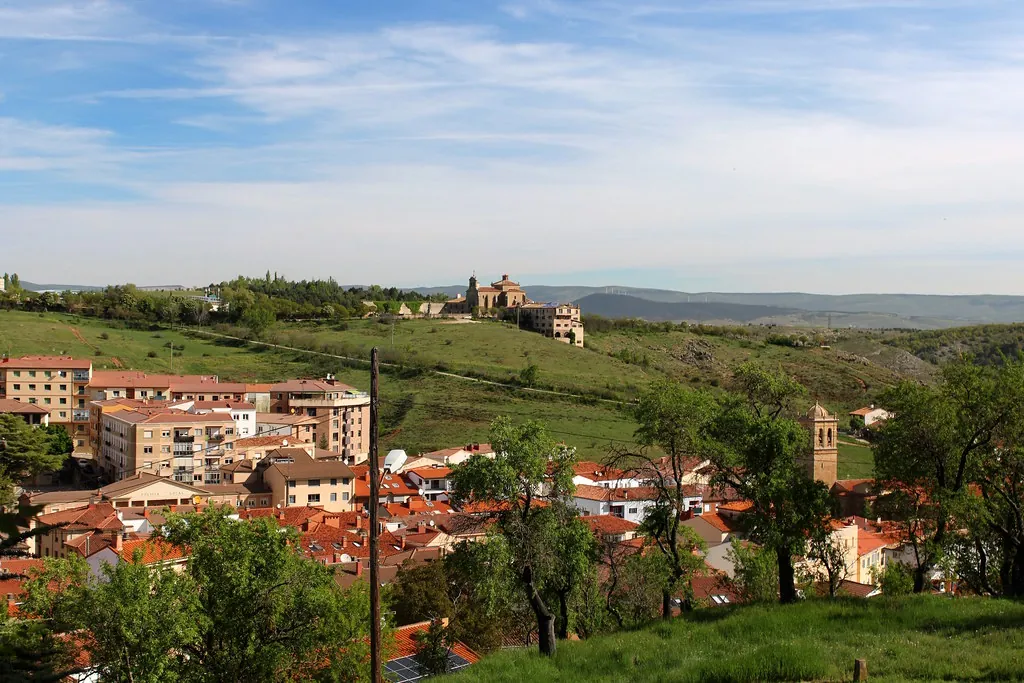
The church bell strikes noon and the sound has nowhere to hide. In Iglesiarrubia's single street, the chime bounces off stone walls, rattles wooden shutters, then dissolves into wheatfields that stretch clear to the horizon. Thirty-five residents, two barn cats and whoever's drinking coffee at the bar hear it simultaneously. This is the loudest thing that happens all day.
Forty kilometres south-east of Burgos city, the village sits at 880 metres above sea level – high enough for the air to carry a nip even in July, yet too low to qualify as a mountain retreat. What it offers instead is the Castilian plateau laid bare: enormous sky, soil the colour of burnt toast, and a silence so complete that a lorry changing gear on the N-234 sounds like an event.
Stone, adobe and stories that won't translate
Every house here has a name rather than a number. Locals send visitors to "La Casa del Tío Paco" or "La de las Palmeras", nodding towards dwellings whose façades still show the original building material: ochre adobe bricks hand-moulded from local clay, patched decades later with rough limestone. The technique matters – adobe keeps interiors cool at midday and warm after sunset, explaining why some owners refuse modern insulation even when the regional government offers grants.
The parish church of San Juan Bautista anchors the western end of the street. Its tower rises just 22 metres, yet dominates every photograph because nothing else breaks the skyline. Inside, the single nave smells of candle wax and damp stone. A 16th-century polychrome retablo survives largely intact; the guidebook entry is two sentences, laminated and Blu-tacked to a side wall. Sunday mass at 11 a.m. is delivered by a priest who drives in from Covarrubias; if he's delayed, someone rings the bell twice and the congregation waits on the stone steps, swapping gardening advice.
Walk the village perimeter in twelve minutes, or take an hour if you stop to read the half-erased graffiti on barn doors: "Viva la República", dated 1937. One doorway shows bullet pocks – folklore claims Civil War deserters were shot here, though no archival record confirms it. The residents neither deny nor embellish; they simply point, shrug, and return to watering geraniums.
Walking nowhere in particular
Tracks radiate from the tarmac edge like spokes. The most used is the Cañada Real Leonesa, a drove road once wide enough for five oxen abreast; farmers still move stock along it each spring. Follow it east for 45 minutes and you reach a derelict grain store, roof long gone, where storks have built a platform the size of a Mini. Bring binoculars in March – the males clatter their beaks in courtship so loudly the sound carries half a kilometre.
There are no waymarks, no elevation profiles, no gift shop at the finish. What you get instead is a lesson in scale: walk ten minutes and Iglesiarrubia shrinks to a brown smudge; walk thirty and it disappears entirely, leaving only wheat and sky. Mobile reception fades with the village, so download the IGN map beforehand. Expect to flush out crested larks and the occasional Montagu's harrier; adders bask on the warmer slopes in April, sluggish enough to step over if you're watching.
After rain the clay turns adhesive – cars slide, boots gain three-kilo platforms. Winter brings harder drama: temperature drops to minus twelve, north wind straight from the Cantabrian coast, and snow that drifts against doorways. The council grades the access road within 24 hours, but the village itself relies on neighbours with tractors. Visitors without 4WD are politely advised to park on the main road and walk the final kilometre.
Where to sleep, what to eat, how to pay
Accommodation totals three options. Casa Rural La Torreta offers two doubles and a kitchenette inside a 19th-century labourer's house; €70 per night mid-week, minimum two nights. Heating is pellet stove only – host Miguel delivers a sack and demonstrates the ignition ritual with the gravity of a Japanese tea ceremony. Alternatively, the municipal albergue has eight bunks at €12, hot water included, but you need to collect the key from the bar first. There is no reception desk, no credit-card machine, no Wi-Fi password taped to the wall.
The same bar doubles as grocer, tobacconist and unofficial information office. Coffee costs €1.20, served in glass tumblers that retain the heat for exactly four minutes. The menu chalked on a board never changes: migas with grapes, fried eggs and chorizo, lamb chops on Fridays. They open at seven for truck drivers, close when the last customer leaves – sometimes ten, sometimes midnight. If you want morcilla de Burgos, ask the owner; her sister makes 40 links each winter and freezes half. A vacuum-packed coil costs €6, but she'll only sell if you've drunk at least two coffees; "it's about trust," she says.
The nearest cash machine is in Hortigüela, 11 km west. The bar accepts cards reluctantly; the signal comes via a dongle balanced on a beer crate, so transactions fail when the wind is easterly. Bring coins for the honesty box at the church – candles cost 50 cents, the money funds roof repairs.
When the fiestas happen – and when they don't
Festivities concentrate into 48 hours around the third weekend of August. Emigrants drive up from Madrid, tents appear on waste ground, and the population quadruples. Saturday night ends with a disco held in the polideportivo, a concrete slab with a tin roof; bring your own beer, pay €5 for entry, dance until the generator runs out of diesel. Sunday mass becomes a reunion – baptisms, confirmations, weddings postponed twelve months so relatives can attend simultaneously. By Monday lunchtime the village is quiet again, litter collected, tents folded, children asleep in the back seat before the car reaches the main road.
Outside August, social life is the domino table dragged into the street after sunset. Anyone can pull up a plastic chair; conversation hovers around rainfall data, wheat prices, whether the young mayor will succeed in installing fibre optic. (Current answer: unlikely before 2026.) If you speak Spanish, you'll be asked about Brexit, British rain, and whether people really eat beans on toast. Answers are exchanged for sips of orujo; refusal is considered bad manners.
Leaving without promising to return
The road out passes a stone crucifix dating from 1724, vandalised during the Civil War and left unrepaired – a reminder that some damage is simply absorbed into the landscape. From here Iglesiarrubia recedes in the rear-view mirror, flat roofs merging with the plateau until only the church tower remains visible. Eventually that too disappears, and the silence you carried away is replaced by tyre hum and radio static.
No souvenir shops sell fridge magnets. Nothing here is Instagram-ready, yet the place lingers – the smell of warm adobe, the taste of coffee cooled by mountain air, the awareness that somewhere on the plateau thirty-five people are living the day you just sampled. Return if you want; they'll nod, remember how you take your coffee, and carry on. Or don't return – the village will neither notice nor mind. That indifference is part of the attraction: Iglesiarrubia was here long before you arrived, and the wheat will grow again whether you come back or not.