Full Article
about Isar
Ocultar artículo Leer artículo completo
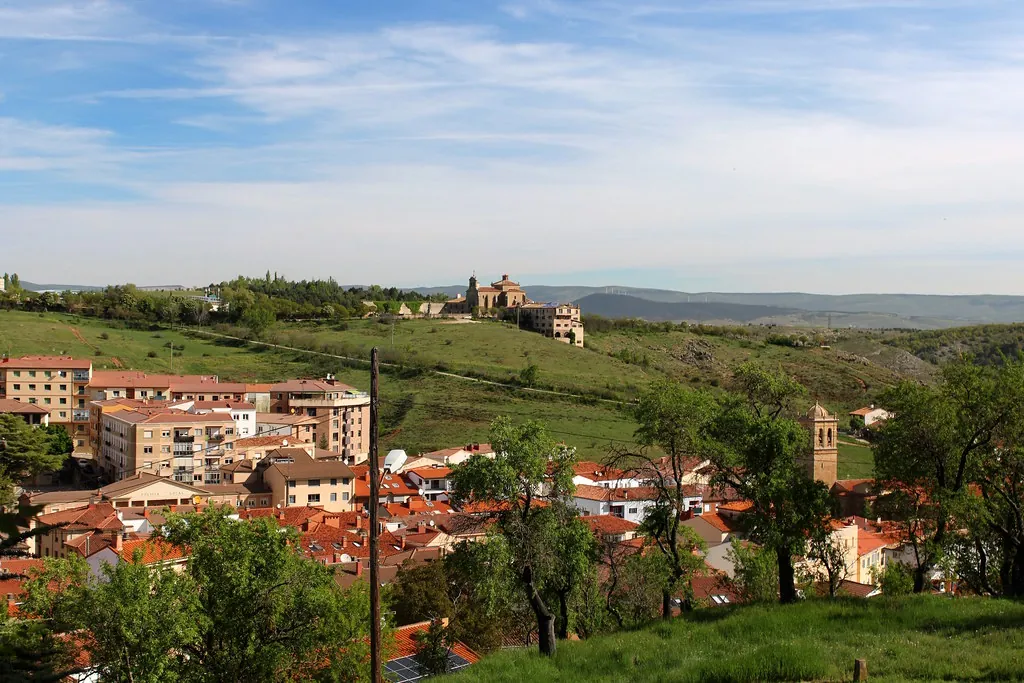
The church bell strikes noon, yet nobody hurries. Two elderly men pause their conversation to watch a tractor crawl past Isar's single grocery shop, its tyres leaving perfect tracks in the dust. At 900 metres above sea level on the Burgos plateau, even sound travels differently here—sharper, clearer, as if the thin mountain air has stripped away everything unnecessary.
This small Castilian municipality sits where the endless cereal plains begin their gentle rise towards the Cantabrian mountains, 35 kilometres northeast of Burgos city. The altitude matters more than visitors expect. Summer mornings start fresh, often dipping below 15°C before the sun clears the low hills. By afternoon, temperatures can swing twenty degrees higher, catching unprepared walkers scrambling for shade. Winter brings proper mountain weather: snow isn't unusual, and the village's whitewashed houses stand out starkly against brown fields frozen hard as concrete.
Stone, Adobe and the Art of Doing Nothing
Isar's appeal lies not in monuments but in the complete absence of them. The 16th-century parish church of San Juan Bautista anchors one end of the main street, its modest bell tower repaired so many times the stone has softened to rounded edges. Houses cluster around it in organic disorder, their lower walls built from local limestone, upper sections from adobe bricks that glow amber in late afternoon light. Wooden doors—some dating to the 1800s—hang slightly askew, their ironwork hand-forged by local blacksmiths whose workshops fell silent decades ago.
Walking these streets reveals the village's real museum: the architecture of daily life. Underground cellars, dug into the clay subsoil, maintain perfect wine-storage temperatures year-round. Above ground, elaborate stone troughs built into house walls once held grain for chickens; now they overflow with cascading geraniums. Each dwelling tells the same story—agricultural decline, youth migration to Bilbao and Madrid, gradual return of retirees who've restored childhood homes with modern bathrooms hidden behind traditional facades.
The population hovers around 130 permanent residents, swelling to perhaps 300 during August fiestas when former inhabitants return with city-raised children. Finding someone under 40 proves challenging. The village school closed in 2008, its playground now a community vegetable garden where tomatoes and peppers ripen against south-facing walls that store the day's heat.
Walking the Borderlands
Three marked footpaths radiate from Isar, though "marked" overstates the case—small stone cairns appear every half-kilometre, easy to miss among wheat stubble. The shortest route, 7 kilometres to neighbouring Sotragero, follows an ancient drove road used until the 1960s for moving sheep between summer and winter pastures. The path climbs gradually to 1,050 metres, revealing the full scale of Castilla's agricultural ocean. In June, green wheat ripples like sea waves. By August, golden stubble stretches to every horizon, broken only by distant villages that appear as tiny white cubes, mirage-like in heat shimmer.
Spring walking brings its own rewards and challenges. March and April can deliver four seasons in a single afternoon—sunshine, sudden hail, then warm breezes carrying the scent of wild thyme. The local saying "hasta el cuarenta de mayo no te quites el sayo" (don't remove your jacket until 40th May) reflects mountain weather wisdom. Autumn proves most reliable: September temperatures settle into comfortable 20s, mushroom season begins in nearby oak groves, and the grain harvest has cleared sightlines for kilometres.
Proper hiking boots aren't essential—these are farm tracks, not mountain trails—but water is critical. The landscape offers no natural shade beyond scattered holm oaks, and the altitude amplifies dehydration. The village fountain at Plaza Mayor flows potable, slightly metallic water drawn from deep aquifers. Fill bottles here; there won't be another source for hours.
The Restaurant That Isn't
Food presents Isar's greatest practical challenge. The village contains zero restaurants, bars or cafés. Zero. The grocery shop opens 9-11am and 5-7pm, stocking basics—bread arrives Tuesdays and Fridays, cheese from a neighbouring dairy, tinned goods, cheap Rioja. Planning becomes essential. Many visitors base themselves in nearby Frías (25 minutes' drive) where medieval walls enclose several decent restaurants, then drive to Isar for walking.
La Consulta de Isar provides the village's only accommodation—three enormous rooms above the former doctor's surgery, each with both bath and separate shower, restored by a Madrid couple who visit monthly. At €70-80 per night including breakfast (delivered from Frías), it's excellent value but requires advance booking. The alternative? Stay in Frías or Medina de Pomar, using Isar as a daytime destination.
For genuine local food, timing matters. The August fiesta features communal paella cooked in pans two metres wide. Easter Sunday brings hornazo—meat-stuffed bread traditionally eaten in fields after morning mass. But these aren't tourist events; invitations come through conversation. Spend time in Plaza Mayor, accept the inevitable offer of homemade orujo (firewater distilled from grape skins), and conversations about food naturally follow.
The Unvarnished Reality
Isar demands self-sufficiency. Mobile reception is patchy—Vodafone works near the church, nothing else does. The village fountain dries up during severe droughts. Summer weekends bring day-trippers whose cars clog narrow streets, their stereos competing with church bells. Winter access requires snow tyres at least once most years; the road from Frías includes a 12% gradient that catches drivers who've forgotten they're effectively in mountains.
Yet these inconveniences preserve Isar's character. The village hasn't gentrified because it can't—no restaurants to attract food writers, no boutique hotels for city weekenders. What remains is authentic, sometimes painfully so. The closure of basic services reflects rural Spain's broader crisis, but also creates space for something increasingly rare: silence, genuine silence, broken only by swallows nesting in church eaves and the occasional tractor grinding through lower gears.
Visit in late September when storks gather on electrical pylons, preparing for African migration. Walk the drove road at sunset when wheat stubble glows orange and shadows stretch kilometres across the plateau. Sit in Plaza Mayor as darkness falls and stars emerge with shocking clarity—no light pollution means the Milky Way appears as a distinct river of light. Then drive carefully back to Frías for dinner, because hunger in Isar after 7pm finds no saviour except the village's single vending machine, installed outside the closed grocery and stocked with crisps and warm Coke.
This is Castilla without the tourist brochure varnish. It won't suit everyone. But for those seeking Spain's rural reality rather than rural fantasy, Isar delivers something increasingly precious: a village that belongs entirely to itself.