Full Article
about Itero Del Castillo
Ocultar artículo Leer artículo completo
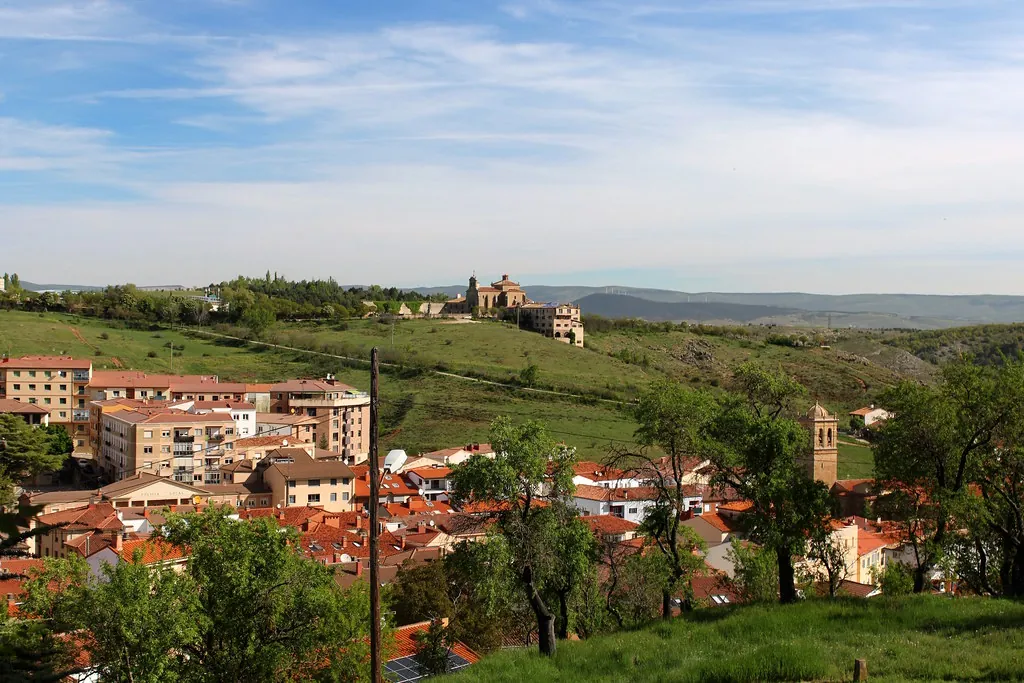
The 14 arches appear first, a stone spine thrown across the Pisuerga, then the hamlet materialises—eighty souls, one bar, and a church tower that has watched the river since the twelfth century. Itero del Castillo sits at 840 m on the high plateau, the last ripple of Burgos before the land tips gently into Palencia. Even in high summer the night air slips below 15 °C; in January it can touch –8 °C and the wheat stubble crunches like brittle glass underfoot.
Most people arrive on foot, hobbling down the Camino francés with scallop shells clacking. The village is a comma in a 780-kilometre sentence: 21 km after Castrojeriz, 18 km before Frómista, and the only place in between where coffee arrives in proper cups rather than plastic beakers. Pilgrims reach the medieval bridge, pause for the obligatory photo, then look up and realise the castle tower is missing its crown. That is the cue either to push on or to stay and discover what happens when the backpacks go quiet.
The Bridge, the Castle and the Hospital that Never Sleeps
Puente Fitero—built by royal charter in 1085—still carries farm tractors as readily as walking poles. Count the arches and you will reach fourteen, though one is buried under silt and another is more hope than masonry. Stand in the centre and you straddle two provinces: Burgos to the east, Palencia to the west, and two time zones of Spanish history—León and Castile—whose frontier once ran along this water.
From the bridge a goat track (unsigned, naturally) climbs 200 m to the castillejo. The tower is an empty shell open to the sky, but the effort buys a 360-degree ledger of Castilian geography: cereal ocean to every horizon, the river a silver wire, and the village reduced to a smudge of terracotta between gold and blue. Descend and you will find the ermita de la Piedad, once a pilgrims’ hospital, now a single-cell chapel whose porch still bears the stone basin where medieval feet were washed. Evening light through the slit window turns the plaster peach; someone has left a pair of worn-out boots by the altar.
Back in the single street, the iglesia de San Nicolás keeps its key under a flowerpot. Inside, the twelfth-century apse hides a shallow niche at ground level—exactly the size of a human foot. The guidebooks miss it; the villagers pretend it is ordinary. Press a sole into the hollow and you replicate a ritual that predates the Reformation.
Silence after Seven
Casa Andrés opens at seven sharp, winter and summer, because that is when the path wakes up. Toast comes rubbed with tomato and a glug of arbequina oil; the coffee is half the price of a motorway service station on the M1. By eight the place is empty again, chairs stacked, owner gone to irrigate beetroot plots. From then until dusk the village soundtrack is wind, river and the occasional clank of a grain elevator. Phone signal vanishes halfway up the lane behind the church; Vodafone users need to climb to the cemetery for one bar of 4G—an irony that makes even the atheists smile.
There is no cash machine. The nearest banks are 17 km east in Castrojeriz or 18 km west in Frómista, so walkers arrive with pockets of small change and leave with blister plasters bought from the counter drawer. The tiny shop—open Tuesday and Friday—stocks tinned sardines, UHT milk and rubber bands of spring onions. Anything greener requires the 2 km walk across the bridge to Itero de la Vega, where a proper supermarket sells Marmite to the occasional homesick Briton.
Walking Without a Credential
You do not need a pilgrim passport to use the Camino here. The path westwards is ruler-flat, following a Roman causeway between irrigation ditches. After 6 km the track reaches Boadilla del Camino and its TREE-LINED canal, perfect for a first swim if July has melted your resolve. Eastbound, the trail enters the paramo—nine kilometres of shadeless plain to Castrojeriz, where vultures circle the limestone ridge. Either direction delivers the meseta’s secret pleasure: the horizon moves backwards as you walk, so the world feels larger than it really is.
For something softer, follow the sheep lane south from the bridge for 3 km along the Pisuerga. Kingfishers flash turquoise between pollarded poplars; nightingales keep up an aria until mid-June. Turn around when the river bends; otherwise you will end up in Palencia city, thirty kilometres on.
What to Eat When There is Nowhere to Eat
The bar’s menú del peregrino costs €11 and starts with sopa de ajo—garlic broth, paprika, a poached egg floating like an orange iceberg. Ask “poca sal, por favor” if your blood pressure objects. The cordero asado appears only at weekends; order it before ten or it will be gone. Vegetarians usually receive a plate of pimientos de padrón and an apology. Local rosado from Tierra de León arrives chilled in a plain jug—strawberry on the nose, clean finish, far more drinkable than the heavier riojas pilgrims insist on. Pudding is rice pudding with a crust of burnt sugar; the owner will not reveal whether the recipe uses full-cream or semi, and frankly it tastes better not knowing.
If the bar is shut—market day, granddaughter’s communion, siesta that ran on—assemble a picnic: queso fresco (mild, crumbly, safe unrefrigerated for twenty-four hours), a barra de pan and tomatoes still warm from the polythene tunnel. Add a bottle of water from the public fountain; locals swear it has more minerals than Evian and the price is unbeatable.
Winter Fog, Summer Furnace
April brings green wheat and storks on the telegraph poles; the thermometer hovers around 18 °C at noon, perfect for twenty-kilometre stages. October swaps the crop for stubble and adds morning mist that drifts like wood-smoke along the river. These shoulder months are the sweet spot: daylight enough to walk after lunch, nights cool enough to justify the albergue’s thick wool blankets.
July and August fry. The meseta holds heat like an anvil; shade is mythical and the river bank becomes a beach. Start walking at dawn or wait until six o’clock; the middle hours are for siesta, river splash, or sitting in Casa Andrés with a second coffee while the ceiling fan clicks overhead. January is the opposite world: still, silver, and almost empty. The albergue shuts mid-December and reopens at Epiphany; if you arrive between times, knock at number 17 and the mayor’s wife will lend a key in exchange for a donation to the choir. Frost whitens the bridge stones and the castle track turns to mud; bring micro-spikes if you fancy the climb.
How Long to Stay—and When to Leave
Most travellers linger one afternoon, one night, one breakfast. That is enough to photograph the bridge, wash socks, and post a smug sunset on Instagram before the 4G drops. Stay two nights and you will learn the waitress’s grandson’s name, hear why the castle well was filled in during the Civil War, and be offered a cutting of the neighbour’s geranium. Stay three and you risk missing the bus back to Burgos—the Monday service leaves at 06:40 sharp, and taxis must be booked the day before.
The honest verdict? Itero del Castillo is a comma, not a chapter. Use it to break a long Camino stage, or as a deliberate pause between the cathedral cities. Arrive expecting medieval ramparts and boutique hotels and you will be disappointed. Arrive ready for river light, stone footprints, and the sound of absolutely nothing after nine o’clock, and the village will repay every minute you give it—then gently push you on towards the next horizon.