Full Article
about Los Rábanos
Church of San Pedro;Los Rábanos reservoir
Ocultar artículo Leer artículo completo
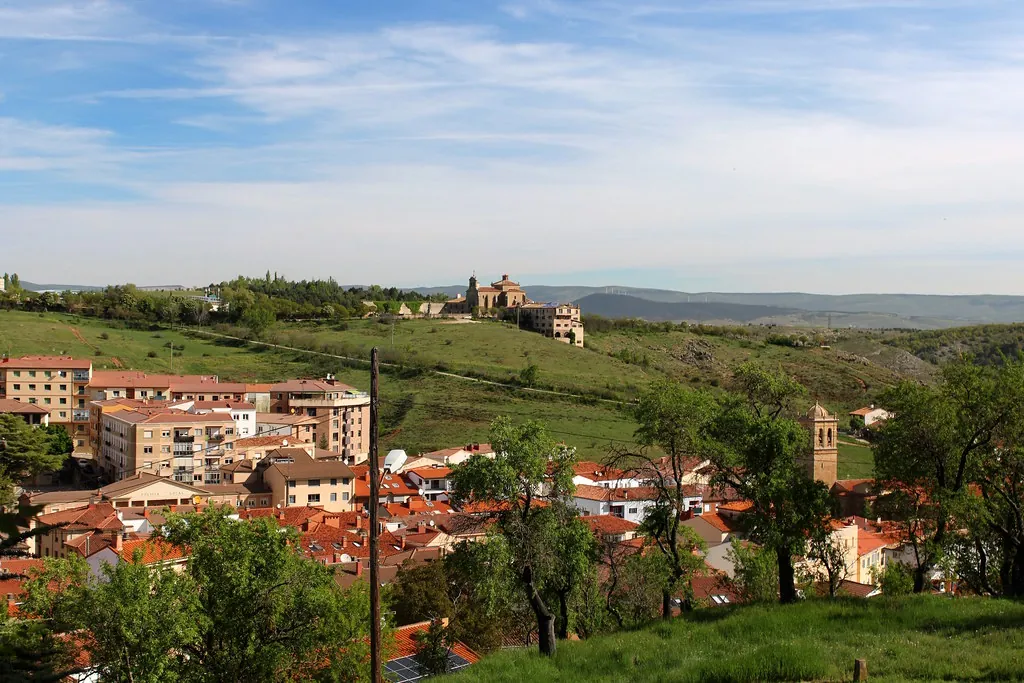
The church bells strike noon, and for a moment the only reply is the low growl of a distant tractor. At 1,022 metres above sea level, Los Rabanos sits high enough for the air to feel thinner, cleaner, and—on winter mornings—sharp enough to make a Londoner rethink the idea of “mild” Spanish weather. Eleven kilometres north-west of provincial capital Soria, the village keeps the same rhythm it has for decades: cereal fields ripen, neighbours linger in doorways, and the sky—huge, luminous—does most of the talking.
Stone, Adobe and the Smell of Cordero
A five-minute walk from centre to edge is enough to map the place. Houses are built from the ground up: ochre stone quarried nearby, adobe bricks sun-baked on site, timber doors that still fit 19th-century iron latches. Peek through an open gateway and you may catch the drop in temperature that signals a bodega excavated straight into the bedrock—cool enough to store wine, cheese and the annual pig, not generally open to visitors but easy to spot by the iron grilles set into the pavement. The parish church anchors the main square; its tower is a patchwork of Romanesque base, Baroque top-up and 1970s cement patching where the bells grew too heavy. No ticket desk, no audio guide: push the door around 19:00 and you’ll catch villagers reciting the rosary in rapid Castilian that echoes off whitewashed walls.
Come July fiestas, the same square fills with long tables, paper tablecloths flapping in the upland breeze. The menu rarely changes: whole lamb rubbed with garlic and mountain thyme, roasted in a domed bread oven until the skin shatters like well-fired pork crackling. A portion will set you back about €12; bring cash because the local organisers treat card machines as urban nonsense. Vegetarians can usually negotiate a plate of migas—fried breadcrumbs laced with grapes and peppers—but this is sheep country, and the flock outnumbers humans by roughly eight to one.
Walking Horizontal across the Meseta
Los Rabanos will never feature on a list of “Spain’s toughest hikes”, and that is precisely the appeal. Farm tracks radiate into rolling cereal steppe, graded so gently that a fit rambler can cover 15 km before lunch without breaking sweat. Head south on the unpaved road signed “Dehesa” and after 40 minutes the village shrinks to a dark smudge; skylarks rise and fall, and the only shade is an occasional holm oak. GPS helps—signposts are sporadic—but the risk of getting irretrievably lost is close to zero; pick any track that points at the skyline and you will eventually hit the N-122 trunk road, or loop back to the church tower that pokes above the wheat like a stone periscope.
Spring brings a brief, almost shocking green that lasts until late May; by August the landscape turns the colour of digestive biscuits and stays that way until the first snow. Snow itself arrives properly only two or three times each winter, but when it does the village can be cut off for 24 hours—the council grader keeps the main approach open, yet side roads glaze into sled runs and walking to the bakery becomes an act of minor heroism. Pack treaded boots between December and March; at this altitude, sheet ice replaces rain more often than not.
A Base, Not a Bubble
Staying here only works if you accept the village for what it is: a working grain centre with 447 inhabitants, one bakery, no supermarket and a bar that opens when the owner feels like it. Stock up in Soria before you drive up the hill. The reward is silence thick enough to taste and night skies dark enough to remind you why constellations matter. Accommodation is limited to a single four-bedroom rural house (hot tub, fireplace, €140 a night for the whole place) and a handful of village lets advertised on Spanish sites—book early during mushroom season, when Madrid families descend at weekends.
Day-trip radius is huge. Thirty minutes east lies the UNESCO-protected archaeological site of Numantia, last stand of the Celtiberians against Rome; 25 minutes north, the stone hermitage of San Baudelio dazzles with barely-lit Romanesque frescoes now shared between the Prado and New York’s Met. Back in Soria city, lunch on butter-smoked river trout at Casa Augusto (around €28 for the menú) before wandering the cloisters of San Juan de Duero, where crumbling arches frame the Duero river like a medieval film set. Return to Los Rabanos in time for sunset—the fields glow briefly tangerine, then cool to pewter as the temperature drops ten degrees in as many minutes.
When to Risk the Drive
British visitors usually fly into Madrid or Zaragoza; both airports involve a hire-car slog across the meseta (3 h 30 min and 2 h 15 min respectively). Petrol is cheaper than in the UK, but tolls on the A-2 add roughly €25 each way—budget accordingly. Public transport stops at Soria bus station; from there, a taxi to Los Rabanos costs about €30 and must be booked in advance because drivers rarely cruise for fares.
Come in late April if you want green fields and wild tulips between the wheat rows; early October if mushroom gathering appeals. Mid-summer is dry, cloudless and 30 °C by lunchtime—perfect for lizards, less so for pale British complexions. November delivers mist that pools in the valleys like grey ink, photogenic but gloomy. January? Crisp, bright, and empty: you will have the paths to yourself, provided the car starts after a minus-six night on an unheated lane.
Los Rabanos does not do “hidden” or “undiscovered”; it simply carries on being itself while tourists photograph doors in Segovia. Turn up with realistic expectations: no craft shops, no cocktail bars, Wi-Fi that wheezes when more than three devices log on. Bring walking boots, a torch for the walk back from the village fountain, and enough Spanish to order a caña. Do that, and the bells, the tractors and the high-plateau sky will do the rest—no clichés required.