Full Article
about Los Villares de Soria
Church of the Assumption
Hide article Read full article
A Village Defined by Its Setting
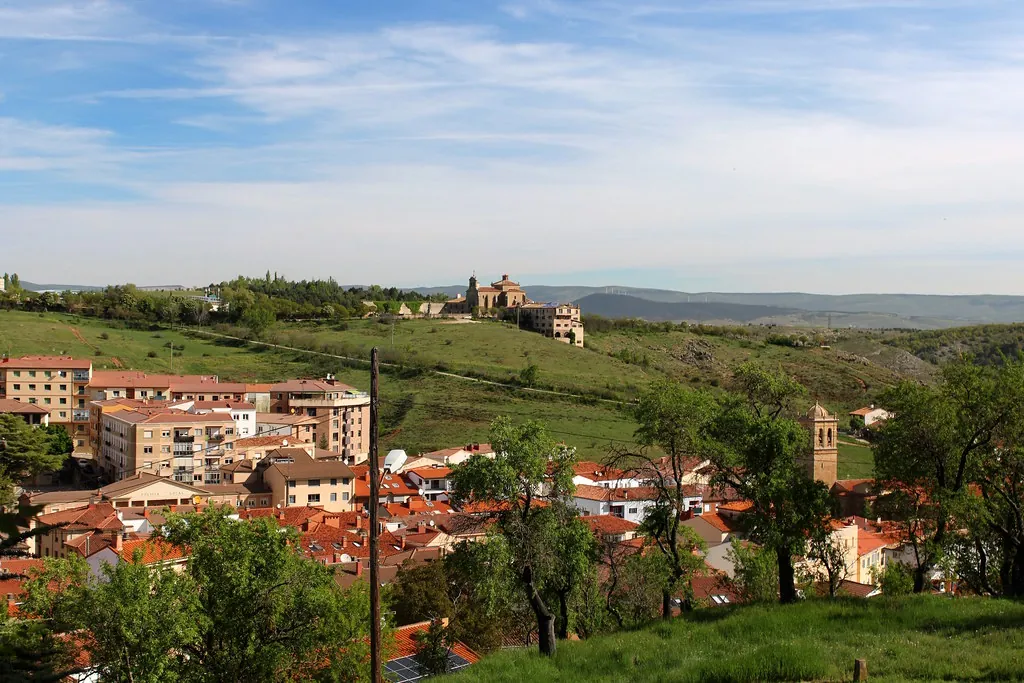
Just over twenty kilometres from the city of Soria, Los Villares de Soria is the kind of place that makes more sense when seen on the ground than on a map. With around seventy residents and sitting at roughly 1,060 metres above sea level, it remains closely tied to agriculture. The layout, the buildings and even the surrounding paths reflect a way of life shaped over centuries by farming and livestock.
Stone and adobe houses line narrow streets, often accompanied by corrals that still hint at their original use. The village has grown in a way that responds directly to the land rather than to any formal planning. Everything feels arranged with purpose: homes grouped close together, open land stretching outwards, and tracks leading into the fields.
The name “Los Villares” is common across Castilla and is usually linked to earlier rural settlements or places where communities once stood. In many cases, including this one, the exact origin is difficult to pin down. What remains clear is the continuity of settlement. The present-day village still follows a traditional pattern, with buildings clustered around the church, agricultural spaces nearby and routes connecting daily life with the surrounding terrain.
Positioned in a transition zone between wide, open farmland and slightly more varied relief to the north of the province, Los Villares de Soria forms part of a broader rural mosaic typical of this area. There are no major landmarks or marked tourist routes. Instead, the landscape itself takes centre stage. It changes noticeably with the seasons: golden cereal fields dominate in summer, while winter brings fallow land and darker tones across the soil.
Architecture Rooted in Everyday Life
The main interest in Los Villares lies in its popular architecture. Walking through the village reveals masonry walls, wide gateways once designed for carts and working yards that in some cases are still in use. There has been little attempt to standardise or restore buildings to a single style. Houses have been adapted over time according to the needs of the families who live in them.
This gives the village a practical, lived-in feel. Rather than presenting a curated appearance, it reflects gradual change. Materials vary, repairs are visible and each property tells part of the story of how people have worked the land here.
At the centre stands the parish church, dedicated to Nuestra Señora de la Asunción. Its tower can be seen from several approaches along the agricultural tracks leading into the village. Although not especially large, the church remains a key reference point, both visually and socially. It is where local celebrations take place and where the rhythm of the community still gathers at certain times of the year.
Beyond the built-up area, cultivated plots spread out in all directions. These are open fields, defined by long lines and wide horizons that are characteristic of this part of the Sorian plateau. Wind is a constant presence. When it picks up, it moves freely across the land, carrying sound through the threshing areas and along the paths that circle the village.
Walking the Agricultural Tracks
Several tracks used for land consolidation projects begin in the village itself. These routes are used by farmers and residents, and they offer straightforward, level walks through the surrounding countryside. They are easy to follow and also suitable for cycling.
Out here, the landscape is simple but revealing. With a bit of attention, it is common to spot wildlife typical of open farmland. Hares move quickly across the fields, partridges appear among the crops, and birds of prey can often be seen gliding overhead.
These paths provide a way to understand how the agricultural system works in this part of Soria. The scale of the fields, the spacing between plots and the openness of the terrain all contribute to a clear sense of how the land is used.
The proximity to Soria city, just over twenty kilometres by road, means that many people encounter Los Villares as part of a short trip around the area. The provincial capital contains most of the region’s well-known monuments. Places such as the Museo Numantino, the co-cathedral of San Pedro and the monastery of San Juan de Duero offer historical context that complements the rural setting found in villages like this one.
Traditions and Daily Rhythm
As in many small villages in the province, the main festivities take place during the summer. This is when people with family ties to Los Villares return, often after spending much of the year elsewhere. The celebrations bring together religious events, shared meals and gatherings in the village square.
Outside these periods, daily life is quiet and closely linked to the agricultural calendar. The pace shifts with the seasons, reflecting the needs of the land. Work in the fields, maintenance of property and local routines define much of the year.
In autumn, when conditions are favourable, some residents head into nearby wooded areas to collect mushrooms. Boletus and níscalos are among the varieties found, although gathering is regulated across the province and must follow established rules. This seasonal activity adds another layer to rural life, connecting people not only to farmland but also to the surrounding natural environment.
A Brief Stop Near Soria
Los Villares de Soria can be explored quickly. In less than an hour, it is possible to walk through the village centre and follow a few of the tracks leading into the fields. The value of the visit lies less in individual sights and more in observing how a small settlement on the Castilian plateau is organised.
The structure is clear: a church at the centre, houses adapted to agricultural work and an open landscape that defines both the economy and the way of life. It is a place where form follows function, and where the relationship between people and land remains visible.
For those travelling through the area, it works well as a short stop before or after visiting the city of Soria or nearby villages. What stays with visitors is not a list of attractions, but a clear impression of a rural structure that continues to shape everyday life.