Full Article
about Madrigal Del Monte
Ocultar artículo Leer artículo completo
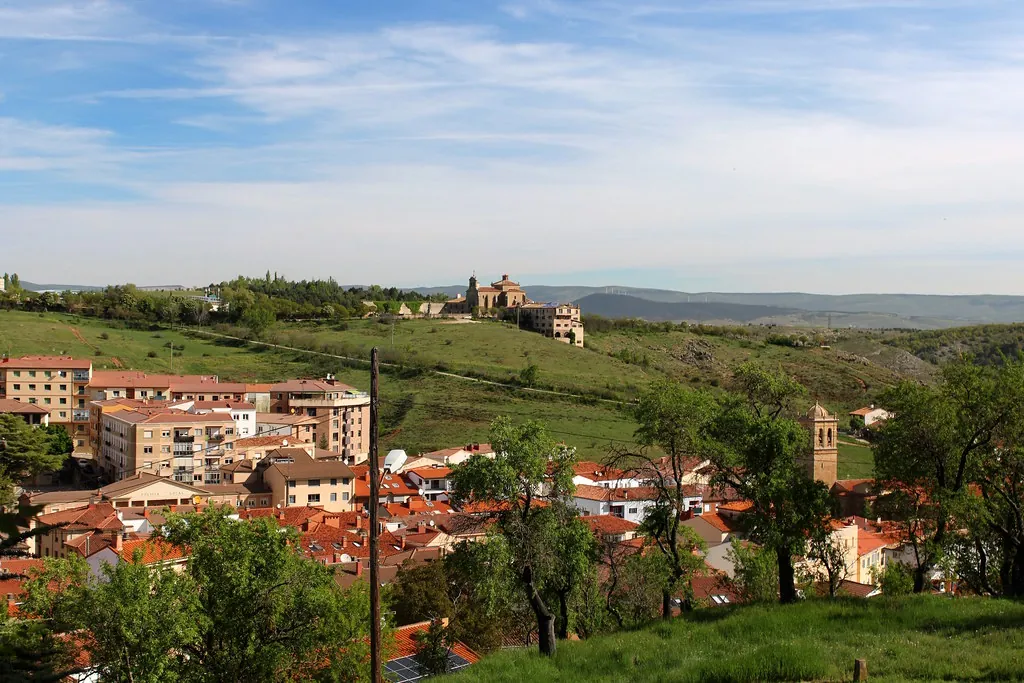
The morning bus from Burgos reaches Madrigal del Monte at 09:42, brakes wheezing, and lets out exactly three passengers. By 09:43 the square is silent again, the only movement a cloud shadow sliding over stone roofs still white with last night’s frost. At 928 m you are higher than Ben Nevis’s summit, yet here the land billows away in gentle wheat oceans rather than jagged peaks. The village sits on the northern lip of the Sierra de la Demanda, a range most British maps label only by its rivers, and it behaves more like a plateau observation post than a mountain resort.
A Plateau that Thinks it’s a Mountain
Come in April and the surrounding cereal fields glow almost lime-green; come August and they turn the colour of digestive biscuits. Either way the horizon feels three postcodes away. The air is thin enough that a brisk walk to the 13th-century church leaves light-headed visitors pausing on the stone bench opposite the war memorial. Sunday-mass bells carry for kilometres, partly because there is so little competition: no motorway, no aircraft approach lane, not even a petrol station. The nearest fill-up is 19 km south on the CL-127, a winding mountain road that can gather snow from December to March and is occasionally closed after dusk for gritting. Winter tyres are not mandatory, but the Guardia Civil will turn cars back if they’re unsuitable, so check the forecast before leaving the A-1 at Briviesca.
Summer brings the opposite problem: sunburn at this altitude is sneaky. UV indexes match the Costas while the thermometer reads 26 °C, and shade is scarce on the tractor-wide paths that fan out towards neighbouring villages. Locals still observe the siesta with conviction; between 14:00 and 17:00 even the dogs seek doorways. Plan hikes early or late, carry more water than you think necessary, and remember that the only cash machine hides inside a tiny grocery that shuts for lunch. When it’s open, withdrawal limits are €200 and it occasionally refuses foreign cards.
Stone, Adobe and the Occasional Wobble Board
No one would call Madrigal postcard-perfect. Half the houses are immaculate, their wooden balconies oiled to a honey sheen; the other half slump gently, roof tiles slipping like bad dentures. That mixture is what makes a wander interesting. The parish church of San Pedro keeps its Romanesque doorway but gained a Baroque tower after a 1755 lightning strike. Inside, the altarpiece still bears traces of medieval paint, though you’ll need to ask at the house opposite for the key—Doña Pilar speaks no English but recognises the word “iglesia” and will wipe her hands on her apron before leading you over.
Look down as well as up. Set into the pavements are square wooden hatches: bodegas subterráneas, family wine cellars carved into the rock. Most are locked, yet if you smell yeast and metal at shin level you’ve found one still in use. The town’s small interpretation centre (open weekends, free, ring the bell) shows photographs of harvest festivals when the whole square became a stomping vat; children slid across the must in tin trays, shrieking with purple feet.
Walking Without Way-markers
Serious hikers sometimes dismiss the Sierra de la Demanda as “too gentle”, but that misses the point. The pleasure here is mileage without drama: broad farm tracks link Madrigal to Sotopalacios (7 km) or to the ruined Romanesque hermitage of San Pelayo (11 km round trip), and you can string together a 25-km loop that never climbs more than 250 m. Maps.me covers the lanes; the National Geographic 1:50,000 sheet does not, so print a backup. Spring brings calandra larks and the occasional swoop of a red-footed falcon; October turns the stubble fields into stubble-quilt squares of ochre and rust.
Cyclists like the same roads because traffic volumes hover around three cars per hour. A sturdy gravel bike is ideal: asphalt can give way to packed clay without warning, and the only repair shop is back in Burgos. If you fancy an overnight saddle tour, the agricultural hostel on the northern edge takes riders— €28 half-board in a four-bed room, towel included, dinner at 20:30 sharp.
Food That Forgets Fashion
There is no tasting menu, no de-constructed lechazo. What you get is Castile on a plate: roast suckling lamb for two, brought to the table on a steel tray, its skin blistered into parchment crackling. At Asador Casa Ramón (Calle del Medio 8) the chef uses oak from his own woods; ask for it “más hecho” if pink meat unsettles you. Starters might be judiones—buttery white beans stewed with chorizo—or a sopa de ajo thick enough to hold a spoon upright. Vegetarians can cobble together a meal from roasted piquillo peppers and the local queso de Burgos, a delicate fresh cheese that tastes like whipped ricotta with a faint sheepy tang. Pudding is often honeyed cuajada served in a glass yoghurt pot; the honey comes from beehives on the windward slope where thyme grows wild.
Wine lists are short and honest: crianza from nearby Rioja Alta or, if you’re lucky, a house clarete—Spain’s answer to a dark rosé that drinks well slightly cool. A bottle rarely tops €16. Coffee arrives in glass tumblers, bitter and strong; drink it standing at the bar and you’ll pay €1.20, sit outside and it doubles. Close the evening with a chupito of orujo de hierbas; the anise-and-mint liqueur tastes like alcoholic Lockets and is surprisingly comforting after a windy day on the meseta.
When the Village Remembers It’s 500 People
August fiestas swell the population to maybe 1,200 as grandchildren return from Bilbao and Barcelona. A cover band plays 1990s Spanish rock in the square until 04:00; earplugs are sensible if your room faces front. The day programme includes a paella the size of a tractor tyre and a greasy-pole contest for hams—spectator fun, but note that accommodation triples in price and the single grocery runs out of tonic water by Saturday lunch. Book early, or better yet, come in late September when the harvest machinery drones like distant bombers and the air smells of crushed barley.
Holy Week (Semana Santa) is quieter: a single drum accompanies the Thursday-night procession, the only light from hand-held candles. Visitors are welcome but photography during the rosary is frowned upon; stand at the back, keep your hood down, and you’ll be offered a warmed cloak if it sleets.
Getting There, Staying There, Leaving
No railway line climbs this high. From the UK the sanest route is a morning Vueling flight to Bilbao, two hours on the motorway to Burgos, then 40 minutes up the CL-127. Car hire desks close at Bilbao airport at 22:30; miss that and you’re sleeping in the terminal. Petrol on the motorway is 10 c cheaper than in the village’s single pump, which only takes Spanish-chip cards after 19:00.
Accommodation is limited to three options: the aforementioned agricultural hostel, two rural houses sleeping six (€90–€110 per night, minimum two nights at weekends), and a newish two-room guest suite above the bakery. None have televisions; all have wood-burners and thick walls that hold the chill even in June. Bring slippers—stone floors are unforgiving—and request extra blankets if you feel the cold. Check-out is 11:00 sharp; the cleaning señora has vegetables to pick.
If you must leave, Burgos makes a soft landing: supermarkets, cathedral spires, and a train back to the coast. Yet the meseta lingers in small ways: your ears pop descending to sea level, your jacket smells of oak smoke, and the first urban traffic light feels unnecessarily frantic. Whether that sensation is relief or regret depends on how highly you value silence.