Full Article
about Mahamud
Ocultar artículo Leer artículo completo
The church bell strikes four and the only reply is the echo off adobe walls. Half the shutters in Mahamud stay closed; the other half flap open like loose envelopes. A tractor grumbles somewhere beyond the wheat, then silence returns—thick, deliberate, the sort that makes a visitor lower their voice even when no one is within earshot.
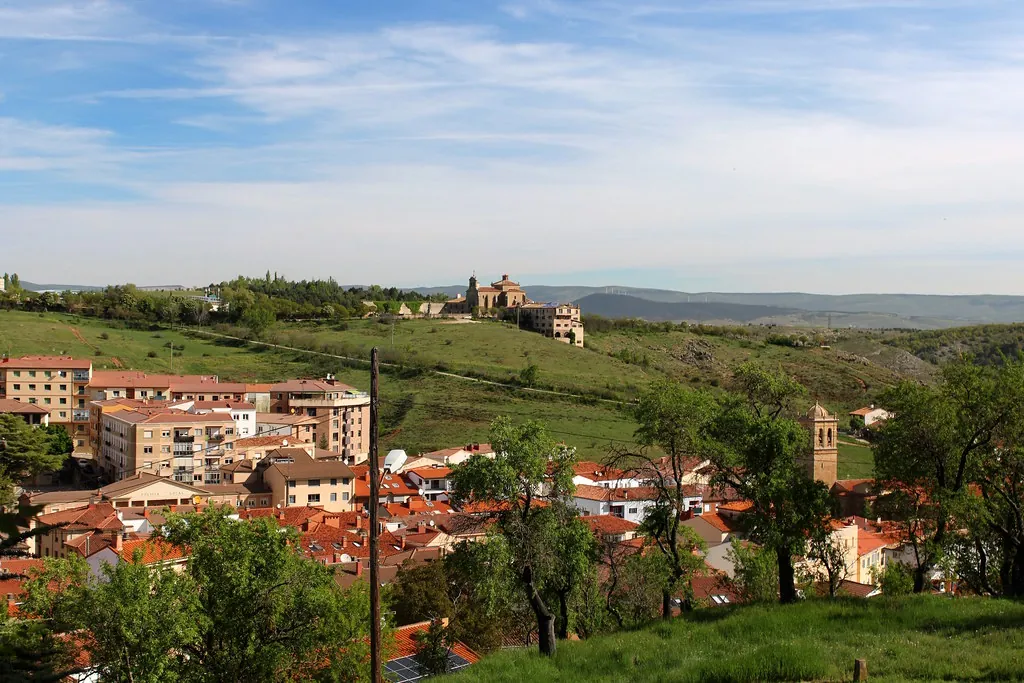
This is the Odra-Pisuerga comarca, twenty-five minutes north-west of Burgos city. The land rolls, but only just; the horizon is a ruler drawn between cereal and sky. Mahamud sits on a slight rise, enough to give the thirteenth-century tower of San Miguel Arcángel a head start over the plain. From the approach road the village looks like a single, low raft adrift in an ocean of grain.
A single façade that stops traffic
Most people arrive by accident—following signs to the slightly better-known Olmillos de Sasamón—and brake when the church wall appears. The south portal is pure late-Romanesque showmanship: five archivolts carved with braids, rosettes and what looks suspiciously like a row of pineapples. The stone is the colour of pale toffee, warm enough to touch even in January. Inside, the nave is dim and smells of candle smoke and old plaster. A seventeenth-century gilded retablo glints in the apse; the priest keeps the key in the house opposite, and if the wooden door is ajar you are welcome to step in. If not, the portico alone justifies the detour.
Walk fifty metres east and the street dissolves into a farmyard. A stork has built on the bell-tower; the council installed a metal grille to stop chicks falling, an expense that caused heated debate in the last plenary. Such is municipal politics when the population hovers around five hundred.
Adobe, holm oak and a bar that opens when it feels like it
Mahamud’s houses are built from what lay to hand: clay, straw, river stone. A few façades carry worn coats of arms—testimony to minor nobility who once collected rents from the surrounding wheat. Number 14 on Calle Real still has its original timber balcony, wide enough for a chair but too fragile to risk sitting on. The village is not frozen in time; it is simply unwilling to hurry. One front garden contains a pristine SEAT 600 rusting gently beside a chicken coop; another has been converted into a miniature museum of agricultural tools, free to enter whenever Doña Alicia remembers to unlock it.
There is no tourist office. The closest approximation is Bar La Cuadra, halfway between the church and the cemetery. Opening hours are advertised in chalk: “Mornings, probably. Evenings, if we’re here.” Inside, half a dozen men play mus, a Basque card game that migrated west along the N-120. Order a caña and you will be asked whether you prefer Cerveza Norteña or the slightly cheaper Mahou. Both cost €1.30; crisps are thrown in without asking. If José is in a good mood he produces a plate of morcilla de Burgos warmed on the grill, the rice inside blackened and sticky. Payment is recorded in biro on a paper tablecloth.
Paths where the wheat talks back
Three signed footpaths leave the village. The shortest, 4 km, loops through holm-oak dehesa to a derelict stone shelter once used by shepherds driving merino flocks to León. The longest, 14 km, follows an old threshing track to Revillarruz, population eighty-three, where the bar has closed but the fountain still flows potable water. waymarking is scrupulous until the fields are ploughed; after that you navigate by keeping the tower of San Miguel in line with the grain silo at Sasamón. Spring brings green wheat and larks; by July the colour has drained to straw and the only shade is your own shadow. Take water—there is none en route, and the summer sun here arrives with the same intensity as Andalucía minus the southern cocktail prices.
Cyclists use the same lanes; the surface is compacted earth good for 28 mm tyres, lethal after rain. Drivers are rare, but every fourth vehicle will be a combine harvester occupying the full width. Stand in the wheat and wait; the driver will raise a hand in apology that looks almost genuine.
Roast lamb and the politics of the wood-fired oven
The village’s single restaurant, La Casona de la Torre, opens Friday to Sunday only. Tables are booked by grandmothers three weeks ahead of family baptisms; visitors without a cousin in Mahamud should telephone before noon. The menu is short: cordero lechal asado, cocido castellano, queso de oveja, and arroz con leche spiced with a curl of lemon rind. The lamb arrives in a clay dish, ribs sheared so the skin forms a single golden sheet. A quarter portion feeds two; a half feeds four and costs €38. The wine is a young crianza from Aranda, poured into plain glasses that once contained breakfast yoghurt.
If the restaurant is full, ask at the bakery for the key to the horno comunal. For a €10 deposit you can roast your own purchase from the butcher in Sasamón. Lighting takes two hours; locals start the fire at dawn and slide the meat in around ten. By early afternoon the square smells of rendered fat and rosemary, an aroma that drifts through open windows and reminds everyone why they never left.
When to come, and when to stay away
April and May give emerald fields, mild afternoons and the risk of sudden showers that turn clay lanes into pottery wheels. September offers stubble, migrating storks and the fiesta de San Miguel: Saturday night verbena with a sound system run off a tractor battery, Sunday mass followed by communal cocido served from a tent in the cemetery—an efficient reminder of mortality while you eat.
August is hot, still and largely closed. Half the houses are shuttered; their owners work in Burgos or Valladolid and return only for the fiesta of the Assumption, a smaller affair without the lamb feast. Accommodation disappears into family guest rooms; if you must visit, book the casa rural Entre Campos at least a month ahead. It has three rooms, a roof terrace that overlooks the wheat, and a policy of no check-in after 22:00 because the owner needs her sleep.
Winter is monochrome and honest. The church interior is heated by one electric radiator; your breath still clouds. On 28 December the village performs the traditional “Los Verdugos”, a morality play in which children dressed as executioners chase evil spirits—represented by teenagers in black bin-liners—through the streets. The script is in archaic Castilian; nobody translates, but the sweets thrown from windows need no gloss.
Getting here without a car
ALSA runs three daily coaches from Burgos bus station to Mahamud, timed for market, medical appointments and not much else. The journey takes forty minutes and costs €3.65 each way; tell the driver you want the segunda parada, not the first slip-road stop that leaves you a kilometre short. Return seats fill with pensioners carrying Lidl bags, so queue early. A taxi from Burgos is €35 on the meter—cheaper than a UK airport transfer, but book by phone; there is no rank.
If you drive, approach from the A-231 Burgos-León motorway, exit 109. The final six kilometres are on a provincial road wide enough for two tractors but not two lorries; night lighting is non-existent and the tarmac stops at the village sign. Park on the plaza—no meters, no disc, no trouble unless harvest trucks need the space.
Leave the adjectives at home
Mahamud will not change your life. It offers no gift shops, no sunrise yoga, no micro-brewery. What it does provide is a calibration point: an hour in the nave of San Miguel or at a card table smelling of grilled blood sausage reminds you how little is required for an afternoon to feel complete. When the bus back to Burgos pulls away, the village returns to the sound of wheat brushing against itself. The bell tolls again, for whom is not clear, and the plain swallows the noise whole.