Full Article
about Mambrilla De Castrejon
Ocultar artículo Leer artículo completo
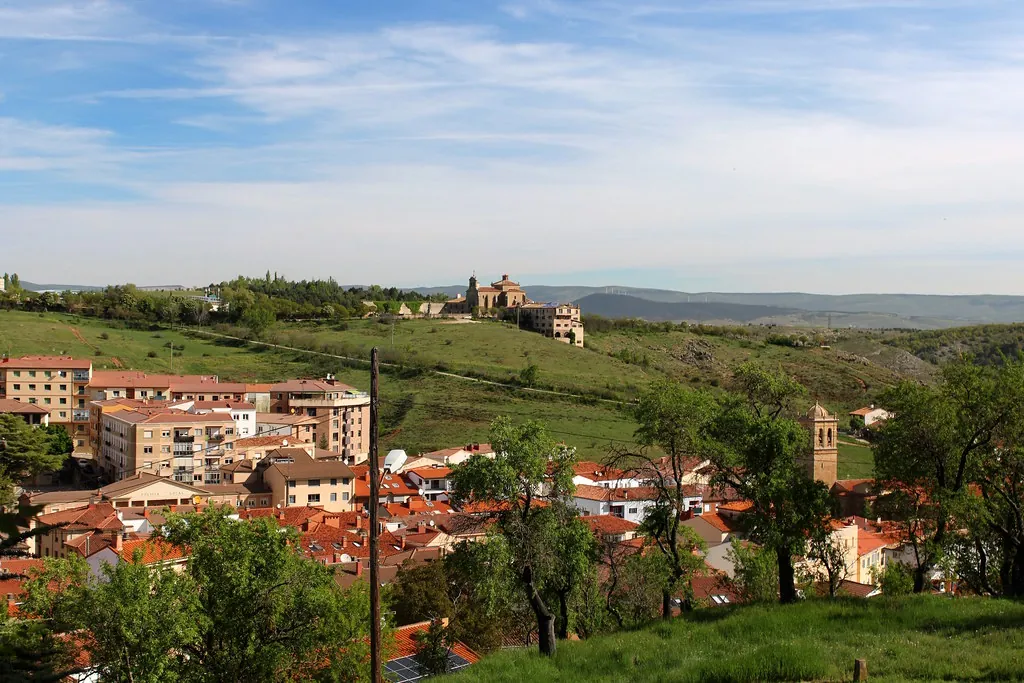
The village ends abruptly. One more step past the stone bench on the mirador and you're staring down thirty metres of ochre cliff to the Duero, the river that freighted Castilian wheat to Porto long before Ribera del Duero meant wine. Mambrilla de Castrejón has just two streets, a church the colour of burnt cream and a population that could fit inside a CrossCountry train. Arrive at siesta time and the only movement is a tractor parked with its keys in the ignition.
This is farming country, not postcard country. Wheat and barley roll away in ruled lines, broken by the occasional square of almond trees. There are no cork oaks, no romantic ruins, no artisan olive-oil press. What you get instead is space: sky that starts at your toes and ends in Portugal, and a silence so complete you can hear the wheat swaying. Bring a coat even in May; at 840 m the meseta still carries the memory of winter and the wind has nothing to slow it down for a hundred kilometres.
The balcony and what lies beneath
The mirador is the single thing every visitor ends up at, usually by accident. A narrow path squeezes between the cemetery wall and someone’s back garden, then climbs eight minutes through thistle and broken slate. Suddenly the plateau shears away. Below, the Duero snakes in a lazy S, its banks green with tamarisk and poplar. Griffon vultures wheel at eye level; their wingspan is wider than the village’s only delivery van. Sunset here is a slow affair—no jagged mountains, just the sun slipping behind the plain and the river turning from pewter to rust. Photographers arrive with tripods and thermos flasks; locals arrive with dogs and a sense of proprietorial pride that the view is still free.
Down in the gorge sit the bodegas that put Ribera del Duero on the map. Most are carved into the sandstone like sandstone like sandcastles at low tide; the temperature stays at 12 °C year-round, perfect for the oak barrels that cost more than a village house. Mambrilla has no winery of its own—the cooperative folded in 1993—but Aranda de Duero, fifteen minutes by car, offers candle-lit tastings in 16th-century cellars that run for seven kilometres under the town. Book ahead; the word “spontaneous” hasn’t reached these parts.
A timetable measured in bread and church bells
Daily rhythm is set by the bakery’s chimney and the priest’s punctuality. The stone oven fires at 05:30; by 07:00 half the village is queuing for still-warm barras, each loaf €1.20 if you bring your own cloth bag. The shop next door unlocks at 09:00, shuts at 11:00, reopens at 17:00 and closes for good at 19:00. Forget something and you’ll be knocking on someone’s back door hoping they’ve spare milk. Monday afternoon everything stays shut; even the dogs seem to observe the custom.
Lunch is 14:00–15:30, announced by the church bell that last rang for Franco’s funeral. If you’re still walking the streets at 15:00 you’ll feel like an extra in a cancelled film. The single bar doubles as the single restaurant: Formica tables, a television permanently on mute, and a handwritten menu that hasn’t changed since the king’s last visit. Order the cordero lechal—milk-fed lamb roasted in a wood oven until the skin shatters like thin ice. Half a quarter feeds two, arrives with hand-cut chips and a jug of local tinto that costs less than the bottled water back home. Vegetarians get tortilla, full stop.
When to come, and when to stay away
April and late-September are kindest. Spring brings green wheat, storks on the telegraph poles and daytime temperatures that hover around 18 °C. Autumn smells of crushed grape skins and charcoal braziers; farmers burn the pruned vine wood, the smoke sweet and sharp. mid-July to mid-August is furnace-hot—34 °C by 11 a.m.—and the village empties as families migrate to the coast. August nights can still drop to 12 °C; pack a jumper even if the car thermometer said 38 °C at lunchtime.
Winter is for the committed. The mirador path turns to glass after dusk; bring boots with grip. Snow is rare but fog isn’t, rolling in from the river and erasing the church tower by breakfast. Heating is by butane bottles that weigh more than the average pensioner; most houses smell faintly of kerosene and roast pepper. On the plus side, hotel rates halve and the bodegas keep their doors open for anyone brave enough to drive the N122 in low sun.
How to handle zero bars of signal
Vodafone and EE piggyback on Movistar, but the nearest mast stares across empty acres of nothing. One bar appears on the bench beside the war memorial; two if you wave your phone above your head like a dazzled tourist. The village library—open Tuesday and Thursday mornings—has fibre broadband and doesn’t mind strangers checking email, provided you sign a ledger that still records occupations like “labrador” and “ama de casa”. Most visitors give up and discover the pleasure of unanswered messages. Download maps before you leave Aranda; road signs are sporadic and the sat-nav lady loses her temper at the roundabout that isn’t.
What you won’t find, and won’t miss
There is no cash machine. The nearest ATM is a twelve-kilometre drive through sunflower fields to a filling station that closes at 22:00 and takes your card before it spits out money. Bring euros in tens and twenties; the bakery lady keeps a jam jar of change but it empties fast. Petrol is similarly exilic—fill up on the Aranda south exit or risk the yellow warning light blinking at you across the plateau.
Souvenir hunters leave empty-handed. The village sells neither fridge magnets nor local pottery; the closest thing to a keepsake is the bakery’s paper bag, stamped with a wheat sheaf and the date. Instead, take home a bottle of crianza bought from the cellar door—half the price of London retail and it comes with a story about the vintage that snowed the pickers in.
Leaving without regret
Mambrilla de Castrejón will not change your life. It will not furnish Instagram with turquoise coves or Moorish palaces. What it offers is a calibration: five hundred people living quietly between river and sky, a reminder that Europe still has corners where the loudest sound is grain being poured into a silo. Drive away at dawn and the mirador fades in the rear-view mirror; the wheat glows like dull gold and the church bell rings for someone else’s funeral. You’ll have spent less than forty euros, eaten lamb crisp as parchment, and stood on a cliff edge where the only thing between you and Portugal is the wind.