Full Article
about Mazuela
Ocultar artículo Leer artículo completo
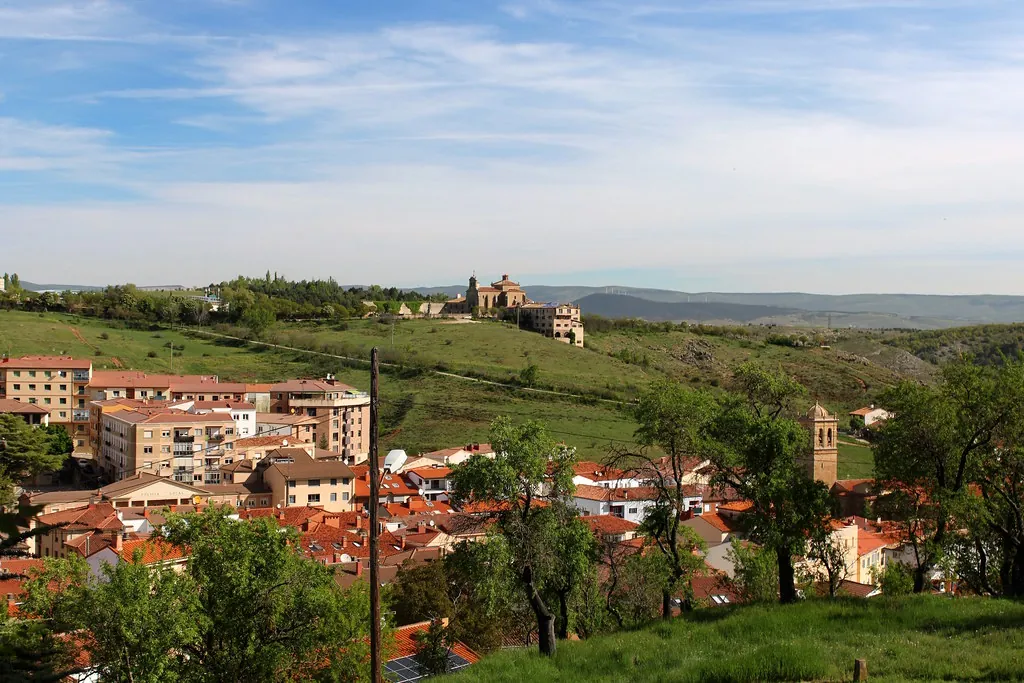
The wheat stops, eventually. Forty-five minutes south-west of Burgos, the N-405 threads through a horizon so wide it feels nautical, then the tarmac shrinks to single-track and Mazuela appears—sixty-odd houses, a church tower and a silence you can almost lean against. No souvenir stalls, no coach bays, not even a bar to soften the landing. Just stone, adobe and the smell of dry earth after a night’s dew.
What passes for a centre
Park where the lane widens by the stone cross; the only traffic after 9 a.m. is the farmer’s van heading out to check the sprayers. From here the village unrolls in two streets shaped like a hairpin. Houses are low, roofed with half-round clay tiles the colour of burnt toast. Some have been patched with cement, others left to slump gracefully. The effect is lived-in, not museum-curated—think Yorkshire dales hamlet transplanted onto a Castilian plain.
The parish church of San Andrés squats at the bend, its tower short and thick because wind here starts in the Cantabrian mountains and doesn’t stop until Salamanca. Push the south door (it sticks in damp weather) and you’ll find a single nave, whitewashed every spring, plus a seventeenth-century retablo gilded with American silver that never quite reached Seville. Sunday mass is at 11 a.m.; turn up ten minutes early and the sacristan might let you climb the tower for a view that ends where the sky begins. No charge, but dropping a two-euro coin in the poor box keeps the roof tiles attached.
Walking into nothing much—and why that’s the point
Three footpaths leave the village; none are signed, so download the 1:50,000 IGN sheet beforehand. The most useful heads south past the last streetlamp (yes, there are six, solar-powered and brighter than you’d expect). After ten minutes the wheat closes in, heads rattling like dry bones. Keep straight and you’ll reach a low ridge once used as a Civil-war lookout; from the top the plateau folds away in ochre rectangles, each hedgeless boundary drawn by Franco’s land reform. Bring binoculars: calandra larks rise in song flights, and on still evenings you can hear the grain elevator in Estépar clanking nine kilometres off.
Spring is brief and brittle—green shoots in April, bleached straw by June—so come either side of Easter when the air smells of wild thyme and the soil still holds moisture. October works too: stubble fires smudge the horizon, and locals in hi-vis vests collect pine cones from the shelterbelts for winter kindling. Mid-August is best avoided; the thermometer kisses 38 °C by noon and shade is rationed to the church portico and the inside of your hire car.
Where to eat (spoiler: not here)
Mazuela’s last grocery shut in 2018; the nearest loaf is baked in Estépar, nine kilometres away. Pack a picnic in Burgos before you set off—Mercadona on the BU-30 ring-road sells manchego, foil-packed tuna and even Hobnobs if you’re feeling patriotic. A folding stool and a water bottle turn the village’s abandoned threshing floor into a private dining room with a 360-degree sky.
If you need a tablecloth, drive twenty-five minutes to the A-1 junction at Rubena. Casa Toñete does lechazo (milk-fed lamb) roasted in a wood oven for €22 a quarter; order ahead or you’ll wait an hour while the coals settle. Vegetarians can usually coax a plate of judiones (giant butter beans) with pimentón from the kitchen, though the chef will look faintly distressed at the concept.
Nightfall: bring a coat and a torch
Street lighting switches off at midnight to save the council €137 a month. On clear nights the payoff is immediate: the Milky Way spills across the sky like tipped sugar. There’s negligible light pollution—Burgos glows faintly north-east, but everything else is black. A basic star-app on your phone will identify Vega overhead and, later in the season, Orion climbing sideways above the silos. Take a jacket even in July; the plateau radiates its heat away faster than you’d credit, and by 2 a.m. dew forms on car roofs.
Combining it with something else (because fifteen minutes is enough)
Most visitors stay long enough for coffee they can’t actually drink, photograph the church, and reverse back down the lane. That’s sensible. Mazuela works as a hinge rather than a destination. Pair it with the Romanesque Hermitage of San Pelayo in Hinestrosa (25 min west) where frescoes of clumsy lions guard a dark interior, then continue to the Arlanza wine belt for a late-afternoon tasting at Bodegas Gormaz. Alternatively, head north to the Sierra de la Demanda for limestone ridges and actual trees—miraculous after a morning on the bare plain.
Getting here without tears
Bilbao is the smoothest gateway: Ryanair’s morning flight from Stansted lands at 11:15 local time, giving you two hours to collect a hire car and still reach Mazuela before the light flattens. Take the A-68 south, swing onto the AP-1 at Miranda de Ebro, then peel off at Briviesca and follow the BU-905 west. The final five kilometres narrow to single-lane tarmac with passing bays; locals drive them like rally stages, so keep your nearside wheels in the grit and flash the hazards if you need to reverse.
Fuel up before you leave the motorway—service stations thin out faster than pubs in rural Northumberland and the only garage in Estépar closes for siesta between 2 p.m. and 5 p.m. sharp.
Honest verdict
Mazuela will not change your life. It offers no epiphany, no Instagram peak, not even a decent cortado. What it does give is scale: a place to stand exactly in the middle of the Meseta and feel the continent stretch away on every side. If that sounds like something you can get from a lay-by on the M40, save the petrol. But if you’ve ever wondered what Spain looks like when the guidebooks run out of pages, come here, switch the engine off, and listen to the wheat grow.