Full Article
about Merindad De Valdivielso
Ocultar artículo Leer artículo completo
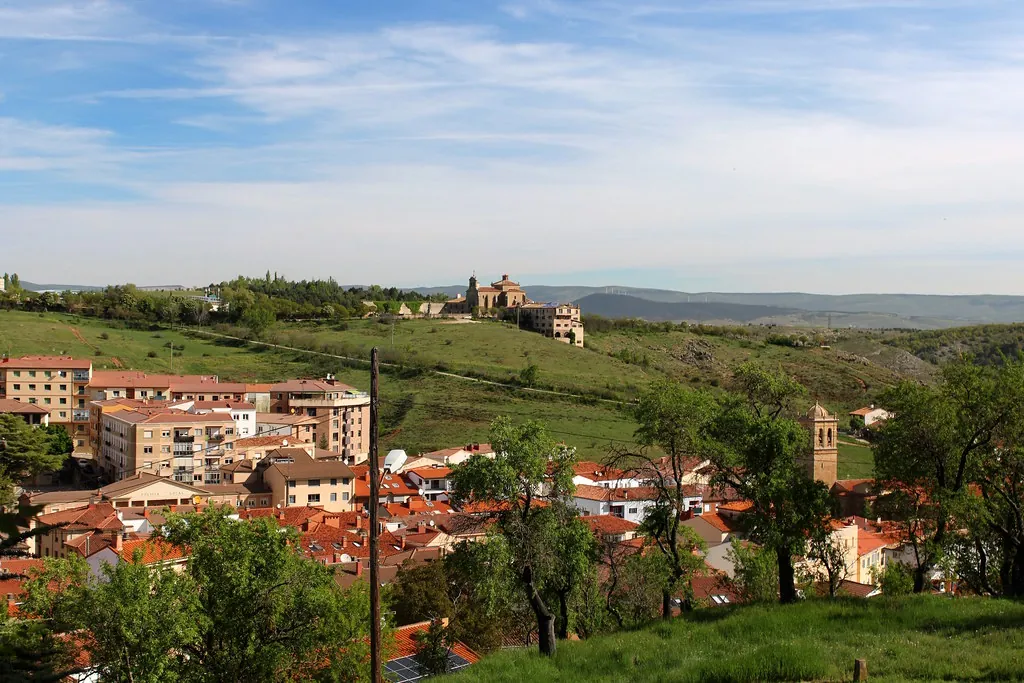
The road drops suddenly. One moment you're on the high moor, watching harriers quarter the heather; the next, limestone walls rise around you and the river appears, completing its near-perfect loop. You've entered a natural amphitheatre where Castile meets Cantabria, and the twenty-odd hamlets of Merindad de Valdivielso cling to the Ebro's banks like an afterthought.
This isn't one village but a scattered municipality stitched together by water and stone. Puente Arenas, Quintana de Valdivielso, Arroyo de Valdivielso – each name marks a bend in the river or a crossing point where merchants once drove livestock towards the markets of Burgos. The houses share a family resemblance: sandstone blocks, timber balconies, red-tiled roofs that turn silver with age. Nothing's been prettified for visitors. When a roof collapses, it stays collapsed until someone needs the space again.
The Geography Lesson
Stand on the Alto de Dobro at dusk and the valley reveals its secret. The Ebro has drawn a 270-degree horseshoe around a fist of land barely five kilometres across. From this height you can trace the river's course, watch it glint where it catches the last light, understand why medieval cartographers scratched their heads. The limestone cliffs glow apricot, then rust, then settle into grey. Somewhere below, an otter slips into the water. You won't see it from here, but you might hear the splash carry upwards like a pebble dropped into silence.
The moorland above changes personality with the weather. Morning sun brings wheatears and stonechats; afternoon cloud rolls in from the Bay of Biscay and suddenly you're walking through peat bog that wouldn't look out of place in Northumberland, except for the griffon vultures overhead. They're the giveaway that you're further south than you feel. British birdwatchers plan entire weekends around these uplands – not for the vultures, which are common enough now, but for the hen harriers that England has mostly lost. Bring binoculars and patience. The birds are here, but the moor is big and mobile reception is patchy at best.
Stone That Hasn't Moved
The Romans passed through – you can still follow their paving stones near Valdenoceda – but it was the eleventh and twelfth centuries that left the real mark. Every hamlet has its romanesque fragment: a doorway with zig-zag carving, a corbel shaped like a fox, a font where generations were christened. San Pedro de Tejada in Puente Arenas keeps its original iron-studded door. Push it open on a weekday morning and the cool air smells of wax and centuries. No ticket desk, no audio guide, just a notice asking you to close the door quietly because the swallows nest in the eaves.
The medieval bridge at Puente Arenas still carries local traffic. Its arches are uneven, widened over the years to accommodate hay wagons then tractors. Stand in the centre at sunrise and watch the reflection complete the circle – bridge and water making a perfect eye that blinks when the trout rise. Fishermen work the pools downstream, using techniques their grandfathers learned from Portuguese monks. They'll nod good morning but won't offer conversation. The river speaks louder here.
What Passes for Action
Walking tracks radiate from the valley floor like spokes. The easiest follows the Ebro's inside bank for seven kilometres through poplar plantations where nightingales sing in May. More demanding routes climb to the cliff tops – not high, perhaps four hundred metres of ascent, but enough to shake out the lungs. The limestone folds into curious patterns: waves frozen mid-crash, caves that promised refuge to shepherds, sudden viewpoints where buzzards launch themselves into space.
Spring brings orchids to the hay meadows – thirty-odd species if you know where to look. Autumn belongs to mushrooms. Local families guard their ceps and chanterelles like state secrets; join a guided foray or risk dirty looks from landowners. Winter can be sharp. At eight hundred metres, snow isn't unusual, but it rarely lingers. The upside is clarity: air so clean that Burgos cathedral, forty kilometres distant, appears as a toy on the horizon.
Evenings centre on food. There are no restaurants in the English sense – just two bars that serve meals if you book ahead, and the dining room at Molino del Canto where Javier converts grandmother's recipes into something approaching haute cuisine without losing the pork fat. Start with morcilla – milder than any British black pudding, sweet with onion and rice. Move on to cordero lechal, milk-fed lamb that collapses at the touch of a fork. Finish with queso de Valdeón, the local blue that's learned restraint from its mountain upbringing. The wine list runs to Riojas you've never seen in Tesco and prices that make you check the bill twice.
The Practical Bits
Base yourself in Puente Arenas or at the mill itself – rooms from €85 including breakfast, dinner available for guests who ask before noon. From here you can reach the high moor in fifteen minutes, Bilbao in ninety (though the last half-hour is proper motorway). Medina de Pomar, twenty minutes west, has the nearest petrol station and cash machine. Fill up both before you arrive.
Weather changes fast. One July afternoon I watched hail bounce off the bonnet while thirty kilometres away the wheat burned gold. Pack layers and waterproofs even in August. Mobile signal dies completely on the northern slopes – download offline maps or risk discovering whether Spanish farmers still practise the ancient art of giving directions via elaborate arm-waving.
The valley empties in winter. Summer fiestas bring returning emigrants and temporary noise, but October to April you're sharing space with perhaps three hundred permanent residents. Some days you'll have the moor to yourself except for the wildlife. Other days, school groups arrive to study the geology and the silence fractures for an hour.
Is it worth the detour? That depends on your tolerance for places that refuse to entertain you. Merindad de Valdivielso doesn't do visitor attractions. It does stone that hasn't moved, rivers that follow their own logic, birds that couldn't care less about your life list. Come for two days and you might leave disappointed that nothing happened. Stay for three and you'll realise that nothing happening was exactly the point.