Full Article
about Montorio
Ocultar artículo Leer artículo completo
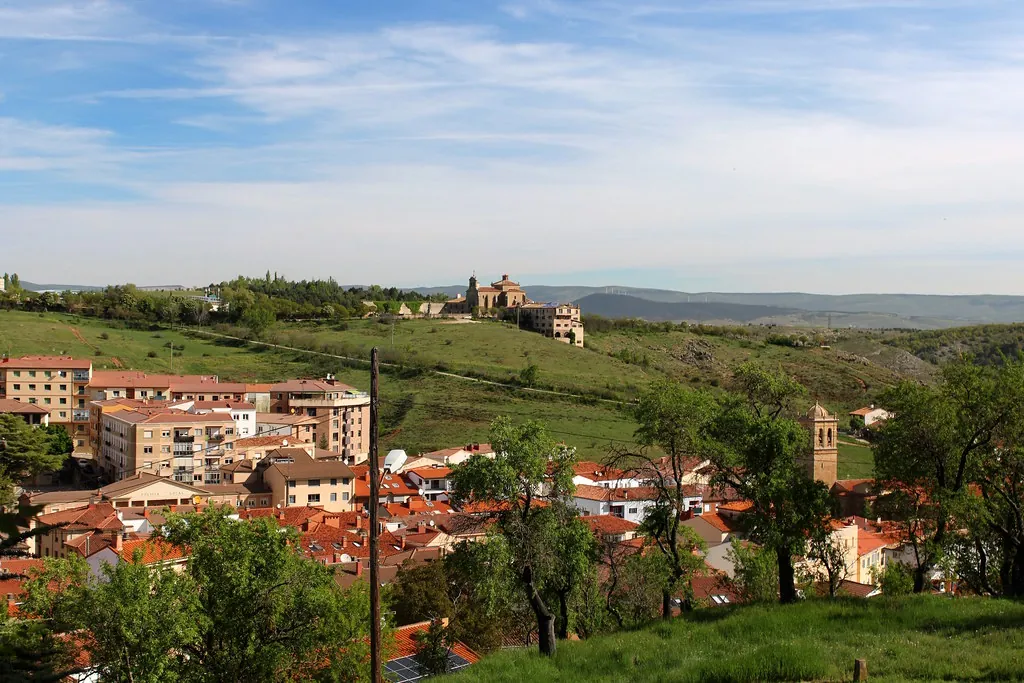
The church bell strikes noon, and the only other sound is grain dryers humming somewhere beyond the stone houses. At 945 metres above sea level, Montorio's air carries the scent of thyme and warm earth rather than the diesel tang of larger Spanish towns. This is Castilla y León's agricultural backbone, a place where combine harvesters still pause to let dogs cross the road.
A Working Village, Not a Museum
Montorio's population hovers around 500, though numbers swell in August when former residents return for the fiesta. What you see today is a hybrid: seventeenth-century adobe walls buttressed by twenty-first-century breeze blocks, grandparents in berets chatting beside teenagers glued to WhatsApp. The effect is refreshingly ordinary. There's no heritage foundation repainting shutters here, just villagers maintaining homes they've occupied for generations.
The parish church of San Pedro dominates the irregular plaza, its bell tower rebuilt in 1953 after lightning split the original. Inside, Baroque gilt sits uncomfortably next to concrete pillars added during Franco's rebuilding programme. Rather than pristine, the interior feels loved—worn wooden pews, wax-stained stone, and a side chapel where someone's left yesterday's carnations. Photography is tolerated, but weekday mass at 19:00 still draws twenty-odd parishioners who'd prefer you didn't treat their worship as spectacle.
Behind the church, two streets converge at a hand-pump still used for irrigation. Follow either lane and you'll reach the village boundary within five minutes. Houses peter out into threshing circles where elderly residents winnow wheat using methods unchanged since their grandparents' day. It's here, at sunset, that Montorio's altitude becomes an advantage: the surrounding cereal plains glow amber while swifts wheel against a violet sky.
Walking the Grain Belt
The GR-82 long-distance path skirts the village, but most visitors prefer the signed 7-kilometre loop that circles Montorio through wheat, barley and vetch fields. Terrain is gentle—barely 100 metres of cumulative ascent—making it suitable for families or anyone recovering on Spain's wine. Way-marking consists of yellow dashes painted on fence posts; if you lose the trail, aim for the next stone hut used for storing sheaves.
Spring brings the most dramatic scenery. From late April the plateau erupts into Impressionist colour: magenta poppies, violet flax, and acid-yellow charlock fighting through green wheat. By July the palette fades to gold; harvesters work 18-hour shifts, and dust hangs in the air like photocopier toner. Autumn sees fields ploughed into geometric furrows where lapwings gather; winter, though bitter, offers crystalline skies and the chance of tracking deer prints across frosted mud.
Binoculars repay the effort. Montorio lies on a raptor flyway; kestrels hover above verges while red kites cruise thermals over the Sierra de Oca ridge. Early risers might spot hen harriers quartering stubble fields, and stone curlews call eerily after dark. Download the eBird app beforehand—mobile signal drops to 3G in the valley, so offline identification helps.
Where to Lay Your Head
Accommodation is limited to four rural houses and a nine-room hotel, so weekend bookings are essential. Hotel Rural El Majuelo occupies a 1926 schoolhouse on the plaza; owners José and Linda converted classrooms into simply-furnished doubles with underfloor heating powered by biomass boilers. At €70 for two, including breakfast of local cheese, honey and migas (fried breadcrumbs), it undercuts most provincial Spanish options. They'll also prepare dinner if asked before 18:00—expect roast lamb, garden vegetables and a bottle of Ribera del Duero for about €25 a head.
Self-caterers favour Casa Rural El Paso, a terracotta-tiled house sleeping four from €90 nightly. The kitchen comes equipped with a proper four-ring hob, sharp knives and decent pans—surprisingly rare in Spanish rentals. British guests appreciate the log-burner; nights can dip below 5 °C even in May, and central heating is expensive at village prices. There's no washing machine, but the owners (who live in Burgos) will arrange laundry for long stays.
Whichever option you choose, bring supplies. The village shop opens 09:00–13:30, stocks UHT milk, tinned tuna and little else, and closes Saturday afternoons. Sunday everything shutters; even the bars rest. Plan accordingly or face a 25-kilometre dash to the nearest supermarket in Belorado.
Eating, Drinking, Closing Times
Montorio supports two bars, both on the plaza. Bar Montorio fries croquetas to order and pours decent coffee for €1.20, but stops food service at 15:00 sharp. Across the square, Mesón El Cazador grills chuletón (T-bone) over vine cuttings; a 1.2-kilogram beast feeds two hungry walkers and costs €38. Vegetarians aren't forgotten—ask for menestra de verduras, a gentle stew of artichoke, pea and carrot that arrives with bread baked in Aranda de Duero.
Neither establishment accepts cards; cash only, and don't expect change for €50 notes. Kitchens close by 21:30, so late arrivals should arrange dinner at their accommodation. Wine comes from cooperative bodegas in nearby provinces: house red is reliably drinkable, while white Verdejo offers crisp relief from lamb-fat heaviness. Beer drinkers note—cañas are served in 200 ml measures, not British pints, and cost €1.50.
Beyond the Village: Day Trips by Car
Montorio sits at the junction of three minor roads, making it an economical base for exploring lesser-known Burgos. Head 30 minutes north-east to the Montes de Oca, where beech woods hide the medieval hospital of San Juan de Ortega—restored by architects David Chipperfield and Caruso St John. The adjoining café serves almond cake worth the detour.
West lies the Arlanza wine route. Family-run Bodega Señorío de Nava offers tastings in a twelfth-century monastery for €12, including three reds and a rosé that pairs surprisingly well with Manchego. Book ahead; groups are capped at ten, and explanations switch effortlessly between Spanish and English.
South, the fortified town of Castrojeriz rewards history buffs. Its 9-kilometre castle walls enclose a Templar church and albergue still used by Camino de Santiago pilgrims. Climb the 800-metre keep for views across wheat plains that mirror Montorio's landscape, but on a cinematic scale.
When to Go, When to Stay Away
April–June offers warm days, cool nights and green countryside at its photogenic best. July–August sizzles at 35 °C; combine siestas with dawn walks, and expect accommodation surcharges during the August fiesta. September brings harvest activity and golden light beloved of painters, while October sees migrant birds pass overhead in thousand-strong flocks.
Winter is hard. Temperatures plunge to –8 °C, pipes freeze, and both bars may close if trade is slow. Roads become treacherous after snow; the CL-634 isn't gritted between midnight and 06:00. Unless you're seeking monastic solitude, visit between March and mid-November.
The Bottom Line
Montorio won't change your life, and it doesn't pretend to. What it offers is an authentic slice of Castilian routine: bread delivered at dawn, farmers arguing over barley prices, and night skies unpolluted by neon. Come for the quiet, stay for the steak, leave before the Sunday shutdown strands you without breakfast.