Full Article
about Olmedillo De Roa
Ocultar artículo Leer artículo completo
The church bell strikes noon, yet only three tables are occupied at the only bar open on Calle Real. One man nurses a caña while reading El Norte de Castilla. Another plays dominoes against himself. This is Olmedillo de Roa on a Tuesday in October—not abandoned, simply operating on a timetable that predates smartphones and Sunday trading laws.
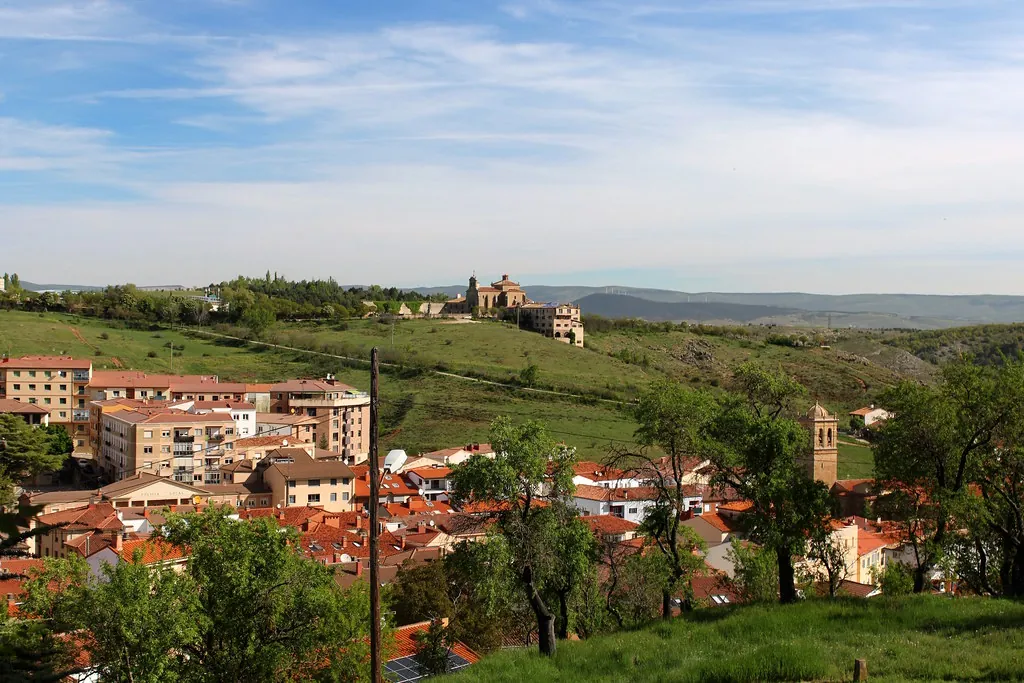
Halfway between Valladolid and Soria, this hamlet of 120 souls sits where the Duero Valley's famous vineyards begin to peter out into cereal fields. The name translates roughly as "little elm grove near Roa," though the elms have mostly vanished. What remains is a textbook example of rural Castilian architecture: stone foundations supporting adobe walls, timber beams, and those distinctive underground wine cellars that locals still call bodegas subterráneas. Many lie locked behind iron grilles, their temperature-perfect depths once essential for storing wine made from grapes grown on surrounding slopes.
Stone, Sun, and Silence
The village spreads across a low ridge, its streets following medieval property lines rather than any town planner's grid. Houses cluster around the 16th-century church of San Juan Bautista, whose weathered sandstone façade shows where Renaissance masons ran out of budget—ornate carving stops abruptly three metres up. Inside, a single nave leads to an altarpiece painted by followers of Juan de Juni. The church stays locked unless mass is scheduled; ask at number 14 Calle Real where the key keeper lives. She'll appear in slippers, muttering about tourists who expect cathedrals in every village.
What's remarkable here isn't individual monuments but the cumulative effect of vernacular architecture. Adobe walls two feet thick keep interiors cool during summers that regularly hit 35°C. Wooden balconies, called corredores, face south to catch winter sun. Peer through gateways and you'll spot patios where chickens once pecked between vegetable rows. Some properties show battle scars: half-collapsed roofs, crumbling walls, the inevitable satellite dish bolted onto 17th-century stone. Olmedillo never received EU heritage funding like nearby Peñafiel. This is conservation by neglect rather than design, creating a more honest timeline of rural decline and sporadic renewal.
The Wine Beneath Your Feet
Ribera del Duero's celebrity bodegas lie just ten kilometres north, but Olmedillo's relationship with wine remains stubbornly domestic. Dig down three metres and you hit limestone—soft enough for cellars but solid enough for ageing tempranillo. Local families still harvest small plots, selling grapes to cooperatives while keeping back 500 kilos for household consumption. The resulting wine isn't labelled or marketed; it arrives at table in unmarked bottles that could contain anything from robust crianza to last year's vinegar.
Visit during September's harvest and you'll see ancient techniques persisting alongside modern tractors. Workers hand-cut clusters into plastic tubs, but those tubs get forklifted onto lorries bound for industrial wineries. The contradiction sums up contemporary Spanish agriculture: traditional knowledge surviving within global supply chains. For casual visitors, this means no cellar-door tastings or gift shops. Instead, mention your interest at the bar and someone might produce a bottle from their cousin's bodega. Expect to pay €6-8 for something that would cost £25 in Britain. Payment happens via an envelope slipped across the counter—tax authorities apparently haven't discovered this system.
Walking Through Four Seasons
The village makes an ideal base for exploring Ribera's back roads without tour-bus congestion. A 12-kilometre circuit heads west through vineyards towards Hontoria de Valdearados, returning via dirt tracks between wheat fields. Spring brings green wheat and almond blossom; autumn paints vines copper and rust. Summer walking requires early starts—by 10am the thermometer hits uncomfortable levels, and shade exists only where poplars line dried-up streams.
Cyclists find quiet country lanes with minimal gradient, though surfaces vary from smooth tarmac to bone-shaking ripio. The local council maintains a basic network of signposts, but don't rely on them. Mobile coverage drops in valleys; download offline maps before setting out. More ambitious routes connect to Roa or even Peñafiel's castle, but these require planning around midday closures—Spanish villages still observe siesta, and you'll find nowhere open for water between 2pm and 5pm.
Winter transforms the landscape completely. Continental climate means proper seasons: temperatures can sink to -10°C, and snow isn't unusual. Vineyards become rows of black stumps against white fields; the air smells of wood smoke and morcilla frying somewhere out of sight. This is when locals finally have time to talk. Stand still for thirty seconds and someone will appear with observations about weather patterns, wheat prices, or why British people insist on eating dinner before 9pm.
What to Expect When Nothing's Happening
Let's be clear: Olmedillo de Roa offers no attractions in conventional tourism terms. No museums, no guided tours, no artisan workshops flogging overpriced pottery. The single shop opens erratically; bread arrives in a van at 11am if the driver remembers. Accommodation options are limited to two rural houses rented out by families who've moved to Burgos city. Book through the village website (functional but last updated in 2018) and expect to collect keys from a neighbour who's been given your flight details via WhatsApp.
This absence of infrastructure creates space for something increasingly rare: genuine downtime. Sit on the church steps at dusk and watch swallows hunting insects. Listen to tractors returning from distant fields, their engines echoing off stone walls. Notice how the light changes from harsh afternoon yellow to soft amber, how shadows stretch across the plaza until everything merges into blue-grey dusk. These moments don't photograph well; they're experienced rather than documented.
The nearest proper restaurants lie eight kilometres away in Roa, meaning you'll probably self-cater. The village shop stocks basics: tinned tuna, UHT milk, surprisingly good local cheese wrapped in waxed paper. For anything fresh, drive to Aranda de Duero's Friday market where €15 buys enough vegetables, chorizo and wine for a weekend. Cooking facilities in rental properties vary wildly—one house boasts a professional range; another makes do with a two-ring camping stove. Check before booking if culinary experiments matter.
Getting There, Getting Away
Public transport doesn't reach Olmedillo. Valladolid airport, 76 kilometres distant, offers summer flights from London Stansted with Ryanair. Madrid remains the reliable option year-round, followed by a two-hour drive northwest on the A1. Hire cars are essential; roads are good but petrol stations become scarce once you leave the motorway. The final approach involves ten minutes of winding country road where you'll encounter more rabbits than vehicles.
Leave on a Sunday morning and the place feels abandoned. Shutters stay closed, streets empty. By midday even the bar has locked up, its owner gone to visit grandchildren in Valladolid. This isn't hostility—simply a village operating for residents rather than visitors. Olmedillo de Roa offers no postcard moments, no Instagram backdrops. What it provides instead is rarer: permission to slow down to Castilian time, where conversations meander and tomorrow can wait. Whether that's enough depends entirely on your tolerance for places that refuse to perform for tourists.