Full Article
about Padilla De Abajo
Ocultar artículo Leer artículo completo
A tractor idles at dawn, its headlights carving two white tunnels through cereal dust. By the time the engine cuts out, the only sound left is the hush of grain moving in the wind. This is how Padilla de Abajo introduces itself—not with a postcard panorama, but with the practical hush of a place that still lives by the plough and the weather app.
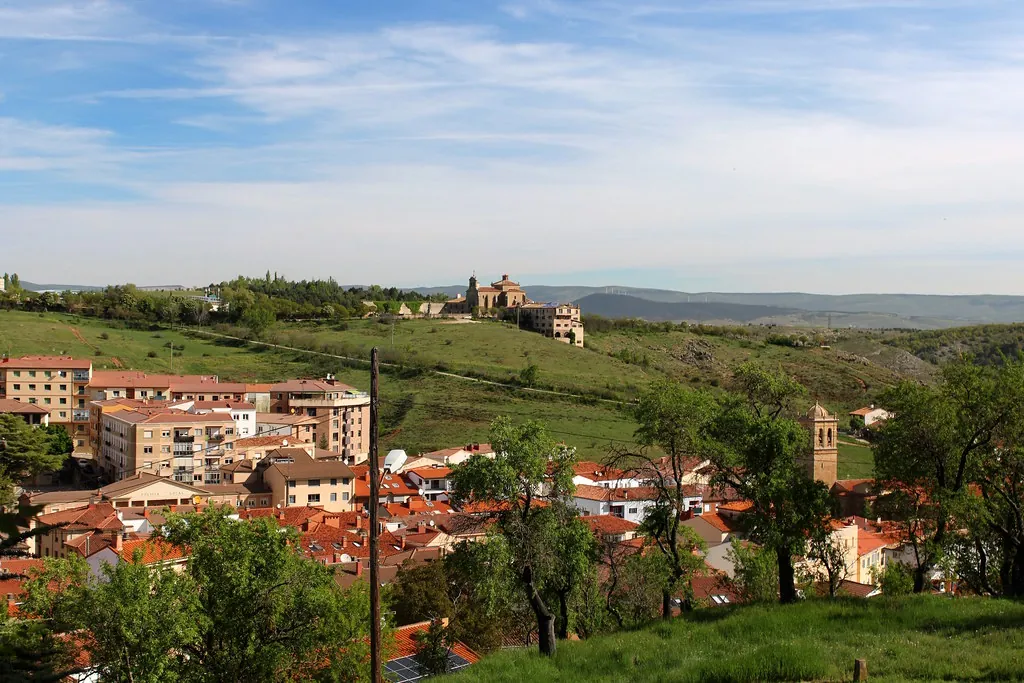
The village squats on the Burgos plain, thirty-five kilometres north-west of the provincial capital. Take the CL-623 out of Burgos, turn off at Villadiego, and follow the tarmac until it frays into a single-track road edged with thistle. The first houses appear without ceremony: stone walls the colour of dry clay, roof tiles rounded by centuries of frost and August furnace. There is no dramatic approach, no sudden reveal—just the sense that the fields have decided to let a few buildings interrupt them.
Stone, Mud and the Memory of Revolt
Padilla de Abajo shares its surname with Padilla de Arriba, a kilometre up the road. Together they form a blunt medieval pairing—“Lower” and “Upper”—that still governs daily life. Cousins borrow tools across the divide; harvesters work the same sweeping cooperatives; both parishes answer to the saint whose feast day fills the single bar with overflowing plastic chairs. The name itself is a quiet act of rebellion: locals insist it honours Juan de Padilla, the Toledan noble beheaded in 1521 for backing the Comunidades de Castilla against Emperor Charles V. No plaque declares this; the evidence is carried in the way grandparents shorten the village to simply “Padilla” and let the rest of the sentence hang.
The Church of San Lorenzo stands at the geometric centre, tower visible from every approach track. Build dates are stitched together—Romanesque footing, 16th-century nave, a Neoclassical portico bolted on after a 19th-century lightning strike. Inside, the air smells of candle wax and damp stone; the altarpiece is provincial Gothic, gilded not with gold leaf but with ochre paint that has darkened to the colour of strong tea. Visitors expecting the theatrical excess of Burgos Cathedral will find sobriety instead: a single nave, wooden pews rubbed smooth by Sunday populations that rarely top sixty, and a bell that still marks work hours for men in the fields.
Surrounding lanes are barely two metres wide. Houses grow directly from the earth: thick adobe cores dressed in limestone blocks, timber beams blackened by chimney smoke. Many retain the arched doorway of a former stable; others have dug out the old bodegas beneath, turning them into damp storage for potatoes and cycling gear. There are no souvenir shops, no interpretation boards. If you want to know who built the heraldic shield above number 14, you knock and ask. Someone will fetch a grandmother who remembers the family’s wheat yield in 1953.
Flat Light, Big Sky
The landscape refuses to flirt. It is a tabletop of clay and chalk, striped from April to July with alternating greens and ochres depending on whether the field is wheat, barley or fallow. There are no dramatic gorges, no romantic olive groves—just horizon, sky, and the occasional electricity pylon that photographers like to grumble about until they realise the pylon gives scale to the enormity of everything else.
Spring brings colour fastest. By mid-April the cereal is ankle-high and lambs chase each other along the irrigation ditches. Storms build over the plain at four o’clock; you can watch them arrive for twenty minutes before the first drop hits. Summer hardens everything. The ground cracks into hexagonal plates; the temperature pushes past 35 °C by eleven in the morning. Autumn is the kindest season—warm afternoons, cool beer, stubble fields turning bronze under a low sun. Winter is wind, and the knowledge that the Meseta can drop to –10 °C at night without a single snowflake to insulate it.
The village sits on the GR-94 footpath, a 160-kilometre loop that links nine Odra-Pisuerga settlements. Walkers usually appear at breakfast time, boots powdered white with dust, and vanish before the lunch bell rings at two. Cyclists outnumber them: the roads are flat, traffic is a tractor every half hour, and the only climb is the gentle ramp to neighbouring Padilla de Arriba—elevation gain, 28 metres. Bring two water bottles; the next fountain is twelve kilometres away and the bar keeps irregular hours on weekdays.
Food That Knows the Calendar
There is no restaurant, only Bar Padilla, open from 07:00 for coffee and Anís del Mono, closing whenever the owner’s grandson finishes school. The chalkboard menu never changes: menestra de verduras (€6), chuletón de Ávila for two (€32), and on Fridays, cocido maragato backwards—meat first, chickpeas last—because that is how they do it in León and nobody has seen a reason to alter tradition. Vegetarians get a tortilla so thick it needs two plates to lift.
For anything fancier you drive to Melgar de Fernamental, fifteen minutes south, or cook for yourself. The Saturday market in Burgos sells leeks the size of baseball bats and morcilla seasoned with smoked paprika that stains the wooden stall crimson. Back in the cottage kitchen you can attempt olla podrida: chickpeas, hen, chorizo, cabbage, and a bay leaf that has probably been reused since 1998. The result feeds six; leftovers improve for three days, should the fridge keep its cool.
Local fiesta happens around 10 August, feast of San Lorenzo. The population quadruples as grandchildren return from Madrid and Bilbao. A brass band plays pasodobles in the square until two in the morning; elderly couples dance with the straight-backed dignity forged under Franco. Visitors are welcome but not announced: buy a raffle ticket (€2) for a ham, drink sweet vermouth from plastic cups, and stay out of the way during the paella contest—prizes are taken as seriously as harvest yields.
How to Arrive, and Why You Might Hesitate
No train comes closer than Burgos. From the UK, fly to Bilbao, collect a hire car, and allow ninety minutes south on the A-68 followed by minor roads that GPS still thinks are footpaths. Car essential: buses reach Villadiego on school-days only, and taxis back to the village after 22:00 are mythical.
Accommodation is limited to three options: Casa El Crisal, a stone cottage sleeping ten with pool and fenced garden (€180 per night whole house, minimum two nights); two rural rooms above the bar (shared bath, €35 pp including breakfast); or you ask at the ayuntamiento and someone loans you the key to the old school dormitory—mattresses okay, heating erratic, donation appreciated. Book ahead for fiesta weekend; the rest of the year you can decide on the drive in.
Weather extremes are real. March can deliver horizontal sleet; August sun will burn through SPF 50 in an hour. Bring layers, a hat that ties on, and shoes you don’t mind filling with soil. Mobile coverage flickers: Vodafone works on the church steps; Orange users must climb the grain silo for one bar.
A Village That Doesn’t Need You
Padilla de Abajo will never court Instagram. It offers instead the rarer pleasure of a place busy with its own continuity: grain stored, pigs slaughtered, saints carried, babies baptised. Turn up without expectation, accept the silence that follows when the tractor cuts out, and you may find—without anyone trying to sell it to you—that the plain has its own kind of monument: space, rhythm, and the sound of wind arguing with wheat.