Full Article
about Padrones De Bureba
Ocultar artículo Leer artículo completo
The church bell strikes noon, yet nobody quickens their pace. A farmer leans against a stone wall, rolling a cigarette with thick fingers stained umber from soil rather than nicotine. This is Padrones de Bureba, where time hasn't stopped—it's simply decided not to hurry.
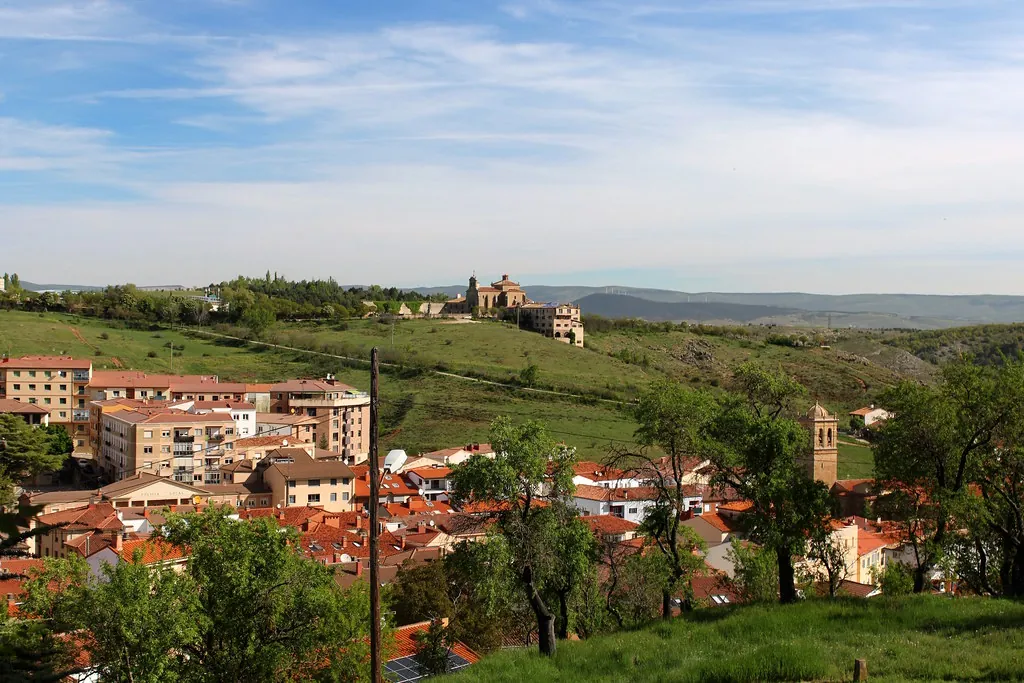
Fifty kilometres northeast of Burgos, the village squats on a gentle rise above cereal fields that stretch until they blur into the summer haze. No dramatic peaks frame the horizon here, no gorges carve the landscape. Just earth, sky, and the steady whisper of wheat bending in the breeze that sweeps down from the Cantabrian Mountains towards Castile's central plateau.
The Architecture of Everyday Life
Stone walls the colour of weathered parchment line narrow streets barely wide enough for a tractor. Houses rise two storeys, their wooden balconies sagging under the weight of geraniums and decades of quiet use. Adobe bricks peek through gaps where plaster has succumbed to rain and sun, revealing construction methods unchanged since Moorish builders taught Castilian peasants their craft.
The parish church dominates the small plaza, its Romanesque origins visible in the squat bell tower rebuilt after lightning struck in 1873. Local stone, local labour, local time. Step inside and the temperature drops ten degrees; shadows pool in corners where elderly women still murmur rosaries on Friday evenings. No audio guides here, no gift shop. Just the smell of beeswax and centuries of village gossip absorbed into stone walls.
Walk the perimeter in twenty minutes. Count the houses—perhaps sixty remain permanently occupied, their windows sealed against winter winds that knife across the plateau. Others stand shuttered, awaiting descendants who visit for August fiestas then flee to Burgos, Bilbao, Madrid. Property prices hover around €30,000 for a three-bedroom house, though estate agents struggle to explain why you'd want one.
Working Land, Working People
April transforms the surrounding fields into an emerald ocean. By July, they've bleached to gold so bright it hurts to look directly. Local farmers plant wheat, barley, and increasingly, sunflowers that track the sun's arc across vast skies. They rise at 5 am during harvest, guiding combines through fields that yield barely enough to cover costs. EU subsidies keep the enterprise viable; tradition keeps it alive.
Stop at the Bar Centro around 10 am and you'll find them—weathered men drinking coffee with cognac, discussing rainfall statistics with the precision of city traders analysing stock markets. They know exactly how many millimetres fell last Tuesday, how this compares to the 1983 season, what it means for September yields. Their fathers knew the same plots, the same patterns, the same inevitable relationship between hope and weather.
The village supports two bars, one grocer, a bakery that opens three days weekly. No petrol station—fill up in Briviesca, fifteen kilometres west along the BU-530. The road curves through landscapes that cinematographers prize for their emptiness. Winter snow closes passes occasionally; spring mud turns tracks impassable. Visit between May and October unless you fancy explaining to a bemused farmer why your hatchback is axle-deep in his field.
Birdsong and Silence
Dawn brings larks. Thousands of them, rising from wheat stalks in spirals of sound that nearly drown the distant hum of motorway traffic carrying goods between Bilbao's port and Madrid's markets. Red kites circle overhead, riding thermals with the patience of creatures who've learned that human activity often means discarded sandwiches or vulnerable rodents.
Bring binoculars and patience. The lack of designated bird hides means you'll crouch behind stone walls, hoping your knees hold out while scanning for great bustards—those improbable birds that weigh as much as a small dog yet can vanish against ploughed earth. They're here, along with hoopoes with their punk-rock crests and bee-eaters that arrive from Africa each spring to nest in riverbanks twenty minutes' drive north.
Photographers arrive in late afternoon when shadows elongate and the quality of light turns brutal midday glare into something approaching poetry. They position tripods on dirt tracks, waiting for that perfect shot: lone oak against wheat field, storm clouds building over distant hills, village silhouette at sunset. Local farmers find this mildly amusing. They've seen it every day for sixty years.
Eating What the Land Provides
The daily menu at Bar Centro costs €12 and changes according to what Miguel's wife feels like cooking. Thursday might bring cocido montañés—hearty beans with cabbage and chorizo that originated in mountain villages where winter kills the weak. Friday could feature bacalao al pil-pil, salt cod transformed through patient stirring into something silken and pungent. Always there's bread baked in Briviesca, always wine from Ribera del Duero sold by the glass for €1.50.
No tasting menus, no fusion experiments, no Instagram-friendly presentation. Just food that sustained generations through civil war, dictatorship, democracy, and the slow hemorrhage of rural population towards cities. The local council has discussed promoting gastronomic routes, then shelved plans when they realised nobody wants to drive forty minutes for stew, however authentic.
If you're staying—several villagers rent rooms for €25-30 nightly, cash only—ask Pilar about her morcilla. She makes it each November when the first frost means pigs can hang safely overnight. Blood, rice, onion, spices stuffed into intestines cleaned by hand. It carries the faint metallic tang that supermarket versions have sanitised away. Fry it with eggs for breakfast and understand why people stay in places that appear, at first glance, to offer nothing.
The Weight of Emptiness
Padrones de Bureba challenges modern assumptions about what constitutes a destination. There's no queue for selfies, no entrance fee, no gift shop selling fridge magnets shaped like wheat sheaves. What there is, in abundance, is absence—of people, of noise, of the relentless stimulation that defines contemporary travel.
This absence attracts a specific visitor: the burnt-out urbanite seeking digital detox, the photographer chasing uncluttered horizons, the genealogist tracing ancestors who emigrated during the 1953 drought. They arrive expecting nothing, find less, and discover that less might be precisely what they needed.
Stay too long, though, and the silence grows heavy. Young people flee towards opportunities; old people remain because leaving would mean abandoning identity itself. The village shrinks by perhaps five souls annually—natural attrition accelerated by rural healthcare cuts and the closure of primary schools when pupil numbers drop below twelve.
Visit Padrones de Bureba for what it lacks rather than what it offers. Come for conversations that unfold over hours rather than minutes, for skies so dark you can read by starlight, for the realisation that civilisation's greatest luxury might be the space to hear yourself think. Just don't expect anyone to help you process this revelation—they're too busy getting on with living.