Full Article
about Palacios De Riopisuerga
Ocultar artículo Leer artículo completo
The Edge of the Plateau
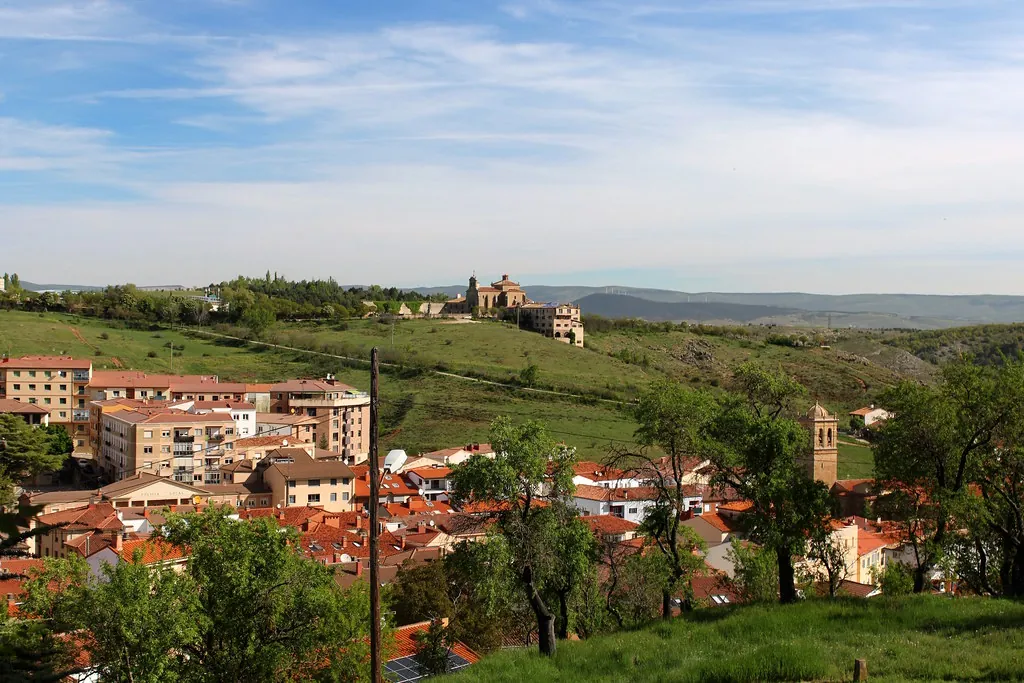
At 800 metres above sea level, Palacios de Riopisuerga sits where Castilla's cereal ocean finally meets the first ripples of the Cordillera Cantábrica. The village appears exactly once on most road maps—an unassuming dot 42 kilometres north-east of Burgos, surrounded by a grid of dirt tracks that farmers still use to reach their wheat fields. Drive in from the A-67 and you'll see the church tower first, a weather-beaten stone rectangle that has watched over barely 500 souls since the 1950s.
The landscape obeys only two colours: the yellow-brown of stubble after harvest, and the sudden green slash of poplars marking the Pisuerga river half a kilometre south. There are no viewpoints, no dramatic drops, just an horizon that keeps retreating as you walk towards it. British visitors expecting the cosy folds of the Cotswolds or the photogenic drama of the Dales often need half a day to adjust to this scale. Once you do, the silence becomes almost physical—no traffic hum, no distant motorways, only the wind combing through the wheat.
What Passes for a Centre
The village spreads along one main street, Calle Real, wide enough for a tractor and a hay trailer to pass without either driver breathing in. Houses are built from the same golden limestone as the fields, roofs tiled with handmade clay that turns rust-red after rain. Many still have wooden doors split in two—upper half open in summer to let air circulate through stables now converted into living rooms. There's no formal tourist office; the best map is sketched on the back of a menu in Bar El Pozo, the only functioning bar, and even that changes depending on which farmer has blocked a path with sheep.
The parish church of San Pedro opens for Mass at 11:00 on Sundays and otherwise stays locked. Knock next door at number 19 and Doña Feli, the caretaker for thirty years, will fetch a key the size of a dinner plate. Inside, the nave smells of beeswax and burnt incense from the 1970s. A single Baroque retablo, gilded with American gold in 1687, fills the apse. Otherwise the interior is stark: no heating, no electric lights until 1995, stone floors worn into shallow bowls by centuries of kneeling. If you've trudged through Europe's cathedrals, this modesty is refreshing; if you need interpretative panels and audio guides, you'll be disappointed.
Walking Without Waymarks
Palacios functions as a trailhead rather than a destination. Three footpaths leave the village, all of them following medieval drove roads that once moved sheep from León to Burgos. The most straightforward is the 7-kilometre loop to Castrillo de Riopisuerga, confusingly signed only as "CR" on half-broken wooden posts. The path crosses two wheat fields, a disused railway embankment and a poplar plantation before depositing you outside Castrillo's equally locked church. Wear proper boots: after rain the clay sticks like wet cement and locals simply walk along the field margins in wellies.
Serious walkers can join the Cañada Real Leonesa, an ancient drovers' highway that runs 130 km south to Medina de Rioseco. Most Britons opt for a 12-kilometre stretch as far as the iron railway bridge at Hontoria de Riopisuerga, a graceful 1890 lattice now rusting quietly in the reeds. Pack water and a picnic; the only bar between the two villages opens unpredictably when the owner's arthritis allows.
Spring brings the best conditions—mild mornings, green wheat rippling like the sea, and stone curlews calling overhead. In October the stubble is burned off, sending columns of smoke into a sharp blue sky; photographers love the light, but asthmatics should check the wind direction first. Summer walks demand an early start: by 11 a.m. the thermometer nudges 34 °C and shade is non-existent until the river poplars appear.
Eating (or Not)
Gastronomy here is what your grandmother might have cooked if she came from rural Castile and rationing never ended. The weekly highlight is Saturday lunchtime at Bar El Pozo: lechazo asado—milk-fed lamb slow-roasted in a wood-fired clay oven until the skin crackles like parchment. A quarter portion feeds two hungry hikers and costs €18; arrive before 2 p.m. or the local families will have polished it off. The alternative is cocido maragato, a hearty chickpea stew served backwards: meat first, vegetables second, soup last. Vegetarians get tortilla de patatas and sympathetic shrugs.
There is no shop, no bakery, no cash machine. The nearest supermarket is in Frómista, fifteen minutes by car, so self-caterers should stock up in Burgos before turning off the motorway. If you rent a village house, the owners usually leave a welcome basket—expect a jar of local honey, a clutch of eggs still feathered, and instructions (in Spanish) not to put potato peelings down the sink.
Monday is the dead day: even the bar closes so the owners can drive to Palencia for wholesale supplies. Turn up then and you'll eat crisps in the car park, unless you've befriended a farmer's wife who might sell you chorizo from a hook in her pantry.
When to Come, When to Leave
April and late-September offer 22 °C afternoons, crisp nights, and wheat fields that glow like beaten bronze at sunset. Accommodation is easier then; village houses rent for €80 a night mid-week, rising to €120 at weekends when families flee Burgos for the silence they claim to miss. Book through the Astudillo tourist office—staff speak enough English to handle credit-card numbers and will text you the key-safe code.
August fiestas, centred on the fifteenth, transform the place. Pop-up bars appear, a sound system materialises in the square, and the population triples with returning emigrants who now work in Madrid or Bilbao. It's the only time you'll queue for a beer, but also the only chance to see traditional jota dancing in the street rather than rehearsed for visitors. Light sleepers should avoid the fireworks at 7 a.m.; everyone else enjoys free chorizo sandwiches and excuses to stay up until dawn.
Winter is brutal. Night temperatures drop to –8 °C, the mist settles for days, and the bar might open only if the thermometer crawls above freezing. Still, photographers prize the hoar frost that turns every stalk of wheat into a glass needle, and the village well actually steams at dawn. Come then only if you own a serious duvet and don't mind solitude.
Leaving the Wheat Behind
The real souvenir of Palacios de Riopisuerga is not a fridge magnet but a recalibrated sense of distance. After a few days the walk to the river feels like a commute, the church bell marks time more accurately than any phone, and the horizon stops looking empty and simply looks complete. Drive back towards the coast and the landscape folds, trees cluster, villages pile on top of hills—pretty, yes, but somehow cluttered. Somewhere around Miranda de Ebro you'll miss the straight line where sky meets wheat, and realise the place has quietly rearranged your idea of space.