Full Article
about Palazuelos De Muno
Ocultar artículo Leer artículo completo
The morning silence breaks at 7:30 sharp when a red Massey Ferguson rattles past the stone houses, heading for the wheat fields that stretch beyond the village edge. This is Palazuelos de Muñó's version of rush hour – a single tractor, one driver, and a cloud of dust that hangs in the thin mountain air.
At 850 metres above sea level, this Burgos village sits high enough that the climate shifts noticeably from the provincial capital 40 kilometres south. Summer mornings start cool, often requiring a jumper until ten o'clock, while winter brings proper mountain weather: minus temperatures, occasional snow, and a wind that whips across the meseta with nothing to stop it for miles. The altitude also means the light hits differently here – clearer, sharper, the kind that makes photographers reach for their cameras even when there's "nothing" to photograph.
Stone, Adobe and the Patience of Farmers
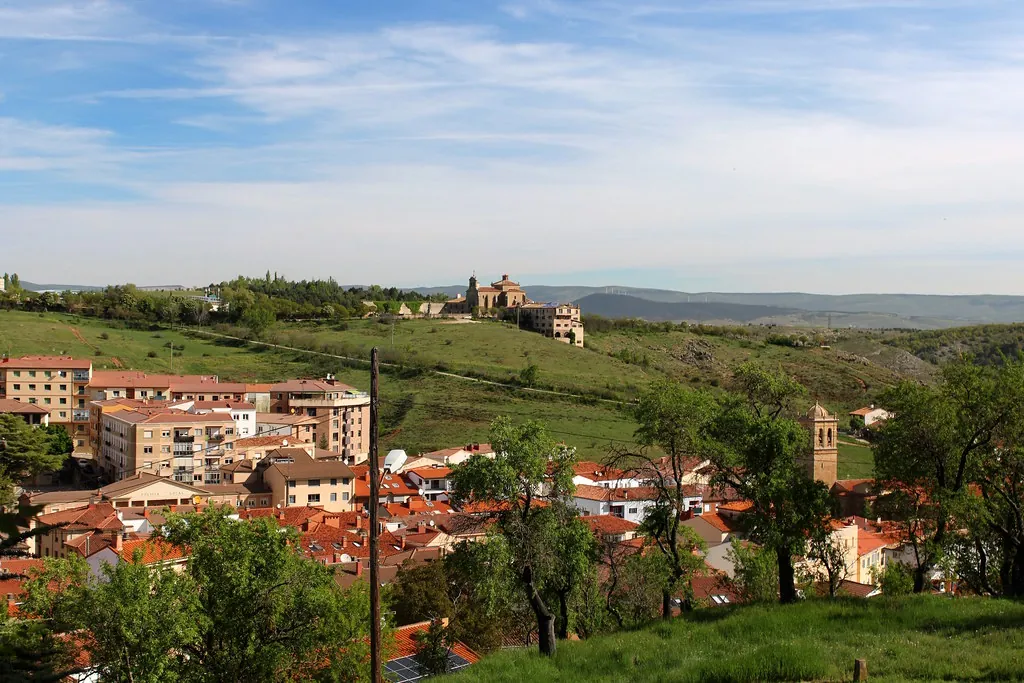
The village architecture tells its own story of adaptation to altitude and scarcity. Local builders used what the land provided: limestone quarried from nearby ridges, adobe bricks sun-baked from the same earth that grew their wheat, and timber beams cut from sparse oak groves in the valleys. Walking the main street reveals this material honesty – some houses stand pristine with their original wooden balconies intact, others sag under patched roofs and concrete additions that speak of harder times.
The parish church dominates this modest skyline, its bell tower visible from every approach road. Built from the same stone as the houses but on a grander scale, it demonstrates how religious architecture once served as the village's vertical exclamation mark against the horizontal monotony of cereal fields. Finding it open requires patience or local knowledge; ask at Bar El Cruce for María, who keeps the key in her apron pocket when she's working Tuesday and Thursday lunches.
The surrounding landscape changes character with the agricultural calendar. April brings emerald-green wheat shoots that ripple like water in the breeze. By July, the same fields turn golden-brown, their edges marked by red poppies and purple viper's bugloss. October strips everything back to bare earth and stubble, revealing the land's underlying contours – gentle undulations that hide steep gullies where rainwater has carved unexpected depth into the plateau.
Walking Where Farmers Walk
Palazuelos offers no waymarked trails or dramatic viewpoints. Instead, walkers follow the same tracks farmers use to reach their scattered plots. These caminos, wide enough for a tractor but often empty, extend for miles across open country. The network is simple: head north and you'll eventually hit the Arlanza river valley; south leads towards the industrial town of Salas de los Infantes; east and west just continue the cereal sea until another village appears on the horizon.
Birdwatchers should bring binoculars for the steppe species that thrive here. Calandra larks perform their tumbling display flights above the fields in spring, while hen harriers quarter the stubble fields in winter. The real prize comes at dusk when stone curlews arrive, their eerie calls carrying across the cooling air like something from a David Attenborough documentary filmed on another continent.
Cyclists find the area better suited to contemplation than competition. The roads connecting Palazuelos to neighbouring villages see perhaps a dozen vehicles daily, making them perfect for leisurely exploration. The catch? Wind. The meseta's notorious viento can turn an easy 20-kilometre loop into a slog worthy of the Tour de France. Check the forecast and plan accordingly – tailwinds heading out mean headwinds coming home.
Food That Understands Hunger
The village itself offers limited dining options – essentially one bar serving basic raciones to locals and passing truck drivers. For proper meals, drive ten minutes to Lerma or twenty to Aranda de Duero. This isn't a disadvantage; it's context. The regional cuisine evolved to fuel people who spent twelve hours behind a plough or tending sheep in all weathers.
In Lerma's Parador hotel restaurant, the menu reads like a Castilian greatest hits album: cordero asado (roast lamb) cooked in wood-fired ovens until the meat slides from the bone, morcilla de Burgos (blood sausage studded with rice rather than oatmeal like its British cousin), and queso de oveja that tastes of the sparse mountain herbs the sheep graze on. A full lunch menu costs €18-22, including wine from Ribera del Duero vineyards thirty kilometres away.
The altitude affects more than weather – it influences flavour too. The extreme temperature swings between day and night concentrate sugars in grapes and intensify the herbs that flavour local cheeses. Even simple dishes taste more pronounced here than their sea-level equivalents elsewhere.
When the Village Wakes Up
Palazuelos spends most of the year in gentle decline, population drifting towards Burgos or Madrid for work. This changes during the fiesta patronal, usually the second weekend of August though dates vary. Suddenly every house displays family members returned from cities, the plaza fills with temporary bars, and the church bell rings with celebratory rather than functional intent.
The festival programme mixes sacred and secular with typical Spanish efficiency: morning mass followed by street drinking, children's games adjacent to serious domino tournaments, and evening concerts that continue until the Guardia Civil politely suggests volume reduction at 3 am. Visitors are welcome but not courted – this remains a village party for village people, refreshingly free of tourist-office choreography.
Winter visits bring different rewards and challenges. January and February often see snow that transforms the brown landscape into black-and-white photography perfection. The village looks its best under a dusting of white, stone houses gaining temporary softness as snow settles on tiled roofs. Practical considerations multiply: carry snow chains, phone ahead to check road conditions on the BU-901 approach, and pack supplies since the village shop reduces winter hours to a morning slot three days weekly.
The Reality Check
Palazuelos de Muñó won't suit everyone. There's no boutique accommodation, no craft shops selling locally-made souvenirs, no evening entertainment beyond whatever's on television in the bar. Mobile phone coverage remains patchy despite repeated government promises, and the nearest petrol station requires a twenty-minute drive.
What exists is authenticity without marketing gloss – a working Spanish village where farmers still set their watches by the sun and the church bell still marks the day's rhythm. The altitude brings clarity: to the air, to the light, and perhaps to travellers seeking something that hasn't been curated for their convenience. Bring walking boots, a sense of patience, and expectations calibrated to rural reality rather than rural fantasy.