Full Article
about Pampliega
Ocultar artículo Leer artículo completo
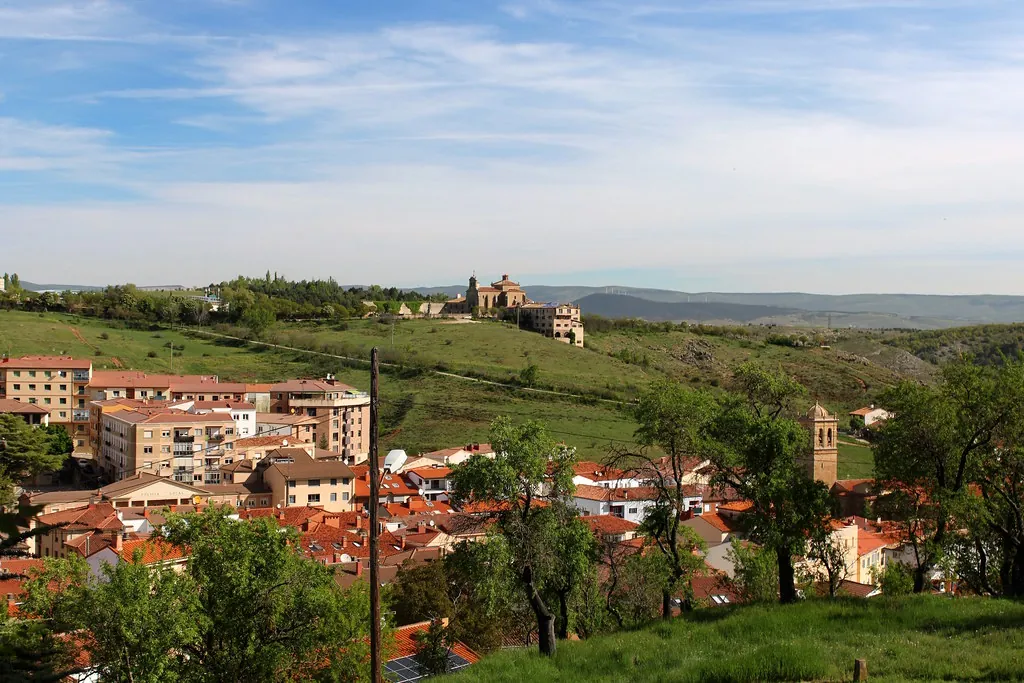
The storks always arrive first. By late February they’re clattering onto the chimney pots of Pampliega, rebuilding nests the size of satellite dishes while the wheat below them is still winter-brown. From the church roof you can count thirty-odd bundles of sticks silhouetted against a horizon so flat it feels like the earth has been ironed.
This is Castilla at its most Castillian: no corkscrew sierras, no romantic gorges—just 830 m of plateau that lets the sky do the heavy lifting. The village sits 45 km north of Burgos where the A-62 barrels towards Palencia, close enough to the motorway for a coffee stop, far enough to hear your own footsteps after 22:30.
A grid of wheat and stone
Pampliega’s centre is a single chessboard of streets thrown across a low ridge above the river Arlanzón. Walk the perimeter in twenty minutes and you’ll pass wheat, barley, more wheat, then the odd irrigation circle that looks from ground level like a green coin dropped on ochre baize. The only shade comes from plane trees planted by the ayuntamiento in the Nineties; in July their shadows shrink to shoeboxes and the air smells of hot pine resin and diesel from the combine harvesters.
Most buildings post-date 1886, the year a baker’s oven took fire and levelled half the village. What rose again is practical rather than pretty: two-storey houses in ochre stone, balconies painted the burgundy-red Spain adopted from railway signal boxes. Here and there a coat of arms—wolves, stars, a single tower—reminds you that somebody once had enough pedigree to quarrel over. Step through the Romanesque doorway of the parish church and you’ll find the font where the same family probably baptised babies in the 1200s; the restorers left one column crooked, a polite nod to eight centuries of subsidence.
Clocks run on harvest time
Come at 07:00 and the only sound is the bakery fan on Calle Real. By 08:00 the older men have claimed the terrace of Bar Norte, drinking cortados while their dogs practise elaborate indifference. The bakery shuts at 13:00 sharp; the butcher follows at 13:15. If you need cash, the BBVA machine inside the mini-market sometimes works, sometimes swallows cards for sport—carry twenty euros and you’ll lunch like a prince.
Sunday is performance day. Half of Burgos province seems to descend for the €12 menú del día: lechazo asado (order it rare unless you enjoy grey lamb), menestra de verduras for the one vegetarian cousin, and queso de oveja curado that tastes like Caerphilly with an extra year of sun. The two competing bars set up extra tables in the square; service slows to a dignified crawl, so order the house Ribera del Duero by the bottle—at €11 it costs less than a single glass back in Covent Garden.
Outside those three hours the village reverts to hush. Teenagers vanish to Burgos for university and return only when the wheat turns gold; the population graph looks like a slow leak, 6,400 in 1950 to just under 5,000 today. English voices are so rare that the barman in Bar Sur still talks about “los ingleses de 2019” who asked for vinegar for their chips.
Roads that go nowhere in particular
Flat can be interesting if you pick the right flat. A web of farm tracks radiates 10–15 km to neighbouring pueblos—Rublacedo, Villalón, Melgar de Fernamental—each one arrow-straight so the tarmac shimmers like a mirage. Hire a bike from the hotel in Melgar (€18 a day) and you can coast south on the camino viejo, tyres crackling over dropped barley. There are no gradients worth mentioning, yet the altitude (830 m) means even May evenings drop to 10 °C; pack a windproof.
Birders bring telescopes for Great Bustards that stride through the stubble like Victorian headmasters. You’ll also spot Montagu’s harriers quartering the fields and, if the farmer has left a patch of fallow, sand-coloured lesser kestrels hovering overhead. The best light is the first hour after dawn when the cereal heads glow pink and every path points towards a sky the colour of Wedgwood.
Winter is a different contract. Continental highs slide down the Duero valley and park; thermometers can read –12 °C at breakfast. The wheat sleeps under frost lace, storks abandon their nests, and the village feels briefly Alpine. Access stays reliable—the council clears the N-120 within hours—but walking becomes a mathematical exercise: how long before fingers go numb through gloves? Stay indoors, order caldo de matanza (peppery pork broth), and watch the smoke from village chimneys drift sideways like slow-motion horse tails.
When to turn up, when to drive on
May gives you green wheat, nesting storks, and daytime highs of 22 °C. September swaps green for gold and adds threshing dust that hangs in bars like talcum. Both months avoid the July furnace (35 °C is routine) and the October rains that turn farm tracks to grey porridge.
Accommodation is limited. The Hostal Arlanzón on the main drag has twelve rooms with tiled floors, small TVs, and wi-fi that remembers dial-up. Doubles are €45 including breakfast (toast, olive oil, tomato, industrial coffee). The municipal albergue offers sixteen beds for pilgrims at €8, opens at 15:00, shuts 22:00, and provides one shower per gender—arrive early or queue with rucksacks.
If you’re without wheels, Monbus runs one daily service from Burgos at 14:15, returning at 06:50 next morning. That timetable suits photographers chasing sunset but strands party animals; the last bar closes half an hour before the bus leaves. Driving from Santander airport takes 90 minutes on the A-67 and A-62; fill up at the Repsol outside Burgos because Pampliega’s single fuel pump locks at 20:00 and all day Sunday.
The honest verdict
Pampliega will not change your life. It offers no Michelin stars, no medieval walls to hashtag, no artisan gin distilled in a former convent. What it does offer is a calibration of scale: horizontal land, vertical sky, and a reminder that Spain still contains places where the loudest noise at midday is a tractor door slamming shut. Stop for an hour on the drive north, linger for a night if you need the silence, then roll on towards the mountains or the coast—whichever direction you choose, the storks will still be here when the wheat turns green again.