Full Article
about Pardilla
Ocultar artículo Leer artículo completo
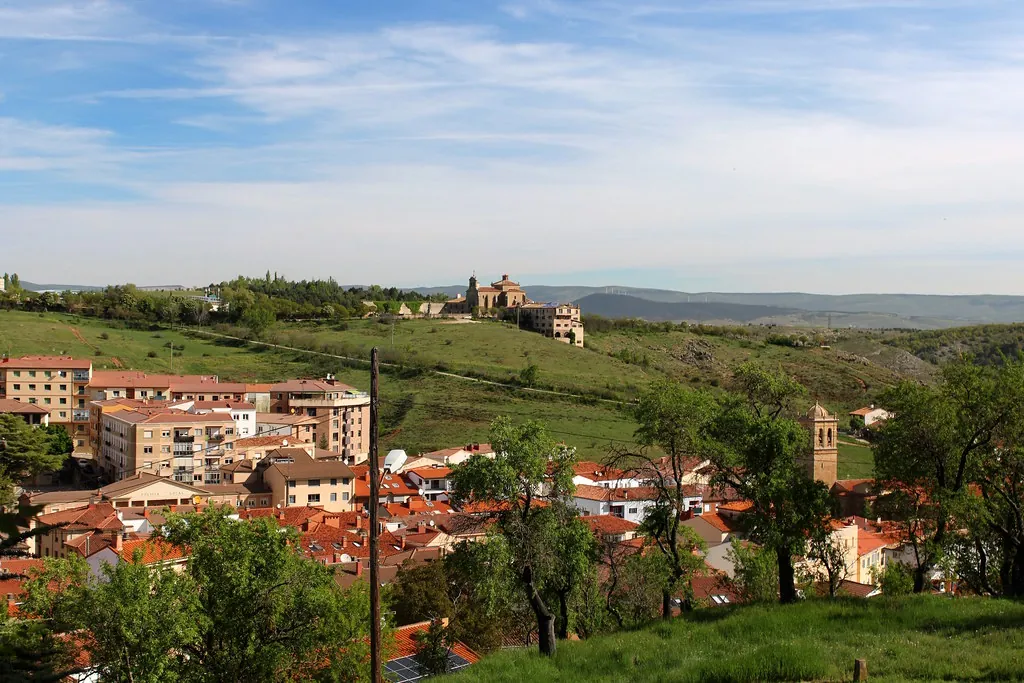
The cereal fields start just beyond the last house. Golden stubble stretches to the horizon, broken only by the occasional poplar windbreak and the faint line of the A-1 motorway. At 940 metres above sea level, Pardilla sits high enough that the air carries a sharp edge even in late September, and the wind—constant, restless—whistles through telephone wires like a reminder that you’ve left the city far below.
This is Castilla y León’s southern frontier, where the plateau begins its long roll towards the Duero valley. The village’s 250-odd houses cluster around a modest stone church whose squat tower serves less as landmark than compass point; lose your bearings on the grid of sandy-coloured streets and the tower reappears, nudging you back towards the single small square. Nothing here competes for attention. That is precisely the point.
Stone, adobe and the smell of rain on dust
Walk the lanes at seven in the morning and the only sounds are swifts slicing the sky and the soft clop of a farmer’s boots on packed earth. Walls are thick—60 cm of stone on the ground floor, adobe above—built to blunt the fierce summer heat and the freezer-aired nights of winter. Timber balconies sag with the dignity of age; many still hold clay pots of geraniums that survive because a neighbour waters them, not because anyone charges admission.
There is no interpretive centre, no gift shop, no carefully weathered sign pointing to “authenticity”. Instead you get the real article: a butcher’s van that rattles in on Tuesdays, bread delivered to doorsteps in plastic crates, and the smell of rain on dusty wheat drifting through open windows. The architectural highlight, the sixteenth-century church of San Juan Bautista, stays locked unless you ask at the house opposite. When the key appears, the interior is cool and plain, the frescoes faded to pastel ghosts. It takes ten minutes to see, and that feels about right.
Flat-footed hikes and sky-wide horizons
Pardilla’s elevation makes it a natural base for meseta walking without the calf-burning ascents of Spain’s mountain provinces. A network of agricultural tracks radiates into the fields, signed only by the occasional wooden post bearing a faded red-and-yellow stripe. Follow one east and within thirty minutes the village shrinks to a smudge; all that remains is the crunch of your boots on clay, the metallic song of a calandra lark overhead, and rows of newly planted barley shimmering like combed hair in the breeze.
Spring brings the biggest colour swing: electric-green wheat, blood-red poppies along the verges, and enough wild asparagus hiding in the ditches that locals still collect it for weekend tortillas. Autumn is quieter—ochre, rust, the occasional burst of white saffron crocus—but the light turns cinematic, low and honeyed, perfect for anyone who understands that “landscape” does not have to mean jagged peaks. Carry water; shade is scarce and the altitude dehydrates faster than you expect. A circular loop south towards the abandoned railway halt takes two hours, returns you in time for coffee, and offers precisely zero Instagram moments. That, too, is the point.
Dinner decisions: why the car keys matter
Evenings pose the only real logistical test. The village’s single hotel, Hotel Milagros Rio Riaza, sits on the old main road where lorries still shake the windows at dawn. Rooms are spotless, showers powerful and hot—blessings after a windy day—but the restaurant is consistently panned by English guests for limp vegetables and over-salted stews. The pragmatic move is to drive ten minutes north to Aranda de Duero, where mesón after mesón turns out lechazo asado (milk-fed lamb roasted in wood-fired clay ovens) and pours Ribera del Duero wines by the glass for under three euros. Book a table at Restaurante José María and you can be back in Pardilla before midnight, stomach warm, headlights picking up the reflective eyes of hares on the road.
If you’d rather stay put, stock up in Aranda’s Mercadona beforehand. Most houses in the village let for weekends carry tiny kitchens, and nothing beats eating tortilla on a balcony while the temperature drops and the sky floods with stars undiluted by light pollution.
When to come, and when to stay away
April to mid-June remains the sweet spot: daytime temperatures hover around 22 °C, nights require only a light jumper, and the fields look like someone turned the saturation dial up too far. September repeats the trick with added grape-harvest buzz in neighbouring villages. July and August are fierce—35 °C by noon, wind like a hair-dryer, and precious little shade. Winter, on the other hand, is surprisingly severe. At 940 m, frost is common from November to March, and the meseta’s infamous fogs can roll in so thick that the A-1 crawls at 30 km/h. Snow is rare but not impossible; if it comes, the village’s sandy streets turn to paste and only tractors move with confidence.
Fiestas follow the agricultural calendar. The main celebration shifts around the last weekend of August, when emigrants return and the population briefly doubles. A modest fair rides into the football field, brass bands play pasodobles until three in the morning, and the village square smells of anise and roast pork. Semana Santa is subdued—one dusk procession, no tourists, hooded penitents carrying candles that gutter in the wind. Neither event justifies a special trip, but stumble upon one and you’ll be offered a plastic cup of wine before you can explain your postcode.
Leaving the plateau
The bill comes in kilometres, not euros. Madrid-Barajas is 150 km south, Bilbao 190 km north; either way you’ll rack up a hire-car bill and a conviction that Spanish motorways are funded by tolls alone. Fill the tank before you leave the motorway—village petrol stations close on Sundays and for two hours every afternoon. Once that is sorted, Pardilla works as a single-night pause between city and coast, or as a three-day detox for anyone who suspects they have forgotten what silence sounds like.
Check out early, roll the windows down, and the wind will still be there, pushing the car towards the next place. Behind you the cereal fields shimmer, unchanged since the last harvest and already preparing for the next. The village doesn’t mind that you’re leaving; it has fields to tend, bread to deliver, and a sky wide enough to make every departure feel provisional.