Full Article
about Pedrosa De Duero
Ocultar artículo Leer artículo completo
The tractors start before eight. By the time the sun clears the ridge east of Pedrosa de Duero, half a dozen machines are already crawling between the rows of tempranillo, their tyres leaving perfect herring-bone prints in the red clay. No one glances at a watch; the vineyard tells the time here. If the leaves are turning olive-green and the berries still hold a faint purple seam, harvest is still two weeks off. When the stalks brown and the juice tastes of black cherry, the whole village moves.
A grid of stone and silence
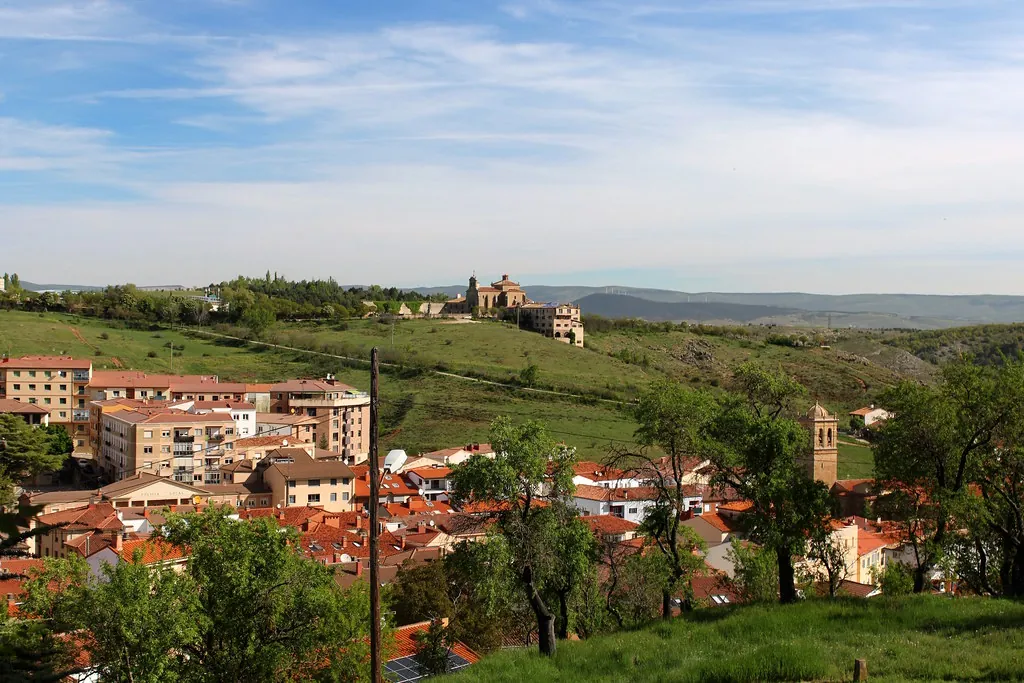
Pedrosa is not pretty in the postcard sense. The houses are the colour of dry earth, their stone walls two metres thick, the mortar washed the same pale ochre as the soil. Narrow lanes run north-south to funnel the Duero’s evening breeze; east-west streets are blocked by blank gables to keep out the winter cierzo wind that barrels down the meseta. Practical, not romantic. Yet the geometry works. Stand in the little Plaza de San Esteban at seven in the evening and the heat drains away so fast you can feel the temperature drop on your forearms.
The church tower keeps watch over 500 souls, a few more at weekends when families drive in from Valladolid for asado lunches. Children still race round the tower on bicycles without having to brake for traffic; the last through-liner was re-routed when the A-1 motorway opened in the 1970s. Residents claim the silence returned overnight. They also claim the wine got better, because tankers no longer shook the barrels in the underground cellars. Both statements sound about right.
Underground cathedals, above-ground vines
Beneath almost every house is a zarcería, a sandstone cave hacked into the hill during the 16th and 17th centuries. Constant twelve-degree air made them perfect for slow fermentation before stainless steel arrived. Many families still lower a barrel each autumn through a trapdoor in the kitchen floor; the smell inside is damp rock, candle smoke and the sweet ghost of last year’s grapes. Two wineries—Pago de los Capellanes and Bodegas Rodero—have turned the concept into architecture. Their new cellars are tunnels bored thirty metres deep, lit like art galleries, the walls lined with French oak that costs more than most villagers earn in a year.
Visits run at noon and 4 p.m. most weekdays, but only if you book 48 hours ahead. The standard tasting at Pago de los Capellanes (€18) pours four reds and includes a plate of local cheese strong enough to make a vegetarian reconsider. Rodero charges €15 and throws in a tempranillo rosé that drinks more like a light Pinot. Neither tour is long—45 minutes, an hour if the guide is chatty—yet both finish with the same advice: drive slowly through the vines afterwards, the roads are narrow and the abuelos walk three abreast.
The calendar that matters
January is pruning, fingers numb despite sheepskin gloves. March brings bud-burst, the hills suddenly flecked with lime-green. By late May the shoots are long enough to catch the wind, so crews spend the summer tying them to wires at knee-height so the tractor can pass. August fiestas (15-16) halt everything for 36 hours: the main street becomes a fairground, the only road through town closes, and parking is a 500-metre shuffle from the football pitch. If you dislike brass bands that play until three, stay in nearby Aranda and visit in the morning.
September is harvest. The cooperative at the edge of the village hums 24 hours a day; the air smells of crushed grapes and diesel. Visitors are welcome to watch, but photographs cost a smile and a handshake—this is work, not theatre. October sees the first tortilla made with new-oil potatoes; locals argue over which bar serves the best even though there is only one bar open mid-week. November brings san martín, the day the first wine of the year is broached. By December the vines are skeletons again, and on the 26th the church bell rings for San Esteban, patron saint, another revolution complete.
Where to sleep, where to eat—elsewhere
Pedrosa itself offers no hotels and, outside fiestas, no dinner. The nearest beds are ten minutes away in Aranda de Duero: Hotel Reyes Católicos has underground parking and staff who answer emails in English; Hotel & Spa Aranda throws in a pool you’ll appreciate after a dusty afternoon among the vines. Rural house Los Jerónimos in Roa is a stone cottage with beamed ceilings and a kitchen big enough to cook the vegetables you’ll buy from the Saturday market in Aranda—peppers the size of cricket balls, garlic still plaited by hand.
Serious eating happens in Aranda’s wood-fired ovens. Asador de la Villa and Mesón de la Villa both roast Segovian suckling lamb (lechazo) at 220 °C for three hours until the rib bones can be snapped between thumb and forefinger. A full portion (€24) feeds two; order a half if you still plan to taste wine afterwards. In Pedrosa the single bar, Casa Toni, opens at seven for strong coffee and a pincho de morcilla that costs €2 and ruins every British black pudding forever. Lunch is whatever Toni’s wife feels like making—usually sopa castellana thick with bread and smoked paprika, followed by stewed chorizo that stains the plate orange. Cash only, no menu, no rush.
A landscape you drink rather than photograph
The Ribera plateau looks flat until you walk it. Each vineyard sits on a slight swell, the rows running north-south so the sunrise warms one flank and the sunset cools the other. Soil changes within metres: gravel near the river holds heat and gives powerful fruit; higher up, chalk reflects light and keeps acidity. Winemakers talk about these differences as if they were suburbs of a city. Drive the dirt tracks between estates and you’ll see the same hill described as “our left bank” or “the right bank”, Bordeaux terminology borrowed by people who have never seen the Gironde.
There are no dramatic viewpoints, no limestone cliffs plunging into the Duero. Instead the drama is in the glass: a 2016 reserva that smells of violet and graphite, tastes of damson and sweet tobacco, finishes with the sort of fine-grained tannins British drinkers usually pay Bordeaux prices to obtain. The fact that the bottle retails for €18 at the cellar door feels almost indecent.
The catch in the vineyard
Rain is the enemy. One July storm can split every berry and wipe out a vintage; hail is worse. In 2017 a 20-minute cloudburst turned healthy vines into bruised sticks and cost the village a third of its crop. Climate change nudges harvest earlier—mid-September now, not October—so workers race against fermenting grapes in 30-degree heat. Tourism helps balance the books, yet too many coaches would shatter the very silence that lets visitors hear the must bubbling in the tanks. The mayor, elected unopposed, spends her days weighing road-widening against the risk of turning Pedrosa into a wine theme-park. So far the tractors still outnumber rental cars, but the margin narrows each year.
Come anyway, preferably in late April when the almond blossoms overlap with the first bright leaves, or in mid-October when the air smells of grape skins and wood smoke. Walk the lanes at dusk, glass of young crianza in hand, and listen. You’ll hear the river, a dog barking two fields away, the soft pop of pruning shears being closed for the night. That is Pedrosa’s soundtrack—no hidden anything, just a small place doing what it has always done, a fraction slower than the world outside.