Full Article
about Pedrosa De Rio Urbel
Ocultar artículo Leer artículo completo
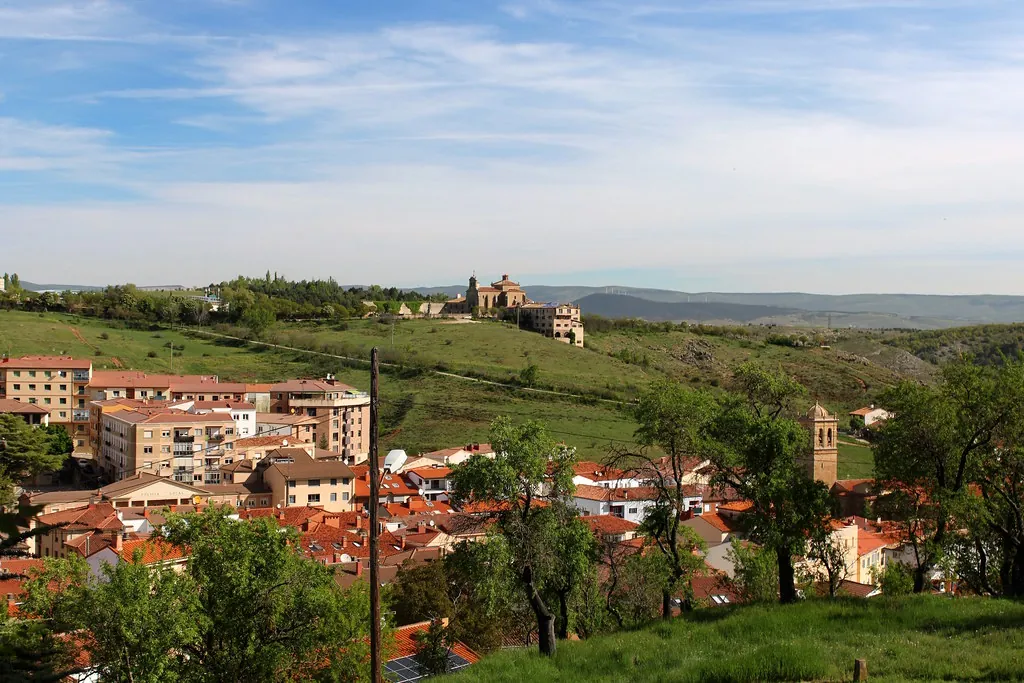
The cereal fields stop abruptly at Pedrosa de Río Ûrbel. One moment you're driving through biscuit-coloured páramo, the next the land drops into a narrow green corridor where the river has carved a slot just wide enough for a village, allotments and a row of poplars. At 950 m above sea level this is the Meseta's final shrug before the Cantabrian mountains, and the contrast is immediate: cool air, the smell of water and a horizon that no longer feels infinite.
Stone, adobe and the smell of wet soil
Pedrosa isn't pretty in the postcard sense. Houses are bulky, built for animals and machinery as much as people, their ground-floor arches wide enough for a tractor. Granite gives way to adobe higher up, the colour of dry tobacco, and roofs sag like well-worn coats. What saves the place from bleakness is the river: the Úrbel runs fast enough to make a proper sound, and its banks are overgrown with willow and black poplar—rare shade in a province that counts every tree.
Walk the single paved lane at dusk and you'll pass half a dozen vegetable plots still watered by hand, the soil almost black compared with the pale dust of the surrounding plain. Lettuce, spinach and broad beans grow here well into November; frost comes early but the valley traps enough daytime heat to keep the growing season alive. If someone offers you a handful of fresh peas, take them—they taste of river mist rather than irrigation.
Walking without waymarks
There are no signed trails, which suits the handful of British visitors who arrive each year looking for exactly that. A farm track leaves the top of the village, crosses the railway line to Santander and climbs onto the meseta proper. In May the wheat is knee-high and larks go up like fireworks; by July the stalks have turned parchment-yellow and the only movement is harriers quartering the field edges. Allow two hours for the 6 km loop back to the bridge—longer if the wind is up, because the plateau saps more energy than the gradient suggests.
Downstream the valley narrows to a limestone gorge where griffon vultures nest. A rough path follows the river for 3 km, then peters out at an abandoned watermill. Take swimming things if you don't mind cold water: there's a pool below the mill race that locals use when the afternoon hits 30 °C. Otherwise turn round and retrace your steps—phone reception dies at the first bend, so downloading an offline map is wise.
What you'll eat (and when you'll eat it)
Pedrosa itself has no restaurant, café or shop. The last grocery closed in 2018; the nearest loaf of bread is 20 minutes away by car in Melgar de Fernamental. Most visitors book half-board in one of the four village houses that take paying guests. Breakfast is toast, olive oil and tomato purée from a jar—surprisingly good once you add salt. Dinner is served at 21:30 sharp: roast lechazo (milk-fed lamb) if it's Sunday, pork shoulder with patatas ali-oli on weekdays, and queso de Burgos for pudding, the texture closer to ricotta than to anything British. Vegetarians get tortilla de patatas and a look of quiet pity.
If you want choice, drive to Melgar. Casa Gaspar does a three-course menú del día for €14; the wine is drinkable and they'll swap the lamb for grilled hake if you ask. Don't expect vegetables beyond chips and a few roasted peppers—this is wheat-and-meat country.
Getting there, staying warm, finding the loo
Fly to Bilbao or Santander with Ryanair or easyJet; either airport is 90 minutes away by hire car. From Bilbao take the A-8 west to Torrelavega, then the A-67 south until the junction for Los Corrales de Buelna. After that it's minor roads, single-lane bridges and the occasional cow. Public transport stops at Burgos, 55 km south; a taxi from there costs around €80, so unless you're in a group, renting a car is the only sensible option.
Accommodation is limited. Casa Rural La Higuera sleeps six, has a wood-burner and allows dogs (€90 per night for the house). Two newer flats in the next hamlet share a pool but you'll need to drive to reach any walks. Winter lets are cheap—€50 a night in February—but the village sits in a frost pocket; temperatures of –8 °C are common and the water pipes freeze. Come in late April instead when nights are cool but the verges are full of purple bugloss and the wheat has turned electric green.
Bring cash. Most houses don't take cards, and the nearest ATM is back on the main road. Phone coverage is patchy inside the valley; stand on the church steps if you need four bars. The church itself is usually locked, but the key hangs on a nail inside the mayor's office—knock first.
When the wind forgets to stop
Pedrosa's biggest drawback isn't the lack of shops—it's the wind. The meseta funnels north-westerlies straight down the valley, and they can start at noon and still be rattling the shutters at two in the morning. Lightweight walking poles help you stay upright on exposed ridges; a buff stops grit getting between your teeth. In summer the same wind is welcome, keeping temperatures in the high twenties when Madrid is roasting at 38 °C. Either way, pack a jacket even in July.
A village that doesn't need you
What makes Pedrosa worth the detour is precisely its indifference to tourism. Nobody will try to sell you artisan cheese or offer a "rural experience". Old men still meet at the petrol pump to talk rainfall, and the evening paseo follows the same 300-metre circuit it has for decades. Join it once and you'll be nodded at; join it three evenings running and someone will ask, politely, which field you bought. Explain that you're only visiting and they'll look relieved—no one here wants to become the next San Vicente de la Sonsierra.
Come for two nights, walk the gorge, eat lamb you didn't have to cook and leave before the silence becomes oppressive. Pedrosa de Río Úrbel will carry on growing vegetables, cutting hay and arguing about water rights long after your flight home has landed, and that's exactly how it should be.