Full Article
about Pedrosa Del Principe
Ocultar artículo Leer artículo completo
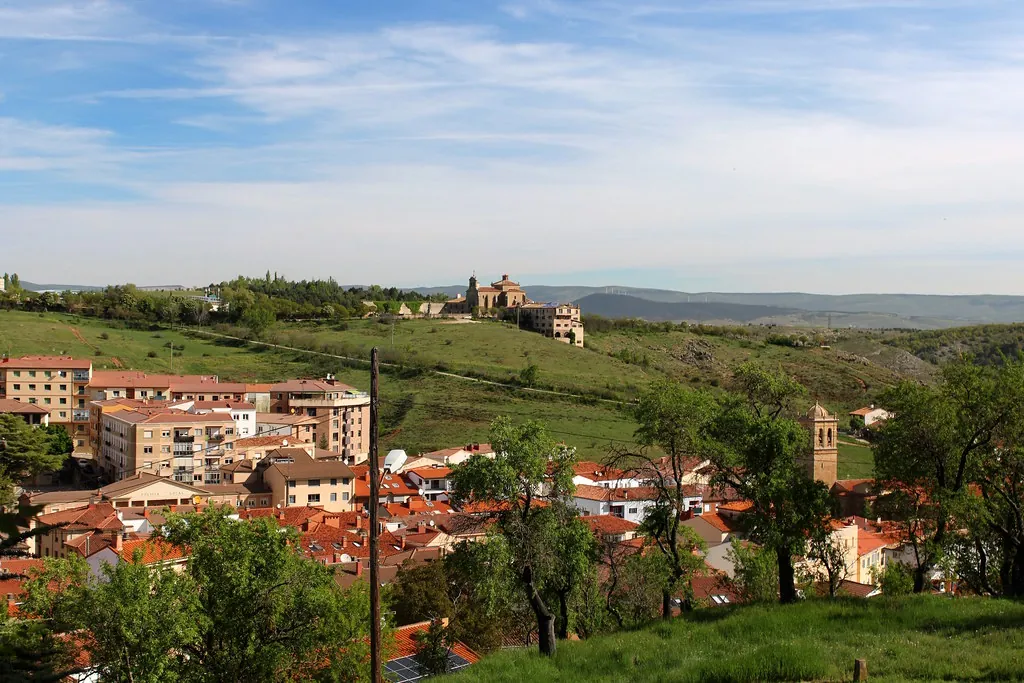
The church bell strikes midday and the only other sound is a tractor ticking over behind a low stone wall. Pedrosa del Príncipe, halfway between Burgos and Palencia on the endless cereal plateau, has no souvenir shop to duck into, no terrace full of Instagrammers, not even a cash machine. What it does have is a front-row seat to the slow-motion calendar that governs wheat, sheep and the few human families still prepared to live by it.
A grid drawn for grain
Stand on the village’s single traffic-calmed road at dawn and the view explains everything. Rectangular fields, the colour of pale ale in April, run to every horizon. There are no hills to break the wind, only the occasional poplar line marking a stream. At 870 m above sea level the air is thin enough to sharpen the light; photographers call it “Castilian contrast” and farmers simply call it dry. The soil is fertile, though, so long as you are patient: one wheat cycle, one barley cycle, then fallow. The same rhythm has looped since the Reconquista.
Stone houses grow out of this earth the same way crops do. Adobe bricks, the colour of the fields, are topped with terracotta tiles fired in local kilns a century ago. Timber gates—most still hand-hewn oak—lead into corral-style courtyards where hens pick between geraniums. A handful of façades carry worn coats of arms: proof that minor hidalgos once lived here, funded by wool rather than warfare. Nobody has touched the stonework for decades; restoration in Pedrosa means replacing a missing tile before the winter rains, not sand-blasting history away.
What passes for a centre
The parish church of San Juan Bautista squats at the highest point, its square tower more fortress than belfry. Step inside (the door is usually unlocked only from ten until noon) and you get the full evolution of Castilian taste in one gulp: pointed Gothic arches holding up a barrel vault painted in 1763 with sky-blue clouds that look suspiciously like sheep. The retable is pure mid-Renaissance swagger, gilded pine rescued from a fire in 1931 and still smelling faintly of beeswax. No multilingual boards, no donation box shaped like a credit-card reader. Just a printed A4 sheet asking visitors to close the door against swallows.
From the church doorway the village unrolls in four short streets named after the trades that have vanished—Calle Herreros (smiths), Calle Zapateros (cobblers). Total walking time, end to end: seven minutes. Yet the details keep you longer: a stone trough now planted with roses, a 1950s enamel sign for extinct brand “Negrito” soda, a wooden balcony propped up with an iron sickle repurposed as a bracket. Nothing is staged; the props simply haven’t been thrown away.
Lunch at the only bar that bothers
Mesón La Plaza opens at 13:30 sharp, shutters flung back to reveal a single room with a cast-iron stewpot the size of a tractor wheel. The menu is a laminated sheet of six dishes; on weekdays three are already crossed out. What remains is reliable: sopa de ajo (garlic soup with poached egg), judiones de La Bañeza (buttery giant beans stewed with morcilla), and lechazo—milk-fed lamb roasted in a wood-fired clay oven until the skin forms a brittle parchment. A quarter portion feeds two Brits comfortably; ask for “un cuarto” and you will still be brought half a kilo of meat. Price: €18 per person with a carafe of sharp young tempranillo. Booking is polite rather than essential except on Sunday after mass.
Vegetarians survive on tortilla and salad, though the lettuce comes dressed with local olive oil so fruity it almost counts as pudding. Pudding itself is usually absent; instead the owner pours chupitos of homemade orujo that tastes of aniseed and regrets. The television above the bar flickers through the lunchtime lottery draw; conversation stops only when the numbers echo the age of someone’s grandfather.
Walking without waymarks
South of the last house a farm track heads dead straight towards a stand of poplars 3 km away. This is the Canal de Castilla—an 18th-century waterway built to float wheat to the coast, now a reed-fringed footpath. Turn left and you can follow it for 11 km to Melgar de Fernamental, crossing two lock-keeper’s cottages turned into bird hides. The going is flat, the surface hard-packed clay; trainers suffice. Spoonbills and marsh harriers arrive in April, and by late May the verge is loud with golden orioles. Take water: there is no kiosk, no fountain, and the only shade is the occasional bridge.
North of the village the land folds gently into the Arroyo de Valdeteja, a seasonal stream that smells of mint after rain. A circular track of 7 km skirts three ruined watermills; their millstones lie propped against doorframes like abandoned dinner tables. The climb out is 60 m—enough to feel thigh muscles, nothing more. Mid-week you can walk all morning and meet one dog-walker; at weekends Burgos families arrive with mountain bikes and the trail feels like the M25.
Winter versus summer bargains
January brings razor wind and skies the colour of pewter. Daytime highs nudge 6 °C, nights drop to –5 °C, and the stone houses breathe cold. Electricity is expensive; villagers still burn almond shells in small cast-iron stoves. Visit then and you will be offered a seat directly above the vent, handed a blanket and expected to keep your coat on. Hotel occupancy—there are two small guesthouses—hovers around 15 %. Prices fall to €35 for a double with breakfast, but cafés may simply shut if the owner decides the chimney needs sweeping.
July is the opposite extreme. Temperatures touch 34 °C by 15:00, shade is scarce, and the tar between cobbles softens like toffee. The fiestas arrive around 25 July: brass bands, foam parties for toddlers, and a procession where the statue of Santiago is carried at a jog while fireworks crack overhead. For three nights the village triples in population; spare rooms are rented out at €80 and the bakery opens at 05:00 to supply bocadillos for hung-over pilgrims. If you want silence, come the week after; if you want atmosphere, book early and bring ear-plugs.
Getting here, getting out
There is no railway. From London fly to Bilbao (2 hrs), collect a hire car and drive south for 90 minutes on the A-68 and A-231—toll-free, scenery improving after Miranda de Ebro when the plateau lifts like a slow-motion stage curtain. Alternatively, ALSA coaches run hourly from Madrid’s Estación Sur to Burgos (2 hrs 30 mins); from Burgos bus station one daily service reaches Pedrosa at 17:15 after 55 minutes of wheat and sunflowers. Miss it and a taxi costs €45.
Petrol is cheaper than in Britain but village shops close for siesta 14:00–17:00; fill up before arrival. Mobile signal is 4G on the main street, one bar on the canal path—enough to call home, not to stream box-sets.
When to press stop
Stay until the sun drops behind the grain silo and the storks clatter back to their rooftop nests. The light turns the stone walls the colour of digestive biscuits; swifts replace tractors in the acoustic background. There is no souvenir to buy, no sunset viewpoint signposted, no cocktail list. Instead you get the small satisfaction of having spent a day where the 21st century feels like an optional extra rather than the default setting. Turn the key in the hire car tomorrow, rejoin the autopista, and within an hour Pedrosa del Príncipe will have shrunk to a smudge on the windscreen—precisely the kind of absence that, for some travellers, counts as a worthwhile discovery.