Full Article
about Peral De Arlanza
Ocultar artículo Leer artículo completo
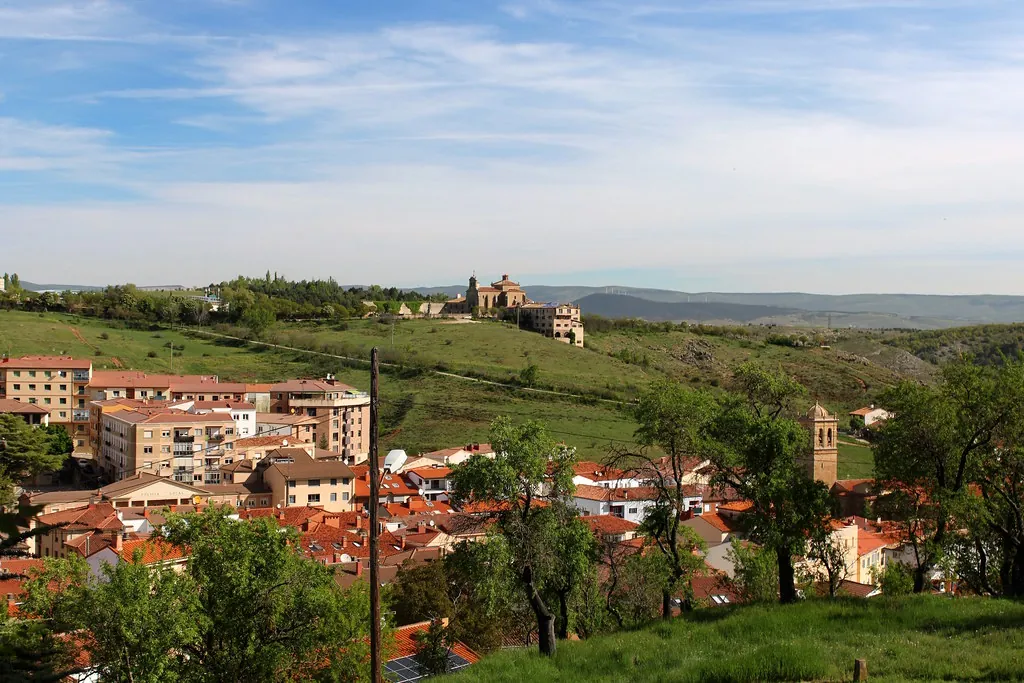
The church bell strikes nine and the only other sound is wheat rustling in the breeze. At 900 metres above sea level, Peral de Arlanza's morning air carries a sharpness that makes even summer mornings feel distinctly autumnal. This tiny Burgos village—home to barely 170 souls—sits suspended between earth and sky on Spain's central plateau, where the Sierra de la Demanda's foothills flatten into endless cereal fields.
Stone, Timber and the Scent of Thyme
Limestone walls warm slowly in the early sun. Timber beams, darkened by centuries of weather, project from upper storeys like eyebrows over narrow lanes. The architectural rhythm here hasn't altered much since medieval farmers rebuilt after a Castilian civil war: ground-floor stables converted into garages, upper living quarters still reached by external stone stairs. Doorways show genuine age—wooden lintels sag, ironwork corrodes into abstract patterns, and ancient lock mechanisms fascinate anyone used to Yale cylinders.
Walk past the 16th-century parish church and you'll spot cylindrical dovecotes punctuating rooflines. Some stand perfectly restored, others tilt at angles that would give health-and-safety officers nightmares. These pigeon houses once supplied meat and fertiliser; today they provide nesting space for kestrels that hunt the surrounding steppe. Bring binoculars and you might also see booted eagles riding thermals above the wheat, or red-billed choughs tumbling around the ruined watch-tower on the hill—remnants of a ninth-century fortification that warned of Moorish raiders.
The River Arlanza murmurs two kilometres away, too distant to moderate the climate but close enough to irrigate vegetable plots. Afternoons can turn surprisingly hot even in May; by dusk the temperature plummets, so pack layers regardless of season. British visitors often compare the landscape to East Anglia—only with added altitude and the occasional griffon vulture.
Silence Broken by Tractors
Peral functions on agricultural time. When tractors head for the fields at dawn the village briefly rumbles; by mid-morning silence returns, broken only by swifts screeching around the church tower. There's no supermarket, no cash machine, no souvenir shop—just a single bar that doubles as grocery, social club and informal tourist office. Opening hours follow demand rather than clocks: if no one's drinking, María Angeles locks up early.
This absence of infrastructure is either liberating or terrifying, depending on your travel style. Draw euros in Lerma (12 km) before arrival. Stock up on water and snacks before siesta descends at 14:00. Mobile reception is patchy on Vodafone and EE; download offline maps and save María Angeles' Wi-Fi password when she offers it. The nearest doctor is 20 minutes away in Covarrubias—factor that in if you have brittle ankles or hay-fever that responds badly to cereal pollen.
Lamb, Blood Sausage and Early Nights
Spanish villages this size rarely sustain restaurants, but food appears when needed. Sunday lunchtime is the reliable moment: locals pile into the bar for lechazo—milk-fed lamb roasted in a wood-fired oven until the skin crackles like parchment. Portions are designed for farm labourers; two people can usually share a quarter. Morcilla de Lerma accompanies it, sweetened with onion and spice so even British palates who fear black pudding finish their slice. Wash it down with a chilled rosado made from Tempranillo grapes grown along the Arlanza valley; lighter than Rioja reds, it suits the altitude's thin air.
Weekday hunger requires forward planning. The bakery in neighbouring Hortigüela opens at 07:00 and sells out of bread by 10:30. Buy a bag of bizcochos NO&EL—simple sponge fingers that taste like childhood—and a brick of queso de Burgos, a soft ricotta-like cheese that partners surprisingly well with strawberry jam from your suitcase. Evening meals mean either self-catering or a 15-minute drive to Covarrubias, where mesones serve roast meats until 22:00. After that, the village belongs to hedgehogs and the night sky's spectacular Milky Way.
Romanesque Footpaths and the Smell of Resin
Peral sits at the junction of several unsignposted tracks that once linked medieval monasteries. Head south along the farm road and you'll reach the ruins of San Juan de Ortega in 45 minutes; stone arches protrude from ivy like half-forgotten bones. Cyclists can follow quiet tarmac lanes through undulating wheat seas—gradients rarely exceed 5%, making the area perfect for leisure riders who find the Pyrenees intimidating. Mountain bikers have tougher options in the nearby Sierra de la Demanda, though you'll need suspension: these tracks double as ranch roads and are littered with fist-sized rocks.
Spring brings carpets of purple crocus and the resinous scent of sun-warmed pine. Autumn turns stubble fields bronze and triggers migration; stand still near the river and you may hear cranes bugling overhead on their way to Extremadura. Winter is surprisingly bright—snowfall is light and melts within days—but night temperatures drop below freezing. Summer offers flawless skies but also prowling mosquitoes at dusk; repellent is essential unless you fancy insomnia.
When the Village Remembers Itself
August transforms everything. The fiesta mayor drags descendants back from Bilbao, Madrid, even Manchester. Suddenly there's a sound system in the square, competing with quad-bike engines and teenage Spotify playlists. Roast-lamb smoke drifts above rooftops; neighbours you've never met press plastic cups of sangria into your hand. The population swells to maybe 500, still tiny yet enough to make the lone cash register in the bar overheat. Book accommodation early—there are only two rental cottages—or time your visit for the quieter shoulder seasons when you can hear your own thoughts.
Leave with the first light and you'll spot dew beading spider webs stretched between thistle heads. The wheat glows pink; a covey of partridges scuttles across the track. By the time the sun clears the horizon, Peral has settled back into its customary hush, as if the previous night's laughter were only a dream. The road out passes ruined farmsteads whose roofs collapsed decades ago; stone walls remain, outlining lives that once measured wealth in hectares and rainfall. Keep driving and Burgos appears 45 minutes later, cathedral spires reminding you that history here is measured in centuries, not seasons.
Practicalities slip into place afterwards. Fill the tank before Sunday. Carry coins for the Lerma toll. Expect tyre noise on the N-234 that sounds deafening after village silence. And accept that somewhere between wheat and sky, Peral has reset your internal clock to a slower, quieter tick—one that Heathrow's baggage reclaim will try, and fail, to erase.