Full Article
about Pineda Trasmonte
Ocultar artículo Leer artículo completo
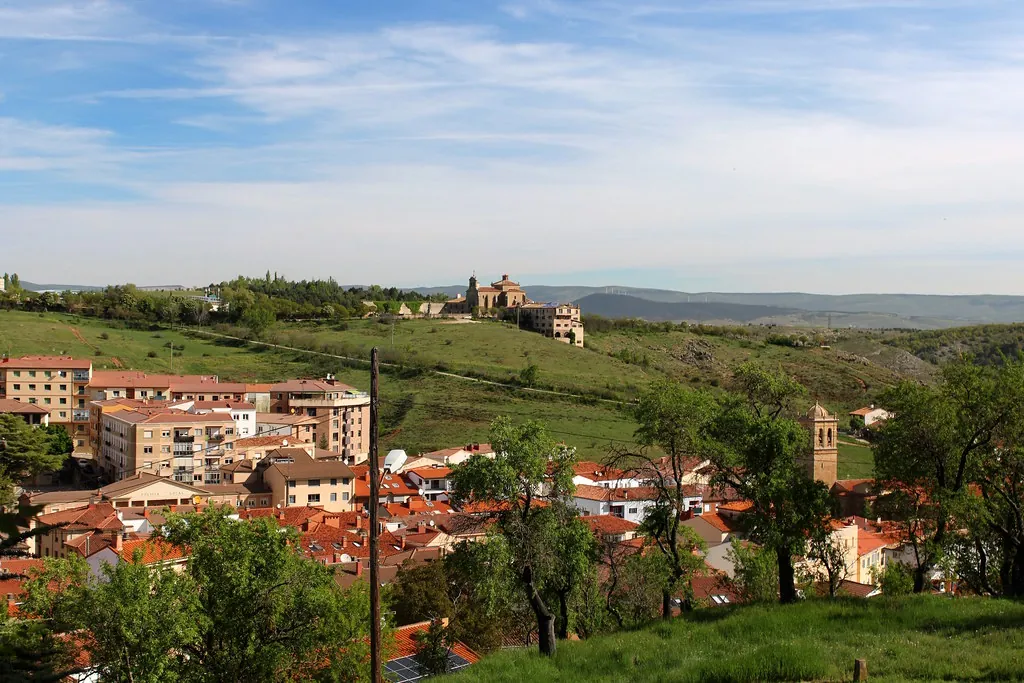
At 950 metres above sea level, Pineda Trasmonte sits high enough that the air thins noticeably when you step from the car. The village rises from the wheat plains of northern Castilla y León like a ship from a golden sea, its stone houses clustered around a church tower that has tracked the seasons since the 16th century. This isn't a place that announces itself. You'll miss the turning if you blink, and that's rather the point.
The Village That Time Didn't Forget—It Just Ignored
Five hundred souls, give or take, live here year-round. Numbers swell briefly in August when former residents return for the fiestas, parking four-by-fours in the plaza and arguing good-naturedly about football. The rest of the year Pineda Trasmonte gets on with the business of being a working village: tractors rumble out at dawn, the baker's van does its rounds, and elderly men in flat caps gather outside the Bar Centro to dissect the grain prices over small glasses of red.
The architecture won't make coffee-table books. Houses are built from local limestone the colour of weathered bone, roofed with terracotta tiles that turn mossy in winter. Some stand renovated with double-glazed windows and satellite dishes; others slump gently, their wooden doors sagging on wrought-iron hinges thick as a wrist. It's honest building, designed for extremes: thick walls keep interiors cool during 35-degree July afternoons and hold heat when January nights drop to minus eight.
Wander fifteen minutes in any direction and you're among wheat fields that stretch to a horizon curved by altitude. Spring brings an almost Irish green, brief and startling before the sun bleaches everything to parchment. Autumn is the photographer's friend: stubble fires send blue smoke drifting at dusk, and the low light turns stone walls honey-coloured. Winter strips the landscape to essentials—earth, sky, and the distant purple silhouette of the Montes de Ayosa. Come after snowfall and the only sounds are your boots crunching and the occasional church bell.
Walking, Eating, and the Art of Doing Very Little
Proper hiking trails don't exist here; instead you'll find agricultural tracks used by farmers for centuries. One leads south-east towards the ruined ermita of San Pedro, its roof long gone but walls solid enough to shelter sheep. The walk takes forty minutes across flat ground—easy going, though the altitude means you'll feel any exertion more than usual. Take water; the sun is deceptively strong even in October.
Food follows the seasons with stubborn Castilian logic. Spring means tender lechazo—milk-fed lamb roasted in a wood-fired oven until the skin crackles like pork crackling. Locals eat it sprinkled with salt and nothing else, tearing chunks from the joint with bread to mop up juices. Summer brings gazpacho followed by queso de Burgos, a fresh cheese resembling ricotta but tangier, served with honey from village hives. Autumn is game season: partridge stewed with bay leaves and a splash of the local Arlanza red, the wine light enough to drink at lunch yet structured enough to stand up to rich meat.
Don't expect menus in English. The Bar Centro offers three choices daily, written on a chalkboard propped by the door. A two-course lunch with wine costs €12—cash only, no contactless. They open at 13:30 sharp; arrive at 15:00 and you'll eat alone while the staff mop floors. Evening service starts at 20:30, though most villagers eat at home, so the place empties by 22:00 when television news finishes.
Night Skies and Silent Streets
Darkness falls fast at this height. By 22:30 in midsummer the temperature has dropped ten degrees from the afternoon peak; in December it's well below freezing. Street lighting consists of four sodium lamps that cast amber pools every hundred metres. Walk beyond them and you'll understand why the village keeps dogs—every noise carries, amplified by the clear air. Look up instead: zero light pollution means the Milky Way appears as a smudge of powdered sugar across black velvet. Shooting stars are so common you stop pointing them out after ten minutes.
Silence here has texture. At 02:00 you might hear a distant tractor starting as a farmer heads out to check irrigation. Otherwise nothing—no traffic, no clubs, no dawn chorus because sparrows haven't discovered the place. If you crave nightlife, Aranda de Duero lies twenty-five minutes west with late bars and a Saturday disco that closes reluctantly at 04:30. Most visitors prefer another glass of wine on their rental terrace, wrapped in a jacket against the night chill.
Getting There, Staying Warm, and Other Practicalities
Fly to Santander with Ryanair from Stansted or Bilbao with EasyJet from Heathrow; both airports hand you onto fast motorway south. The final approach leaves the A1 at Lerma, winding through sunflower fields for twelve kilometres until Pineda appears suddenly on a low ridge. Hire cars are essential—public transport means one bus daily from Burgos at 07:15, returning at 14:00 sharp. Miss it and a taxi costs €70.
Accommodation is limited to three self-catering houses and a four-room guesthouse above the bakery. None have reception desks; keys wait under flowerpots or handed over by the baker's wife who speaks precisely three English words: "Hello, welcome, breakfast." Prices run €60–€90 per night year-round. Heating is included but old stone walls drink energy—pack thick socks even in May. Wi-Fi exists but drifts in and out like a bored teenager; download offline maps before arrival.
Bring cash. The village has no ATM; the nearest is in Lerma, ten kilometres away and closed for siesta between 14:00 and 17:00. Shops follow the same rhythm: open 09:00–14:00, then 17:00–20:30. Sunday everything shuts except the church, whose Mass at 11:00 doubles as social calendar. Non-Catholics are welcome but dress modestly—shorts and vest tops draw stares.
When to Come, When to Stay Away
Late April to mid-June offers the kindest introduction: days warm enough for T-shirts, nights cool enough for sleep, fields green before the sun scorches them gold. September repeats the trick with added grape harvests and mushroom forays in nearby pine woods. July and August bake; sightseeing is best done before 11:00 or after 17:00, with a long lunch and siesta between. Winter is brutal but beautiful—bright blue skies, snow on roof tiles, and a stillness broken only by church bells. Come then only if you enjoy your own company and remember that stone cottages take two days to warm up properly.
Leave the village for day trips and you discover why the location works. Santo Domingo de Silos monastery, famous for Gregorian chant, sits thirty-five minutes south through landscapes that starred in the film The Good, the Bad and the Ugly. The Arlanza wine route threads past Romanesque churches and family bodegas offering tastings at €5 a head—no appointment needed if you arrive before noon. Burgos city, with its Gothic cathedral and excellent tapas scene, is forty minutes north on the motorway.
Pineda Trasmonte won't change your life. It offers no epiphanies, sells no fridge magnets, and closes early. What it does provide is a calibration point: a place where the horizon is still wide enough to remind you how small, and how lucky, you are. Bring a book, good walking shoes, and an appetite for lamb. The village will handle the rest.