Full Article
about Quemada
Ocultar artículo Leer artículo completo
The church bells strike eleven and every head turns. Not towards the tower—towards the road. A Massey Ferguson rumbles past the bar where half the village seems to have gathered for a mid-morning coffee, conversation pausing only while the driver lifts two fingers from the steering wheel. In Quemada, this counts as the morning rush.
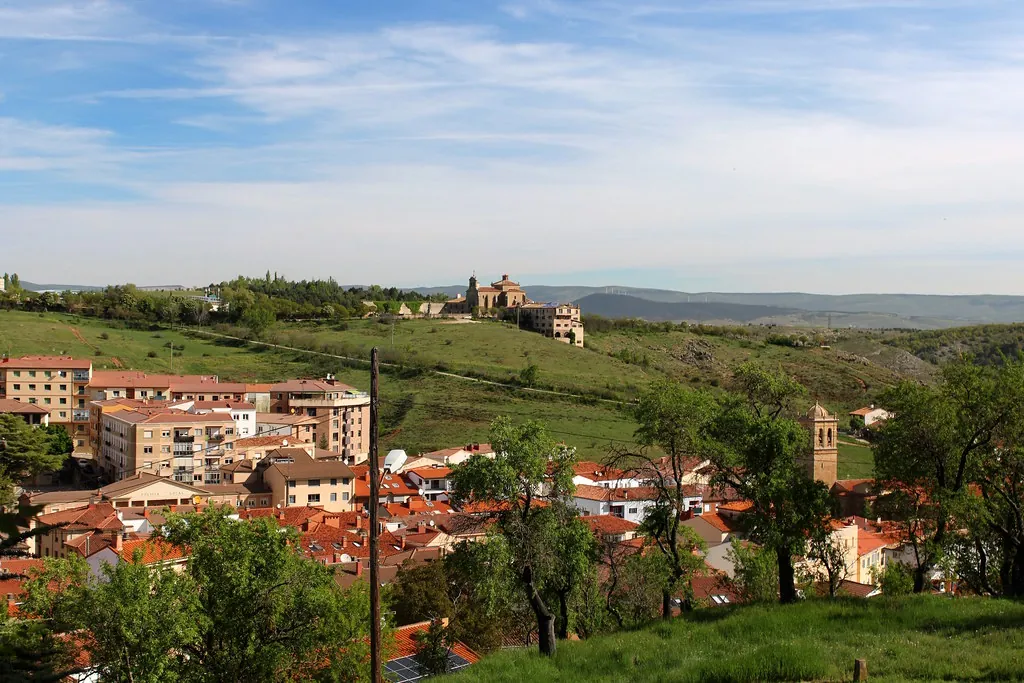
Twenty minutes north-west of Burgos city, the CV-905 spur road peels off the arterial N-120 and begins to climb through wheat plains that look level until you notice the church tower shrinking in the mirror. At 940 metres above sea level, the village sits exactly where the cereal plateau starts to fracture into the low limestone ridges that announce the Cordillera Cantábrica. The change is subtle but decisive: oak scrub replaces irrigated maize, the wind picks up, and the horizon gains a serrated edge.
Quemada’s name—literally “burnt”—is older than the stone houses themselves. Local historians link it to medieval border skirmishes and the seasonal burn-offs once used to clear pasture for transhumant flocks. The sheep are long gone, yet the habit of looking skyward before striking a match remains. Fire risk boards still appear at the village edge every June, graded from green to ominous burgundy. When the colour hits red, the barbecue packs stay in the shed and even the older farmers postpone their evening cigarette.
A Parish Church That Grew Like Topsy
The Iglesia de San Juan Bautista started life around 1200 as a single Romanesque nave with a squat tower—serviceable, defensible, built from the same honey-coloured limestone that pokes through the surrounding wheat. Each century stapled on its own addition: a wider choir in the 1500s, a Baroque retablo gilded with American silver, then a neo-classical portico that looks almost embarrassed to be there. Inside, the cool darkness smells of candle wax and damp stone; swallows nesting in the eaves provide the only soundtrack during weekday visits. The caretaker, Julián, keeps the key on a length of baling twine and is usually found opposite in the Bar Centro. A donation of two euros covers lightbulb money; another euro buys a sheet that identifies the assorted Virgin Marys, though half the names have been corrected in biro by parishioners who remember when each statue was repainted.
Walk the ring of lanes that circle the church and you can read Quemada’s economic history in the masonry. Ground-floor windows shrink to slits on older houses—medieval tax was levied on aperture size. A 1920s villa sports Art-Dec wrought-iron balconies paid for with Cuban remittances. The newest builds use hollow concrete blocks and stick-on stone cladding; they keep the traditional terracotta roof tiles only because the planning office insists. Scaffolding appears, disappears, then appears again two doors down. Nothing happens fast, but nothing stays still for long either.
Walking Papers: Heading for the Horizon
Three waymarked paths strike out from the village, all following the ancient drove-roads that once linked summer and winter pastures. PR-BU 84 heads south-east for 7 km through a corridor of holm oaks to Orbaneja Riopico, where a bar serves plates of morcilla the size of cricket balls for €4. The route is flat, stony, and mercilessly exposed; carry more water than you think sensible—there is no shade between kilometre posts two and six. Spring brings emerald wheat and nesting skylarks; by July the same fields have turned the colour of digestive biscuits and the only movement is the shimmer of heat haze.
A shorter 3 km loop, the Senda del Cerco, skirts the edge of the Arroyo de las Ollas gorge. Stonechat and zitting cisticola flick between thorn bushes; if you start an hour before sunset you’ll meet Angel and his two spaniels driving home a remnant flock of churro sheep. He’ll pause for a chat, fill you in on rainfall figures to the nearest millimetre, and warn that the path “gets ambitious” after rain. Trust him—clay plus gradient equals skates.
What Arrives on the Daily Lorry
Quemada has neither bakery nor chemist. At 08:30 the white refrigerated lorry of Pan y Más pulls into Plaza de España, horn blaring. Housewives, still in slippers, queue for yesterday’s baguettes delivered from a factory in Burgos; the driver also sells kitchen foil and lottery tickets, an efficiency that would make a Tesco aisle planner weep. Produce from the surrounding allotments fills the gaps: bunches of Swiss chard tied with twist-ties, eggs stamped with the seller’s name, honey decanted into worn Rioja bottles. If you’re self-catering, stock up before Friday afternoon—nothing moves on Saturday that isn’t fuelled by brandy and cards.
Meals centre on what the land can survive without irrigation. Roast suckling lamb—lechazo—arrives at table pale, crisply glazed and dissected with the edge of a plate, no knife required. A full portion feeds two hungry walkers and costs around €22; half portions are not advertised but reluctantly granted. The local morcilla de Burgos is surprisingly light, rice-based rather than onion-heavy, best eaten lukewarm so the fat doesn’t congeal. Vegetarians get beans—specifically, alubias pintas from nearby Pedrosa del Príncipe, stewed with bay leaf and plenty of garlic. Wine comes from the Arlanza valley, young and fruit-forward, poured into thick glass tumblers that make ABVs impossible to guess. You will wobble on the walk home.
Fiestas Governed by the Harvest Clock
San Isidro, 15 May, is less procession than agricultural trade fair minus the trade. Tractors polish up, straw bales become seating, and the priest blesses seed drills as well as souls. Evening mass finishes early so the village band can march everyone to a marquee where €10 buys a plate of cocido and half a bottle of tinto. Fireworks are modest—rockets left over from New Year—because dry stubble waits in the fields.
The serious party lands on the weekend nearest 24 August, when Quemada’s population quietly trebles. Returning emigrants park Madrid-plated cars along the wheat stubble; cousins who left for factory work in Miranda de Ebro compare mortgage rates over gin-and-tonics that cost twice the Burgos city price. Saturday night’s verbena runs until the amplified voices of ageing crooners give way to dawn patrol tractors starting the irrigation pumps. If you need sleep, close the window and accept that air-conditioning is what the ancients called “stone walls half a metre thick”.
Getting There, Getting Out
Burgos–Rosa de Lima bus station operates one daily service to Quemada, departing 14:15 and returning at 07:00 next morning—a timetable designed for visiting aunts, not tourists. Hire cars make more sense; the drive is 25 minutes on the BU-905, toll-free and usually empty enough to sightsee while steering. In winter fog the same road becomes a grey tunnel where GPS arrows spin uselessly—carry a paper map if you plan December walks. Snow is rare but not unheard of; if the white stuff sticks, villagers cancel appointments and head for the slopes above Monterrubio with carrier bags lashed to their feet as makeshift sledges.
Accommodation is limited to three guest rooms above the Bar Centro (€45 B&B, shared bathroom, Wi-Fi that forgets passwords) and a rural cottage sleeping six on the road to Sotopalacios (€90 nightly, minimum two nights, bring charcoal). Booking ahead is wise during fiestas; the rest of the year you can probably turn up and knock. Hosts will apologise for the rooster, then warn you about the church bells instead. Both start at six; earplugs solve only one of the problems.
Leave before the bells strike eleven again and you’ll notice something odd. The same farmers who nodded politely earlier now raise a hand in salute, as though your presence has been logged and approved. Quemada doesn’t do effusive, but the gesture is the nearest thing to a five-star review this side of the Duero. Enjoy it; the next village along the road may not bother.