Full Article
about Quintana Redonda
Church of the Assumption;Ceramics Museum (Tajueco - outlying district)
Ocultar artículo Leer artículo completo
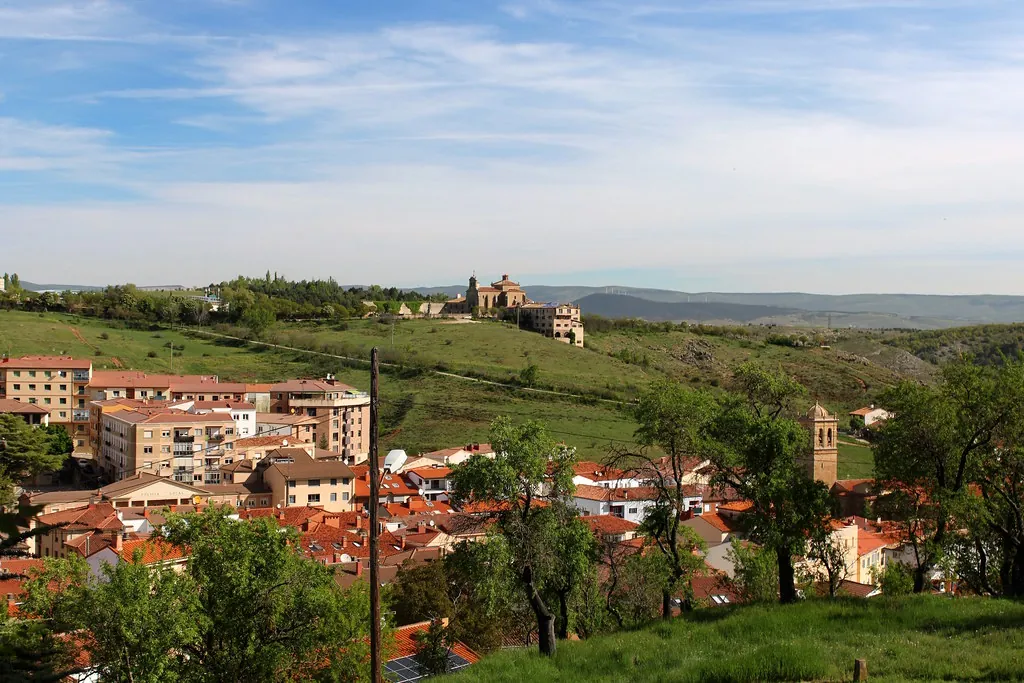
The petrol gauge is nudging red and the last station flicked by 20 km ago. Then Quintana Redonda appears: a single row of stone houses, a church tower with no lights, and a hand-painted sign that simply reads “Pueblo”. At 1,020 m above sea level, the air is already thinner than at any point on the M25, and the temperature has dropped six degrees since leaving Soria. This is the meseta, Spain’s high central plateau, and the village feels like the last outpost before the map turns beige.
A town that measures seasons, not minutes
Wheat and barley run right to the doorsteps. In June the fields glow bronze; by February they are a stubble beard of frost. The 500-odd inhabitants still set their calendars to the sowing and the slaughter, and the only traffic jam is caused by a tractor turning into the cooperative granary. There is no centre to speak of—just a T-junction where the road widens enough for two vehicles to squeeze past, provided both mirrors are folded. Park here; everything else is a three-minute walk.
The church of San Juan Bautista closes its doors at dusk, but the stone blocks hold the day’s heat and make a decent back-rest while you work out where on earth dinner is coming from. Spoiler: not from Quintana Redonda. The single bar opens for coffee at 07:30 and shuts once the last brandy is poured, usually before 15:00. After that, the village runs on what is in the fridge. Plan accordingly: the nearest supermarket is 22 km south-east in Soria, and the road back is unlit, populated by wild boar with no road sense whatsoever.
Walking without a postcard motive
There is no medieval arch, no mirador with Instagram railing, no artisanal ice-cream parlour. What you get instead is space. Head north on the unpaved track signed “El Burgo de Osma 12 km” and within ten minutes Quintana Redonda shrinks to a dark smudge on the horizon. The path follows the crest of a low ridge; larks rise and fall on thermals that smell faintly of thyme and diesel. The incline is gentle—this is not Picos-style drama—but the altitude means a 10 km loop still leaves lungs working harder than expected. Bring water; there are no fountains after the first kilometre.
Spring brings the only real colour burst: scarlet poppies threaded through the wheat, and tiny purple viper’s bugloss along the verges. Photographers arrive expecting Provence and find instead a restrained water-colour palette that looks better in horizontal light just after dawn. Mid-summer is golden-brown and unforgiving; walking at midday feels like standing under a grill. Autumn adds stubble fires and the sweet-acrid smell of straw, while winter is sharp, wind-polished and often fogged in—pretty in a brutal sort of way, but not the season for roadside repairs.
Food that still carries a farm tag
Most villagers keep a pig, a few chickens and a vegetable plot the size of a London studio flat. The annual matanza happens in December; visit then and you will see every balcony draped with white intestines drying into next year’s chorizo. The local restaurant—technically in neighbouring Fuentetoba, four km down the SO-100—serves chanfaina, a rice stew bulked out with liver and lung. Ask for “arroz blanco” if offal is a step too far; the cook will shrug and produce a perfectly acceptable paella-style rice with whatever vegetables survived the frost.
Sheep’s cheese comes from a tiny quesería in Fuentepinilla, ten minutes by car. The cheese is firm, slightly oily, with a lanolin aftertaste that divides tables. Pair it with the house red from Ribera del Duero—brought up by the carafe, prices start at €7 for half a litre—and you have lunch for two under €20. Sunday lunch is the only service that books up; turn up unannounced and you will be handed a plate of torreznos (think pork scratchings with meat attached) and pointed towards the door.
When the village remembers how to party
Fiestas patronales land on 15–16 August. The population triples as grandchildren return from Valladolid and Zaragoza. A sound truck parks outside the church and pumps out 90s Spanish pop until the small hours; grandparents dance barefoot on the warm asphalt. There is a foam cannon for the kids, a raffle for a ham, and one portable bar that runs out of lager by midnight. It is all aggressively small-scale—no fairground rides taller than the church tower—but the atmosphere is genuine, the kind that package tours spend fortunes trying to bottle. Rooms in the sole B&B are spoken for months ahead; motorcyclists camp on the school patio instead, secure in the knowledge that every local knows exactly who owns each bike.
Getting there, getting out
Madrid to Soria is two hours by regional train from Chamartín; hire cars sit opposite the station and the desk staff still use a paper map to show the way out of town. From Soria, the SO-100 north is a fast, almost empty dual-carriageway that climbs steadily. Fog can drop without warning in winter—allow an extra 30 minutes and keep the fog lights on. Mobile signal cuts out 8 km south of Quintana Redonda; download offline maps before you leave the city.
Leave on a weekday morning and the place feels half-abandoned; stay overnight and you realise the silence is the point. Quintana Redonda will never make a “Top Ten Spanish Villages” list because it was never trying to. What it offers instead is a calibration service for urban clocks: wheat grows at its own speed, dinner is whenever you remember to cook it, and the stars—unimpeded by street-lights—remind you that constellations pre-date budget airlines by several million years. Fill the tank, pack snacks, and come while Spain’s empty quarter is still empty.