Full Article
about Quintanaortuno
Ocultar artículo Leer artículo completo
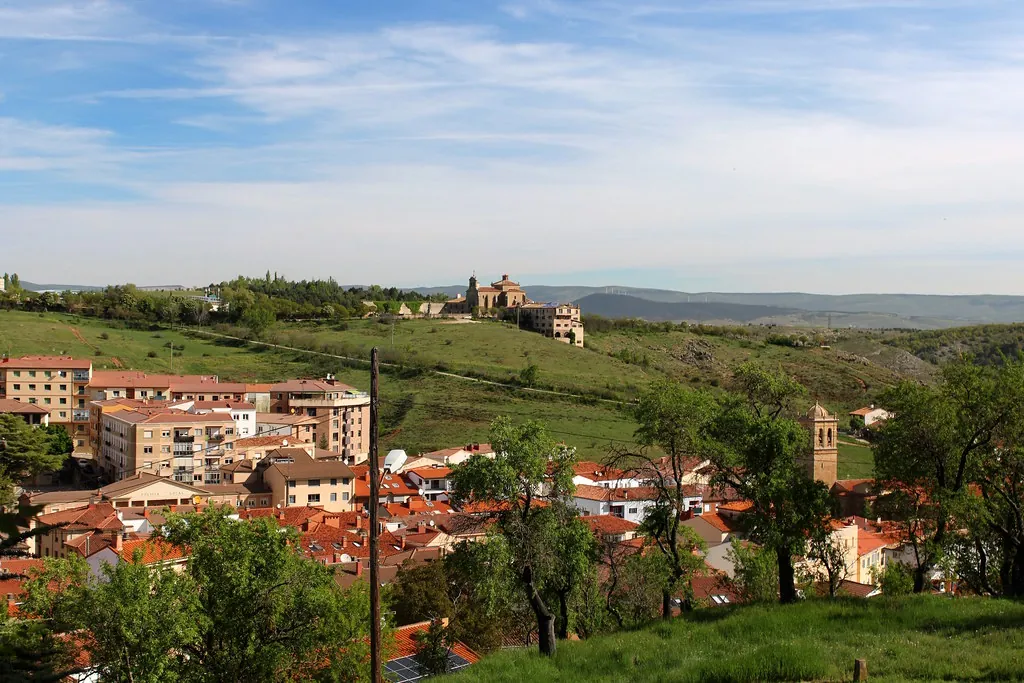
The tractor appears at dawn, its engine breaking the silence that blankets Quintanaortuño's single main street. By the time the sun clears the horizon, the driver has already covered half the distance to his fields, leaving nothing but tyre tracks in the dew and the faint smell of diesel hanging in the morning air. This is rural Castilla y León at its most honest—not a carefully curated museum piece, but a working village where agriculture still dictates the rhythm of daily life.
The Architecture of Everyday Life
Quintanaortuño's stone houses don't announce themselves with grand façades or ornate balconies. Instead, they hunker down against the notorious meseta weather, their thick walls built from local limestone and their terracotta roofs weighted with stones to resist the wind that sweeps unimpeded across the cereal plains. Walk the quiet streets and you'll notice details that guidebooks miss: the way wooden doors swell in autumn humidity, how window frames bear generations of paint layers, why the older houses face south-east to catch morning warmth while avoiding afternoon heat.
The parish church stands at the village centre, not particularly old by Spanish standards, perhaps 18th century, but serving the same purpose it always has. Its bell still marks the hours for field workers, though these days the sound competes with mobile phone alarms. Inside, if you find it open (try Sunday mornings or ask at the bar), the interior reveals that particular Castilian blend of austere grandeur—high white walls, simple wooden pews, and the faint scent of incense and centuries-old stone.
Dovecotes punctuate the surrounding landscape, cylindrical stone towers that once provided both meat and fertiliser for local families. Some stand perfectly preserved, others crumble artistically, their weathered stones providing nesting sites for the very birds they were built to house. These structures photograph beautifully in the golden hour light, though photographers should note that trespassing in private fields remains frowned upon regardless of artistic intent.
Seasons in the Landscape
Spring transforms the surrounding plains into an ocean of green wheat that ripples like waves in the constant breeze. This is perhaps the most photogenic season, when wildflowers edge the field margins and the air carries the fresh scent of growing grain. Temperatures hover around 20°C in May, perfect for walking the agricultural tracks that radiate from the village, though you'll need proper footwear—these are working paths, not maintained trails.
Summer brings brutal heat. By July, the wheat turns golden and harvest begins, filling the air with dust and the mechanical rhythm of combine harvesters. Daytime temperatures regularly exceed 35°C, making early morning or late evening the only sensible times for exploration. The village empties as families retreat indoors during peak heat, creating an almost ghost-town atmosphere that some visitors find unsettling rather than peaceful.
Autumn offers perhaps the best balance for British travellers. September maintains warm days around 25°C but cools pleasantly at night. The harvested fields reveal their soil, creating patterns of furrows that stretch to distant horizons. This is when locals return to outdoor life, and you'll see groups of men playing cards outside the bar, women gathering to exchange village news, children riding bicycles along streets that traffic forgot.
Winter arrives early on the meseta. November winds carry the first sharp chill, and by December morning temperatures regularly drop below freezing. The landscape turns monochrome—brown earth, grey stone, white frost—creating a stark beauty that photography enthusiasts appreciate. Snow falls infrequently but when it does, the village transforms into something approaching a Christmas card, albeit one where the post office closes at 2pm and the nearest supermarket requires a 20-minute drive.
The Reality of Rural Dining
Let's be honest about eating here. Quintanaortuño offers limited options. There's one bar, open irregularly, serving basic tapas and drinks. Don't expect a menu in English or vegetarian options beyond tortilla. The nearest restaurant worth the name sits in Villariezo, 8 kilometres away, where Casa Cayo does decent Castilian cooking at reasonable prices—expect to pay €12-15 for a three-course menú del día.
For self-catering, Burgos city provides everything you need, just 25 minutes by car. The Mercadona supermarket stocks British basics if you're craving proper teabags, though discovering local specialities proves more rewarding. Try queso de Burgos, a fresh white cheese that crumbles beautifully over salads, or morcilla de Burgos, the local blood sausage that's surprisingly moreish despite sounding off-putting to British sensibilities.
Local wine comes from the Ribera del Duero region, robust reds that pair perfectly with roast lamb, the area's signature dish. If you're staying in self-catering accommodation, buy provisions in Burgos before arrival—Quintanaortuño's tiny shop closed years ago, and the next village's store keeps erratic hours.
Making It Work: Practicalities
Getting here without a car requires determination and patience. ALSA buses connect Burgos to nearby Villariezo twice daily, from where you'd need a taxi for the final stretch. Car hire from Burgos airport (served by Ryanair from London Stansted) makes infinitely more sense, costing around €30 daily for a basic vehicle.
Accommodation options within the village itself remain limited to rural casas that sleep 4-6 people, booked through platforms like Ruralgest. Expect to pay €80-120 nightly for a restored village house, often with original beams and stone walls but modern bathrooms and WiFi that actually works. Breakfast means whatever you bought yesterday—nobody's delivering croissants here.
Mobile phone coverage can be patchy between buildings, though this improves annually. Download offline maps before arrival, and consider that "15 minutes away" in rural Spain might mean 15 kilometres on winding roads where getting stuck behind a tractor constitutes normal traffic conditions.
The village makes an excellent base for exploring northern Castilla y León. Burgos cathedral, a UNESCO World Heritage site, justifies the 25-minute drive alone. The archaeological site of Atapuerca, where Europe's oldest human remains were discovered, lies 40 minutes east. Even day trips to the Picos de Europa become feasible, though that requires an early start and acceptance of Spanish driving standards on mountain roads.
Quintanaortuño won't suit everyone. Those seeking nightlife, shopping, or sophisticated dining should stay in Burgos. But for travellers wanting to understand how rural Spain actually functions, beyond the clichés of flamenco and fiestas, this village offers something increasingly rare: authenticity without artifice. Just remember to bring walking boots, a sense of patience, and realistic expectations about what constitutes entertainment when the nearest cinema is half an hour away.