Full Article
about Quintanapalla
Ocultar artículo Leer artículo completo
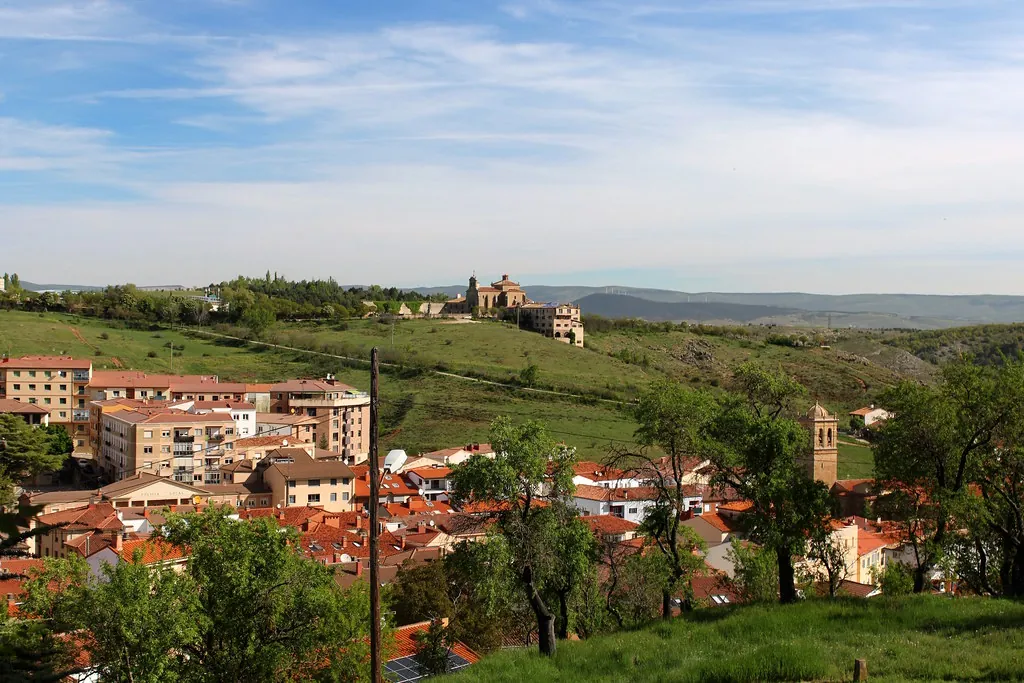
The wheat stops here. Fifteen kilometres northeast of Burgos, the endless cereal plains suddenly develop ripples—gentle folds that announce the Parameras de la Sierra without ever quite reaching mountain status. Quintanapalla sits at 830 metres above sea level, high enough for the air to carry a mineral edge yet low enough that winter rarely traps the single access road. From the village’s only proper street you can watch weather systems roll in from the Cordillera, dark bruises against a horizon so wide it feels nautical.
This is not postcard Spain. The houses are the colour of dry earth, their stone walls patched with adobe that crumbles if you pick at it. Wooden doors hang slightly askew, opening onto corrals where chickens scratch between tractor tyres. There is no plaza mayor lined with orange trees, no medieval archway framing a view. What you get instead is the real Castilian meseta: hardworking, wind-scoured, honest about what it can and cannot provide.
A Pause Before the Mountains
Most visitors arrive by accident, or necessity. The village lies just off the N-623 that carries summer traffic from Santander to the Mediterranean, and drivers often peel off for petrol or leg-stretching, surprised to find a settlement at all. Pilgrims on the Camino de Santiago sometimes divert here when the albergues in San Juan de Ortega are full; the hotel runs a €20 shuttle for foot-sore walkers who cannot face another kilometre. If you are driving south from the Bilbao ferry, Quintanapalla makes a convenient overnight halt: ninety minutes from dock to duvet, with none of the coastal resort premiums.
The single accommodation is the Hotel Rural Quintanapalla, a converted farmhouse with ten rooms and a restaurant that closes when the last diner leaves. Expect roast lamb scented with woodsmoke, morcilla that actually tastes of blood rather than cereal, and a house tinto from Arlanza that costs €12 a bottle—rough enough to make you appreciate the good stuff when you get home. Breakfast is toast, coffee and a polite refusal to fry anything; they will boil an egg if you ask the night before. Rooms in the newer annexe have air-conditioning, but the older chambers rely on metre-thick stone for temperature control. In July they can still feel like ovens; ask for a north-facing window or travel in April/May when the surrounding wheat is emerald and skylarks hover overhead.
What Passes for Activity
There is no monument to tick off, no interpretative centre, no gift shop selling fridge magnets. The fifteenth-century church is usually locked; ring the bell and the sacristan’s mother may appear, wiping her hands on an apron, to let you into a single nave whose most interesting feature is the silence. Instead, the village offers space. Farm tracks radiate across the plateau like spokes, perfect for flat cycling or an undemanding stroll. A thirty-minute circuit at dawn will earn you a sky streaked with rose and mauve, the only sound the clank of a distant irrigation pump. Bring binoculars: kestrels perch on the telephone wires, and in late September you might spot honey buzzards drifting south along the escarpment.
When boredom threatens—and it will—Burgos lies twenty minutes west. Spend the morning gaping at the cathedral’s filigree spires, grab a set lunch of lechazo and Rioja for €18 in the market hall, then retreat to Quintanapalla before the afternoon traffic builds. Closer still is the Sierra de la Demanda, where proper mountains begin: an hour’s drive puts you above 1,500 m among Scots pine and red kite, cool enough for a jacket even in August. Snow plugs the higher passes from December to March, so if you are travelling between Christmas and Easter, pack chains or confine yourself to the plateau.
Seasons on the Plateau
Spring arrives late and all at once. One week the fields are beige stubble; the next they shimmer with young barley that ripples like animal fur in the wind. Temperatures hover around 18 °C by day but plummet at night—bring layers, and do not trust the forecast. Autumn is the mirror image: harvest dust hangs in golden shafts until the first equinoctial gale sweeps the sky clean. Winter is monochrome, the palette reduced to ochre and ash. When the east wind blows from Álava the thermometer can read –8 °C at midday; the hotel switches on under-floor heating and serves lentil stew thick enough to stand a spoon in. Summer is the trickiest season. The meseta bakes, the wheat turns the colour of old brass, and the village bar (open sporadically) fills with tractor drivers seeking cañas at eleven in the morning. August nights can still drop to 12 °C—relief if you have been wilting in Andalucía, but chilly if all you packed was shorts.
The Fine Print
There is no cash machine, no petrol station, no shop selling emergency razors. The nearest supermarket is an Eroski on the Burgos ring road, so arrive stocked. Phone signal inside the hotel is patchy; step into the car park for four bars of 4G. If you need dietary variations, email ahead; the kitchen buys daily and will not improvise vegan paella on the spot. Dinner service starts at 20:30—late by British standards—and finishes when the chef is tired, rarely after 22:00. Book a table even if you are staying; the restaurant fills with French motorhomers who have read the same online review you did.
Leave the village by the same road you entered: the CV-224 links to the N-623, which feeds the A-1 motorway. Santander airport is seventy minutes north, Bilbao ninety. Car hire desks close at 22:00 in both terminals; miss your flight and you will spend the night in the terminal. There is no bus service worth mentioning—one school run at dawn, another at three in the afternoon. Taxis from Burgos start at €40 each way, more than the room costs once divided between two.
Worth the Detour?
Quintanapalla will not change your life. It offers a bed, a decent lamb chop, and a sky full of stars unimpeded by street lighting. For some that is plenty. Use it as a breathing space between the ferry and the Costas, or as a base for sampling northern Spain without the Picos price tag. Come with a full tank, low expectations and a taste for wide horizons, and the meseta might just surprise you. Leave wanting more, and the road to Burgos is always open.