Full Article
about Quintanilla De La Mata
Ocultar artículo Leer artículo completo
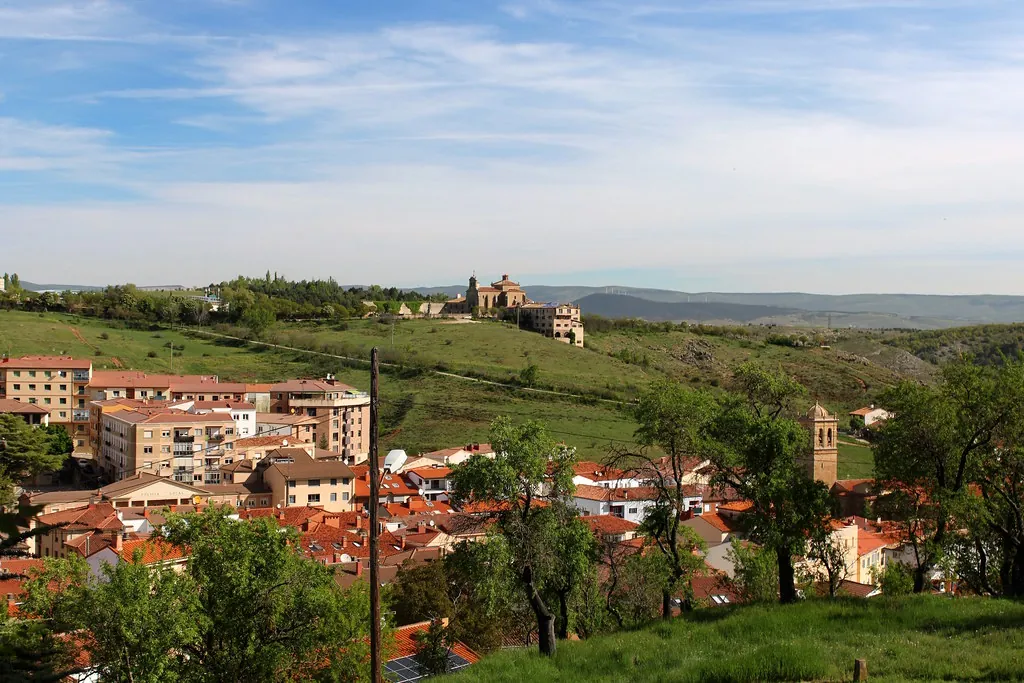
The church bell strikes noon, yet nobody appears. The plaza remains empty, save for a single tractor rumbling past the stone houses, its driver raising two fingers in acknowledgement. This is Quintanilla de la Mata, a village where time hasn't so much stopped as simply slowed to the rhythm of cereal fields swaying in the plateau wind.
At 945 metres above sea level, this Burgos municipality sits on Castile's northern meseta, where the land stretches flat enough to spot a neighbour's tractor three kilometres away. The altitude brings sharp temperature swings—summer mornings start at 12°C, climbing to 30°C by midday, whilst winter can trap the village beneath snowdrifts that sever road connections for days. Those planning winter visits should carry blankets and snacks; the A-62 motorway might be clear, but the final 12 kilometres from Aranda de Duero can become impassable.
The village's 5,000 residents live scattered across low stone houses, many built from local limestone and adobe that blushes warm ochre in afternoon light. These aren't museum pieces—peeling paint reveals decades of repairs, satellite dishes perch beside 19th-century wooden balconies, and modern aluminium windows interrupt rows of traditional wooden shutters. Walk Calle Mayor at 2pm and you'll understand Spanish schedules: metal shutters rolled down, streets silent, the occasional television murmur drifting through open upstairs windows.
The Architecture of Everyday Life
Quintanilla's church stands slightly elevated, its modest tower visible across wheat fields that encircle the village like a golden moat. Built between the 16th and 18th centuries, the Iglesia de San Pedro mixes Gothic sobriety with Baroque additions—the kind of evolutionary architecture that happens when communities build incrementally, not architecturally. Inside, the air carries incense and centuries of candle wax; the altarpiece, gilded in 1732, gleams dully in filtered light.
The real architecture lives at ground level. Wander into Plaza de la Constitución and you'll find houses sharing walls like conspirators, their ground floors once stables now converted into garages. Adobe walls—some dating to the 1700s—bulge organically, their limestone corners worn smooth by generations of passing shoulders. Peer through iron gates into interior patios where chickens peck between potted geraniums and firewood stacks reach ceiling-high, evidence of winters when temperatures drop to -10°C.
The village maintains three operational bakeries, unusual for its size. Panadería Hermanos López opens at 6am, its wood-fired oven dating from 1924 producing crusty loaves that locals buy by weight. Try asking for "pan de pueblo"—the rustic country loaf—whilst marvelling at how Spanish bakeries somehow operate without the queueing systems British customers expect. People simply know whose turn it is.
Walking the Invisible Borders
Quintanilla sits surrounded by cereal steppe—400 hectares of wheat, barley and fallow fields that stretch to every horizon. This isn't hiking country with marked trails and carparks. Instead, a network of agricultural tracks connects neighbouring villages like beads on a dusty necklace. The GR-88 long-distance path passes 3 kilometres south, but locally you're following farm tracks between fields, navigating by telegraph poles and the occasional concrete waymarker erected by the regional government.
Spring brings the most rewarding walking, when green shoots create a patchwork against dark earth and skylarks provide the only soundtrack. Try the 8-kilometre circuit to Villanueva de los Caballeros—head west from the church, follow the track past the abandoned threshing circle, then south where the path dips into a shallow valley. You'll pass three ruined farmhouses, their stone walls gradually disappearing back into the landscape, testament to rural Spain's gradual emptying over the past century.
Summer walks demand early starts. By 10am the sun becomes punishing—there's no shade across these open plains, and summer temperatures regularly exceed 35°C. Carry water, obviously, but also understand that these fields operate on agricultural, not tourist, timetables. That means dust from passing tractors, the occasional aggressive farm dog protecting property boundaries, and paths that suddenly disappear beneath ploughed earth.
Eating on Castilian Terms
Food here follows agricultural cycles, not tourist demand. The village supports four bars, all serving variations on the same local menu. Bar Central opens earliest—7am for farmers needing coffee and brandy before heading to fields. Their menú del día costs €12 midweek, featuring lechazo asado (roast suckling lamb) cooked in wood-fired ovens, the meat so tender it separates at the touch of a fork. This isn't sophisticated cuisine; it's sustenance cooking that hasn't changed substantially since the 1950s.
Vegetarians face limited options. Traditional Castilian cooking centres on pork—every part, every preparation. Even the humble tortilla española arrives studded with chorizo. Bar Plaza will prepare a vegetable paella with 24 hours notice, but understand you're requesting something outside their normal repertoire. The local cheese, queso de Burgos, provides respite—fresh, mild, and spreadable on the crusty bread that accompanies every meal.
Wine comes from Ribera del Duero, 25 kilometres south. Order "un tinto" and you'll receive whatever bulk wine arrives in 5-litre plastic containers from local cooperatives. It's drinkable, honest, and costs €1.50 per glass. For something more refined, Bodegas López Cristóbal in neighbouring Roa offers tastings by appointment—their crianza sells locally for €18, roughly half UK retail prices.
When Silence Becomes Complicated
Quintanilla's authenticity cuts both ways. The village offers no tourist office, no souvenir shops, no weekend craft markets. Information arrives through conversations, normally in rapid Spanish delivered with distinctly Castilian accents that transform "cinco" into "thinco"—challenging even for confident Spanish speakers. The nearest cash machine stands 12 kilometres away in Aranda de Duero; many businesses operate cash-only, especially for transactions under €10.
Accommodation means staying in surrounding towns. Hotel Reyes Católicos in Aranda provides comfortable rooms from €65 nightly, but you'll need transport—last buses leave Quintanilla at 8pm, and taxis cost €25 each way. The village itself offers no hotels, though local families sometimes rent rooms to seasonal agricultural workers. Enquiring about these arrangements requires Spanish and cultural sensitivity; knocking on random doors isn't recommended.
The silence that attracts many visitors becomes overwhelming for some. Night-time brings absolute quiet—no traffic, no distant music, just wind across empty fields. Light pollution remains minimal; Milky Way visibility proves spectacular on clear nights. But this isolation feels complete, especially during winter months when shortened days and empty streets emphasise the village's dwindling population.
Quintanilla de la Mata offers neither dramatic landscapes nor Instagram moments. Instead, it presents rural Spain without filters—working farms, ageing populations, traditional rhythms increasingly rare across Europe. Come prepared for that honesty, bring Spanish phrases and patience, and you'll discover a village where the plateau's vast horizons provide their own form of grandeur. Just remember: the tractor driver raising two fingers isn't being rude—that's simply how neighbours acknowledge strangers here, before returning to fields that have sustained families for generations.