Full Article
about Quintanilla Del Coco
Ocultar artículo Leer artículo completo
The Village That Weather Forgot to Rush
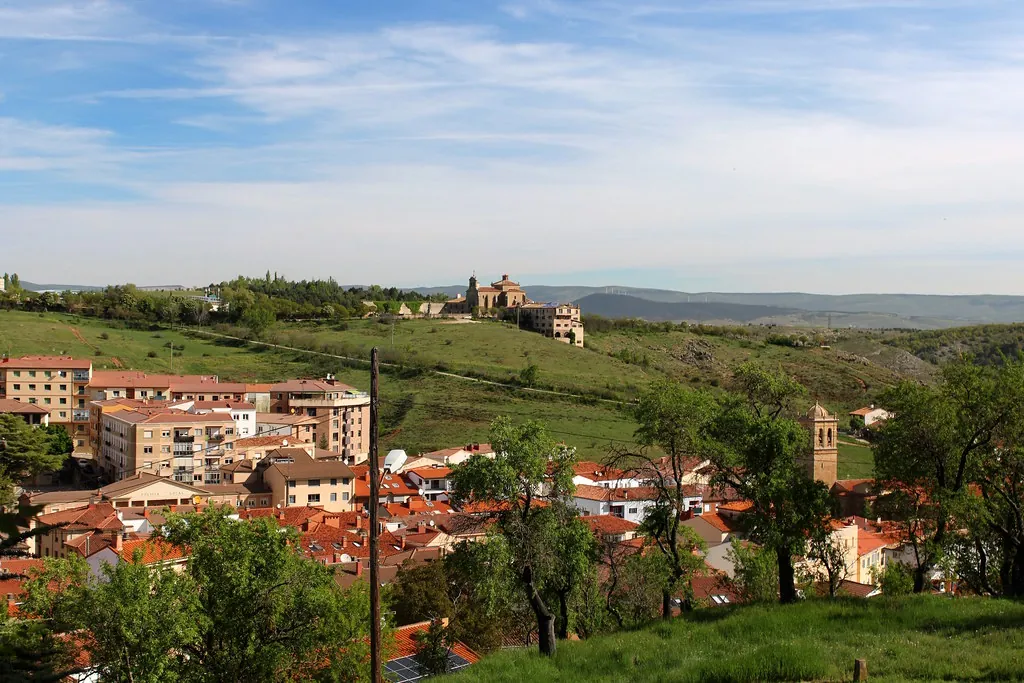
At 900 metres above sea level, Quintanilla del Coco sits high enough that mobile phone signals waver but low enough to avoid the harsh mountain weather that grips the higher peaks of Burgos province. The altitude matters here. Summer mornings start crisp even in August, and winter can lock the village in for days when snow drifts across the secondary roads that web through the cereal fields.
The stone houses, their wooden beams darkened by decades of mountain sun, huddle around a church tower that dates back to when this was frontier territory between Christian and Moorish Spain. Unlike the villages that tumble down hillsides, Quintanilla del Coco spreads across a plateau, giving it an unexpected spaciousness. The streets run straight, following the ancient logic of agricultural access rather than medieval defence.
Walking Through Layers of Castilian Life
The parish church dominates the skyline, but it's the details at ground level that reward attention. Adobe walls three feet thick keep interiors cool through summer's peak and retain heat when Atlantic storms sweep across the meseta. Wooden balconies, some dating to the 18th century, overhang narrow pavements where neighbours still stop to discuss rainfall and wheat prices.
Traditional fountains punctuate the streetscape, fed by mountain springs that once served as the village's only water source. The largest, Fuente de San Pedro, still draws locals who swear the water tastes better than anything from a tap. During summer fiestas, children chase each other around its stone basin while grandparents perch on the rim, watching the same scenes they witnessed fifty years prior.
Walk five minutes in any direction and you're among wheat fields that stretch to every horizon. The paths aren't marked, but they're obvious—tractor tracks worn deep into the ochre soil. Spring brings a brief explosion of green that fades to gold by July, when the harvest transforms the landscape into something resembling a Lowry painting, all angles and earthy colours beneath vast Castilian skies.
What Actually Happens Here
Birdwatchers arrive with binoculars and leave disappointed if they're expecting mountain eagles. The real stars are the ground-nesting species: crested larks that run rather than fly, partridges that materialise from nowhere, and the occasional hoopoe with its absurd crest. Dawn and dusk provide the best sightings, when the cereal fields become an orchestra of calls and the mountain air carries sound for miles.
Photography works differently here. The flat light of midday flattens everything into two dimensions, but the golden hours transform ordinary stone into something remarkable. The church facade catches first light at 7:30 am in October, while sunset backlights the wheat stubble into patterns that change daily as harvesting progresses. Local farmer José María García, 73, has been photographing the same three streets for forty years. "The buildings stay the same," he says, "but the light makes them new every day."
The village functions as a working agricultural centre, not a museum. Tractors rumble through at 6 am. The smell of diesel mingles with woodsmoke from breakfast fires. In October, the air thickens with the scent of freshly threshed grain. During harvest, the plaza fills with combines and grain trucks that would look oversized anywhere else but seem appropriate here, where everything operates on an agricultural scale.
Eating and Drinking: The Reality Check
There are no restaurants in Quintanilla del Coco. None. The nearest proper meal requires a 15-minute drive to Lerma or a 25-minute journey to Aranda de Duero. What exists is Bar Alambique, open Thursday through Sunday, where María serves coffee, beer, and basic tapas to a clientele that arrives on tractors and stays for exactly two drinks before returning to work.
The bar stocks local specialities: morcilla de Burgos (blood sausage with rice, infinitely better than it sounds), queso de Burgos (fresh cheese that tastes of sheep and mountain grass), and chorizo that María's husband makes in their garage. A coffee costs €1.20. A beer, €1.50. The television plays silently in the corner, usually showing agricultural prices or the bullfighting from nearby villages.
For anything more substantial, plan ahead. The supermarket in Lerma closes at 9 pm sharp and doesn't open Sundays. The petrol station on the A1 motorway serves acceptable bocadillos de lechazo (roast lamb sandwiches) but charges motorway prices. Self-catering visitors should shop in Burgos before arriving—there's nothing worse than craving tea and biscuits at 8 pm on a Saturday with only village bars for company.
Getting There, Staying There, Leaving Again
The drive from Bilbao takes two hours on excellent motorways followed by twenty minutes on roads that narrow alarmingly. From Madrid, it's 2.5 hours north on the A1, then west through countryside that becomes progressively emptier. Public transport exists in theory—a daily bus from Burgos that arrives at 2 pm and leaves at 6 am the following day, making day trips impossible and overnight stays essential.
Accommodation means either the three-room guesthouse above Bar Alambique (€35 per night, shared bathroom, no breakfast) or rural houses rented by the week through the provincial tourism office. These start at €400 weekly and include fully equipped kitchens, which given the restaurant situation isn't optional. Book directly with owner Carmen Martínez—she doesn't do online bookings but answers her landline after the third ring, usually.
Winter access requires checking weather forecasts. The BU-905 road from Lerma climbs 300 metres in 8 kilometres and ices over in January. Snow chains live in car boots from December through March. Summer brings different challenges: the village fountain occasionally runs dry during August droughts, and the municipal swimming pool (open July 15-August 15) fills with agricultural workers' children who've spent their lives around machinery rather than water.
The Unvarnished Truth
Quintanilla del Coco won't change your life. It's not a revelation or a retreat or any of the other words travel writers deploy when they've run out of specifics. It's a place where Castilian farmers live and work, where the church bell still marks time, where strangers are noticed but not necessarily welcomed with the enthusiasm that tourism brochures promise.
The village rewards those who arrive without agenda. Sit in the plaza long enough and someone will explain why the wheat looks different this year. Ask at the bar about the eagle carved above the church door and you'll hear three competing theories, each delivered with absolute conviction. Stay for evening Mass (7 pm Saturdays, 11 am Sundays) and witness the social fabric that holds rural Spain together when governments and economies fail.
Leave before you overstay. Three days provides enough time to understand the rhythms without imposing on hospitality that's genuine but not infinite. Drive away at dawn when the fields are silver with dew and the village is just waking, tractors coughing into life like elderly smokers. In the rear-view mirror, Quintanilla del Coco looks exactly as it did when you arrived—which is precisely the point.