Full Article
about Quintanillas Las
Ocultar artículo Leer artículo completo
The stone doorway is still warm from the afternoon sun when the first tractor rumbles home. No church bell marks the hour; instead, the smell of dry straw and diesel announces that work is finished. In Las Quintanillas, a scatter of hamlets 20 km south-west of Burgos, time is measured by whatever is happening in the surrounding wheat belt. One week the fields glow emerald, the next they shimmer gold. Visitors who arrive expecting a timetable usually leave understanding a calendar.
A Province of Horizons
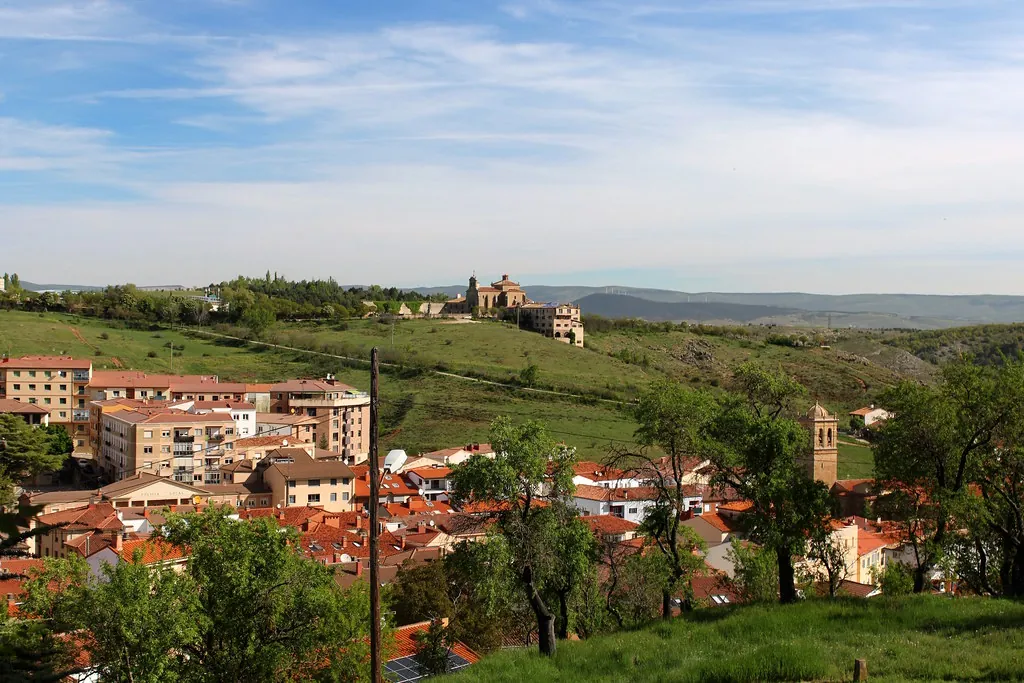
From the N-234 the landscape looks almost flat, but step out and you notice the land rolls like a gentle swell. Every slight rise reveals another mile of cereal stripes and another hamlet—La Vid de Arriba, Quintanilla Sopeña, La Mata—each barely a dozen houses and a church tower the height of a mature oak. The total population across the whole municipality is just over five hundred, and half of them seem to be walking dogs or watering geraniums when you pass through at seven in the evening.
There is no centre as such, no plaza mayor lined with cafés. The town hall sits in the largest nucleus, Las Quintanillas de Arriba, next to a locked-fronton court where local boys still play pelota against a wall built in 1952. Mobile-phone coverage is decent; anything more ambitious—museum, cash machine, petrol pump—requires a 15-minute drive to Tardajos. The absence of services is inconvenient, yet it also guarantees silence deep enough to hear hoopoes calling from the poplars.
What You’re Really Looking At
Guidebooks that bother to mention the place usually file it under “rural architecture.” That sounds dull until you realise the houses are textbooks on how to keep cool without air-conditioning. Walls a metre thick, south-facing wooden galleries, and tiny upstairs windows that hinge outward like eyelids. Many façades still wear their original ochre wash, mixed generations ago with bull’s blood to make the pigment stick. Peer through an open gateway and you will spot a carved stone trough or a dovecote shaped like a fat pepper pot—details ignored by grander monuments but lovingly preserved here because nobody thought to replace them.
The churches are equally understated. Iglesia de Santa María in La Mata has a Romanesque doorway recycled from a long-vanished monastery; the priest arrives on Sunday, unlocks the door, and locks up again before lunch. In Quintanilla Río Abajo you can just make out 16th-century fresco fragments under a coat of whitewash, provided the sacristan is in the mood to fetch his ladder. No tickets, no audioguides, only the smell of beeswax and burnt incense that lingers for decades.
Walking Without Waymarks
Footpaths exist mainly because farmers need to reach their plots, but the council has printed a free leaflet—available in Spanish only—that sketches three circular routes between 6 and 12 km. The longest, which joins the villages of Sopeña and Arroyo, follows a drove road wide enough for two ox carts to pass. In late April the verges are lavender-blue with viper’s bugloss; by July the same plants stand brittle and grey, rattling like dry bones in the wind.
Stout shoes are plenty; boots are overkill. Carry water because there are no bars, and shade is limited to the occasional holm oak. A pair of binoculars will earn you sightings of little bustards performing their strange frog-hop display, or hen harriers quartering the stubble. Expect to meet more tractors than people; the drivers lift one finger from the steering wheel in salute, the Castilian equivalent of a royal wave.
Eating: Bring It With You
The single holiday home listed on British booking sites—Donde la Abuela, six bedrooms, 9.9 rating—comes with a brick barbecue the size of a small car for good reason. The village itself has no restaurant, no pintxo trail, no Sunday market. Your nearest reliable meal is in Tardajos at Asador Casa José, where £18 buys half a roast lamb and a jug of local tempranillo. Otherwise shop in Burgos before you arrive: the Mercadona on Avenida de Castilla y León stays open until 21:30, surprisingly late by provincial standards.
If you are invited into a private house—accept. Hospitality is exercised with fierce pride. Lunch might start with garlic soup thickened by a poached egg, move on to morcilla de Burgos (the regional blood sausage that contains rice instead of onion), and finish with quince paste sliced by the grandmother’s penknife. Vegetarians should declare themselves early; the concept is still met with polite incomprehension.
Timing and Temperature
Spring, roughly mid-April to late May, turns the fields green and the air soft. Autumn, mid-September to October, trades colour for combine harvesters and the smoky smell of straw burning. Both seasons stay around 20 °C at midday and sink to 10 °C after dark—perfect walking weather. August belongs to the locals who fled to the coast; they return for the fiesta mayor, inflate the population to 800, and dance until dawn in a marquee erected on the football pitch. Accommodation prices do not budge—there is so little stock that demand barely registers—but earplugs are advisable.
Winter is honest here. When the wind drifts south from the Meseta the thermometer can touch –8 °C, and the stone houses, designed for summer, become refrigerators. Roads are gritted promptly, but if snow is forecast carry chains; the final five kilometres are single-track.
Getting There, Getting Out
Fly to Bilbao with easyJet from Gatwick or to Santander with Ryanair from Stansted. Either airport hands you a hire car and the A-1 southbound; turn off at junction 219 and follow the CL-127 for 12 km. Total driving time from Bilbao is 90 minutes, from Santander 75. If you prefer the train, take the AVE to Burgos and collect a rental car at the station; the last 20 km takes 25 minutes on the BU-11 and a couple of local roads that GPS still mis-labels.
Petrol stations close at 20:00; fill up in Burgos if you are arriving late. Mobile data fades in and out, so download offline maps. Finally, remember church bells here strike the hour whether anyone is listening or not—a gentle warning that Las Quintanillas will carry on farming its land long after the last visitor has driven back to the airport.