Full Article
about Rebolledo De La Torre
Ocultar artículo Leer artículo completo
The stone walls of Rebolledo’s castle keep still stand two storeys high, but the only guardians today are storks nesting on the parapet and a tractor driver who waves if you wander too close to his barley. That single scene—medieval masonry against a humming John Deere—captures the village’s rhythm: centuries coexist without ceremony, and nobody charges an entrance fee.
Wheat, Wind and One Romanesque Church
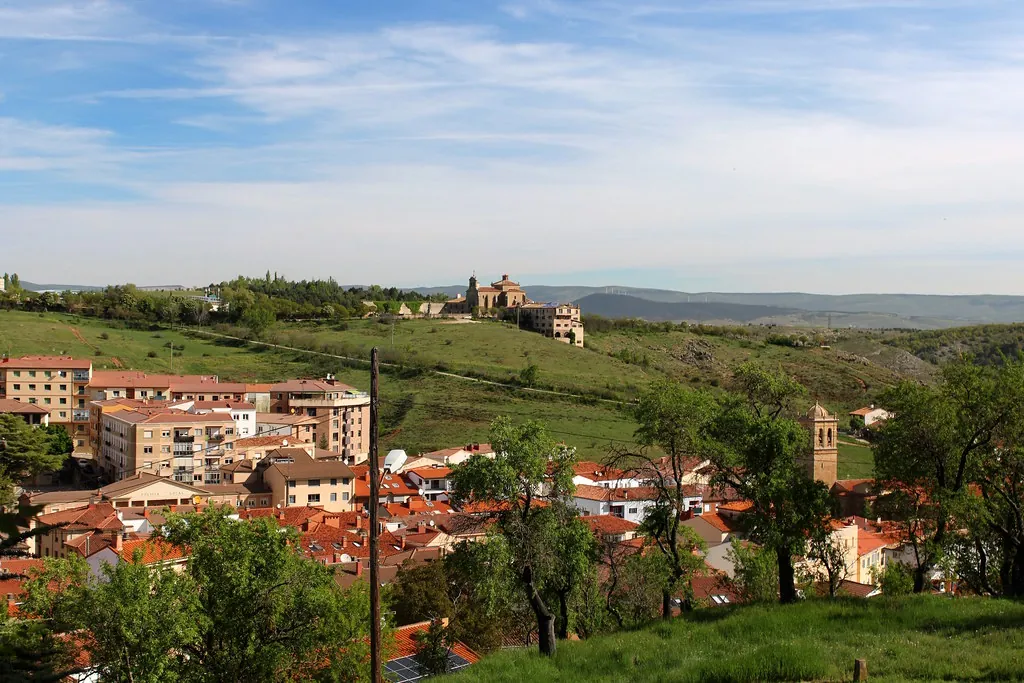
Drive south from Santander airport for ninety minutes and the Cantabrian hills flatten into an ocean of wheat. Rebolledo de la Torre sits on the first gentle ripple, 842 m above sea level, where the plateau begins to remember mountains. The altitude knocks the edge off summer heat—mornings stay cool until 11—and sharpens winter, when the thermometer can dip below –5 °C and the surrounding fields turn silver with frost.
The wheat dictates the calendar. April paints the countryside electric green; by late June the stalks are waist-high and blond, rustling like dry paper. After the July harvest the land becomes a chessboard of stubble and plough, wide open under a sky that feels bigger than the entire province of Burgos. Bring a wide-angle lens if you photograph, but also a plastic bag—dust drifts across the unsurfaced roads and will find your camera sensor.
The village itself clusters around the 12th-century Iglesia de San Juan Bautista. It is no cathedral: a single nave, a modest bell tower patched with brick, and a doorway whose weathered capitals might depict lions or might be sheep—opinion divides. The door is usually open; step inside and the temperature drops ten degrees. Half-moon shafts of light cut across pews that still bear the carved initials of nineteenth-century farmhands. There is no explanatory panel, no gift shop, only the faint smell of beeswax and the creak of wooden rafters when the wind picks up.
A Thirty-Minute Loop and a Ruin with No Rope
You can circumnavigate Rebolledo on foot in half an hour. Calle del Medio, Calle del Sol and the gloriously named Calle Sin Salida thread between stone houses whose wooden balconies sag like old bookshelves. Most front doors are painted oxblood or indigo; geraniums in olive-oil tins add slashes of red. Look up and you’ll see nesting holes chiselled for swifts—summer evenings echo with their shrieks.
At the northern edge the streets dissolve into track, and the castle appears. Built sometime before 1150, it lost its roof in a fire during the War of Spanish Succession and never regained it. The owners—local farming cooperative—keep the outer gate unlocked, but inside is rubble, thistles and the occasional plastic feed sack blown in on the wind. Climb the external stair to the first-floor gallery and you can peer through arrow slits across a horizon that hasn’t changed since the Middle Ages. Bring a torch; the spiral stair is dark and one misjudged step drops you onto granite blocks polished smooth by sheep.
There are no safety rails, no multilingual signage, no attendants. The ruin is honest: take responsibility for your own ankles.
Cycling to the Next Coffee
Rebolledo itself has no café. For breakfast you need wheels. A quiet farm road heads east 10 km to Osorno la Mayor, where Bar La Torre serves cortado and churros from 07:30. Cyclists appreciate the gradient: almost flat, surface compacted limestone, skylarks for company. If you prefer circular routes, continue south to Villahán (abandoned school, curious horses) then swing back via the CL-632—total 26 km, traffic negligible except on market day (Tuesday) when tractors claim the tarmac.
Drivers can string together a Romanesque day trip: San Juan in Rebolledo first, then Santa María in Sotillo (14 km), San Juan in Hornillos (22 km) and lunch in Melgar de Fernamental at Asador O’Pazo—roast lechón around €18, wine from Arlanza included. None of the churches charge admission; opening is catch-as-catch-can, so mornings give better odds.
Lamb, Lentils and the Annual Homecoming
Food culture is domestic. Locals buy meat from the itinerant butcher van that honks its arrival every Tuesday and Friday; bread arrives in a white van at noon. Visitors should time their stay for a festival or bring supplies. The big date is 15 August, when emigrants return and the village quadruples in noise. A marquee goes up on the football pitch, volunteer cooks dish out cordero asado (€10 a plate), and a mobile disco plays Spanish eighties hits until the Guardia Civil remind organisers of the 02:00 curfew. San Isidro, 15 May, is gentler: a short procession to the fields, a blessing of tractors, free chorizo sandwiches for anyone who helps carry the statue.
Between times you self-cater. The Dia supermarket in Osorno stays open 09:00–21:00, stocks local morcilla de Burgos and Campo de Peñaranda lentils—ideal for a slow-cooked stew if your accommodation has a kitchen. Otherwise plan on half-board in nearby Melgar (Hotel Monasterio de San Miguel, doubles €75, decent menú del día €14).
Seasons and Practicalities
Spring, mid-April to mid-June, delivers green wheat, mild 18 °C afternoons and clear 06:00 dawns—photographers’ favourite. September offers similar temperatures and stubbly fields alive with migrating wagtails. July nights stay above 20 °C; the upside is village bustle, the downside is dusty air and flies. In January the place empties, the castle turns Gothic under lowering cloud, and you may have the church to yourself—pack layers and expect limited daylight (sunset 17:45).
Access is by car only. Ryanair and EasyJet fly direct from London to Santander; Bilbao adds more choice. Hire desks stay open until the last flight, and the A-67 south is motorway within minutes. Fill the tank before leaving the coast—service stations thin out after Torrelavega. Rebolledo has a level gravel square beside the church with ample room for campers; overnighting is tolerated but leave no trace—no water, no bins, no toilets.
Mobile coverage is patchy inside stone houses; step outside for four bars of 4G. Medical emergencies: the health centre in Osorno is ten minutes away; for anything serious Burgos Hospital is 45 km on fast road. Wi-fi exists in most village rentals but expect countryside bandwidth—sufficient for WhatsApp, optimistic for Netflix.
Worth the Detour?
Rebolledo de la Torre will never elbow Segovia or San Sebastián off an itinerary. It offers thirty minutes of architecture, an unfenced ruin, and a landscape that refuses to hurry. Come if you like your history unadorned, your roads empty, and your nights quiet enough to hear wheat sway. Treat the village as a breather between blockbuster sights, or as a place to finish that book you’ve carried since Gatwick. The wheat doesn’t mind either way, and neither do the storks.