Full Article
about Retuerta
Ocultar artículo Leer artículo completo
The church bell strikes noon, and Retuerta's single café fills with farmers still dusted with wheat chaff from the morning's harvest. This is when you realise you've stumbled into proper Spain—not the coastal version with its English menus and inflated prices, but the interior where lunch starts at two and the siesta isn't a tourist gimmick.
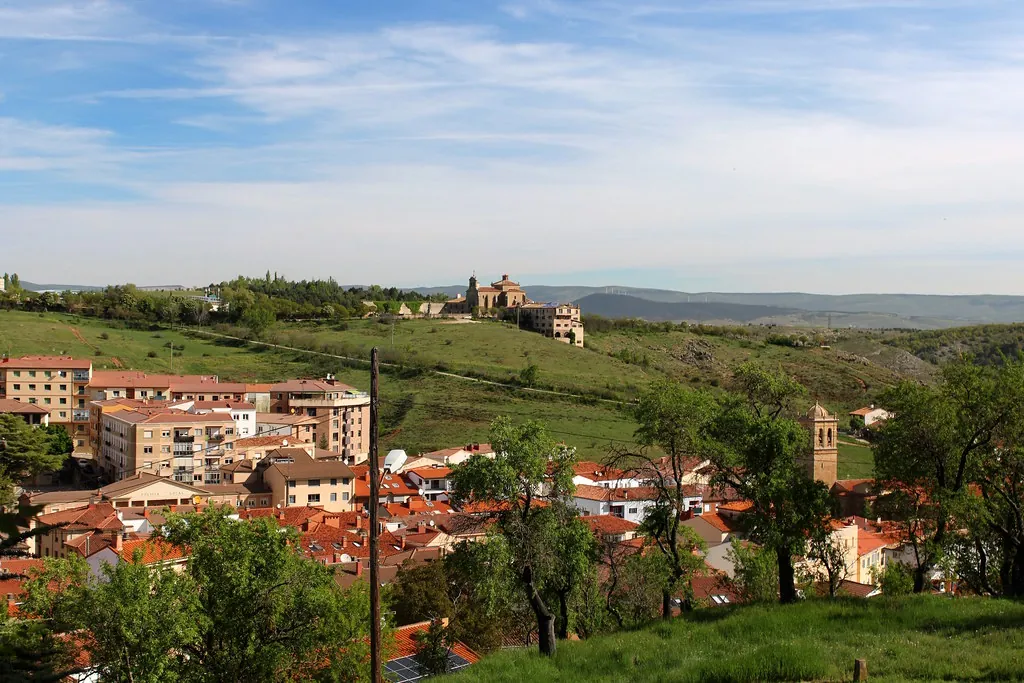
Retuerta sits forty-five minutes northeast of Burgos, where the plateau begins its gentle roll towards the Duero valley. The village proper houses perhaps a hundred souls, though the wider municipality spreads across wheat fields that shimmer gold from June through August. It's the sort of place where tractors have right of way, and where the evening's entertainment involves watching storks circle the church tower while the sun drops behind stone barns that have stored grain since Napoleon's troops marched through.
Stone, Wheat and Silence
The village follows the classic Castilian pattern: houses huddled around a church, everything built from whatever the land provided. Here it's golden limestone, soft enough for farmers to carve their own doorways but tough enough to withstand centuries of freezing winters and baking summers. Adobe walls two feet thick keep interiors cool during July's forty-degree heat, while tiny windows face away from the prevailing wind that whips across the meseta.
Wander the lanes and you'll spot the tell-tale signs of a working agricultural community: granaries raised on stone pillars to deter rats, massive wooden doors wide enough for hay wagons, and communal washing slabs where cold spring water still runs through stone channels. Some houses stand empty—their owners moved to Burgos or Madrid—while others sport satellite dishes beside traditional wooden balconies. It's regeneration on Castilian terms: slow, practical, unromanticised.
The fifteenth-century church of San Andrés dominates the highest point, its square tower visible for miles across the wheat. Inside, faded frescoes peel from vaulted ceilings, and the altar piece shows saints with faces darkened by centuries of candle smoke. The building's unlocked during daylight hours, though you'll need to jiggle the handle—rust from winter frosts has warped the metalwork. Donations for maintenance sit in an old tobacco tin; last year's total reached €347.
Between Bread and Wine
Retuerta's fortune has always been wheat, but geography places it at the meeting point of Spain's grain belt and its premier wine region. Drive ten minutes south and you're among Ribera del Duero's famous bodegas; head north and it's nothing but cereal fields until you hit the Cantabrian mountains. This split personality works for visitors. Mornings can be spent watching harvesters work the fields—giant machines that cost more than most villagers' houses—while afternoons allow for wine tasting at nearby estates.
The contrast is striking. In Retuerta, a coffee costs €1.20 and comes with free tapas of local chorizo. At Abadía Retuerta LeDomaine, fifteen minutes towards Sardon de Duero, suites start at €400 nightly and the Michelin-starred restaurant plates lamb with reductions costing more than most farmers earn in a week. Both places serve the same landscape, just through different lenses. The luxury hotel occupies a twelfth-century monastery where monks once grew wheat and made wine; now sommeliers pour vintages for international guests who've never seen a combine harvester.
For self-caterers, Burgos city's supermarkets provide everything needed, but try the village bakery first. It opens at seven for locals buying breakfast baguettes, closes at two, then reopens for two hours each evening. The baker's wife sells eggs from her own hens—€1.50 for half a dozen, still warm if you arrive early enough. Cheese comes from a cooperative twenty minutes away where Manchega sheep produce milk for nutty, aged wheels that cost a third of London prices.
When the Fields Turn Gold
Timing matters here. April brings bright green shoots across the plateau, plus the risk of late frosts that can wipe out entire crops. May sees the landscape transform into an ocean of emerald, with poppies splashing red across field margins. But late June through July delivers the money shot: wheat and barley ripening to honey-gold beneath skies that painters spend careers trying to capture. The harvest itself—typically July into August—brings clouds of dust and the constant drone of machinery, less photogenic but fascinating for those who've never watched industrial agriculture at work.
Autumn means stubble burning, an increasingly controversial practice that sends plumes of smoke across horizons. Farmers insist it clears disease and prepares fields for planting; environmentalists point to carbon emissions. Winter arrives early and stays late. January temperatures regularly drop below minus ten, and snow isn't uncommon. The village empties further as elderly residents head to city apartments owned by their children. Come March, returning migrants swell numbers for Easter processions that have marched through these streets since the Reconquista.
Practicalities for Plateau Visitors
Getting here requires wheels. Burgos bus station runs a twice-daily service that drops passengers at the crossroads, three kilometres from the village proper. Taxis from the city cost €50—more than most car hires for the day. Roads are excellent; the final approach involves ten minutes of winding through fields where you might encounter anything from a farmer on a quad bike to a herd of sheep moving between pastures.
Accommodation within the village itself is limited to one casa rural sleeping six, booked through the ayuntamiento in neighbouring Melgar de Fernamental. Most visitors base themselves in Burgos, where the Hotel Norte y Londres offers doubles from €60 including breakfast, or splurge at the Abadía Retuerta property if funds allow. Either way, pack layers. Even midsummer evenings can drop to twelve degrees once the sun disappears, and spring/autumn require proper jackets.
The village's single bar serves food at Spanish hours: breakfast until eleven, lunch from two until four, evening tapas after eight. Portions are enormous by British standards; one ración feeds two comfortably. Specialities include lechazo (roast suckling lamb) and morcilla de Burgos, a blood sausage bulked with rice rather than oatmeal. Vegetarians face limited options beyond tortilla and salads.
Retuerta won't suit everyone. There's no mobile signal in parts, shops close for siesta, and English isn't spoken. But for travellers seeking Spain beyond the Costas, where agriculture shapes daily life and where stone walls echo with eight centuries of rural routine, it offers something increasingly rare: authenticity without the performance. Just don't expect to tick boxes. Come to wander lanes where your footsteps are the only sound, to watch light change across wheat fields, and to understand why Castilians value silence as much as conversation.