Full Article
about Revilla Del Campo
Ocultar artículo Leer artículo completo
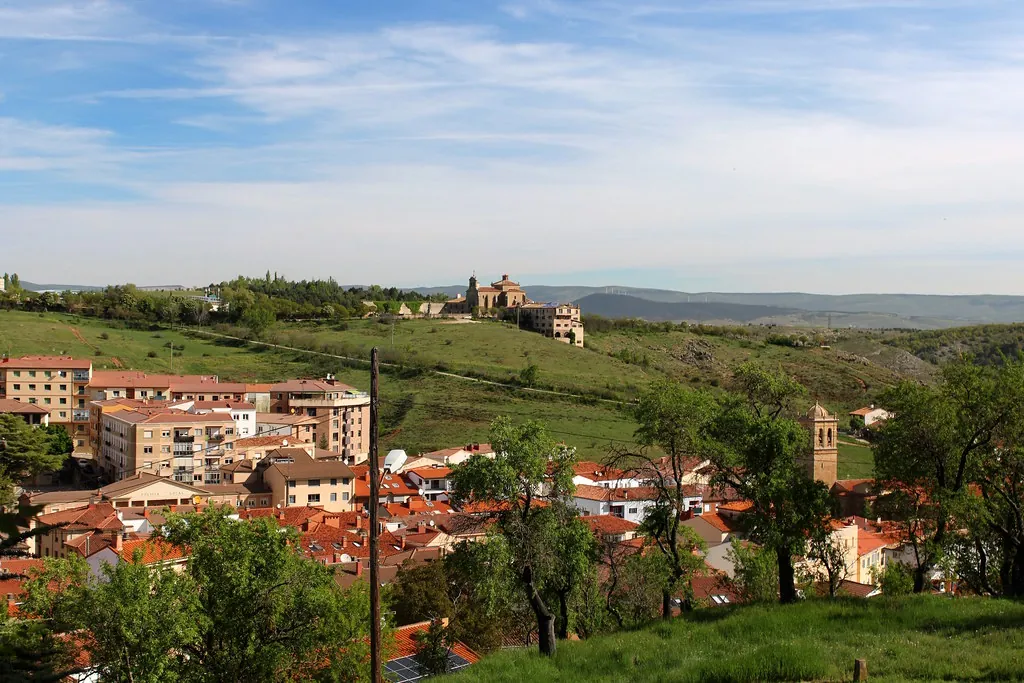
The first thing you notice is the bell tower. It rises above wheat fields long before the houses come into view, a square stone finger pointing at skies that seem twice the size of anywhere back home. At 940 metres above sea level, Revilla del Campo sits high enough for the air to feel thinner, cleaner, and—on still spring mornings—cold enough to make you rethink the idea of a Spanish holiday wardrobe.
This is the northern Meseta, the great Castilian tableland where the phrase “endless plain” stops being a travel-writer cliché and becomes a measurable fact. From the village edge you can watch tractors crawl across ochre strips of earth that meet the horizon 30 kilometres away. The only vertical punctuation, apart from the church, is the occasional stork nesting on a telegraph pole, clacking its bill like castanets at anyone who lingers too long below.
Stone, Adobe and the Smell of Rain on Dust
Revilla’s houses are the colour of the ground they stand on: honey-coloured stone at the base, sun-baked adobe rising to terracotta roof tiles. Timber doors are built for ox carts, not SUVs, and many still open into cobbled corrals where chickens scratch between geranium pots. A short walk—five minutes will take you from one side of the village to the other—reveals the small pleasures that guidebooks usually skip: a 17th-century wine press carved into bedrock beneath somebody’s kitchen; a forge converted into a garage; a stone cross whose base is worn smooth by centuries of farmers pausing to mutter a quick prayer before market day.
Inside the parish church of San Pedro the temperature drops ten degrees. The interior is spare, the paintwork faded to ox-blood and parchment, but the retablo glints with gilt cherubs whose cheeks have been restored so often they look slightly surprised. Sunday Mass is at eleven, sung by a congregation of twenty-odd voices that can still manage the full Gregorian Creed. Visitors are welcome to sit at the back; photographs are tolerated if you wait until the last hymn.
Flat Trails, Fast Clouds
The River Ausines loops lazily south of the village, its banks lined with poplars and disused waterwheels. A gravel track—part of the old Santander–Mediterráneo railway line—shadows the river for 23 kilometres, dead flat and signposted in Spanish and English. Hire bikes in Burgos before you come; Revilla has no rental shop, only an elderly farmer called Manolo who will lend you two hybrids for €15 a day if you ask at the bar. The ride east to Monterrubio takes forty minutes and you’ll meet more hoopoes than humans. Take water: the only fountain between villages dribles warmish and tastes of iron.
Walkers should aim for the grain-mill path at dawn, when dew silveres the spider webs and the only sound is the soft knock of wheat heads in the breeze. Allow an hour to reach the ruined Molino de la Cuesta; stone benches face west, perfect for a thermos stop while clouds scud across the plateau like sped-up weather forecasts. Mobile signal dies 500 metres out of the village—download offline maps or, radical idea, follow the track and see where you end up.
Eating (and the Art of Forward Planning)
There is no restaurant in Revilla del Campo. What the place does have is a pantry-on-request system: phone Señora Conchi the night before (947 10 20 34) and she will cook for however many you bring—lamb shoulder slow-roasted in a wood oven, pimentón giving the crust a smoky edge, served with judiones (buttery white beans) and a bottle of Arlanza crianza that costs less than a London pint. Pudding is usually queso de oveja with membrillo; ask for the semicurado if you find Spanish sheep cheese too punchy. Dinner is served in her front room, lace tablecloth, plastic-covered sofa and a television muttering the regional news. Cash only; no menu del día.
Breakfast is easier. The tiny Ultramarinos Rubio opens at eight (nine on Mondays, half-day closing). Stock up on still-warm baguettes, local chorizo picante and tomatoes that actually taste of summer. If you arrive on a Sunday you’ll find the shutters down; bring supplies from Burgos or go hungry until the bar fires up its toaster at eleven.
Fiestas: Accept or Escape
The village quadruples in size every 8 September when the romería hauls a statue of the Virgin three kilometres up to the Ermita de la Soledad. What follows is a twelve-hour picnic of roast suckling pig, bottomless clay bowls of clarete (the local halfway-between-rosé-and-red) and traditional jotas sung in harmony by people who have been practising since primary school. Visitors are handed plates and expected to join in; refusal is taken as personal insult. Book accommodation a year ahead or sleep in your hire car—every sofa, stable and spare room is spoken for.
Light sleepers should also note 16 July, Virgen del Carmen, when fireworks explode at dawn and the brass band rehearses in the square until the small hours. If you value quiet, check the calendar before reserving. The rest of the year the only nocturnal noise is the church clock striking quarters.
Getting There, Staying Put
Burgos is 32 kilometres north on the A-1; leave at junction 230 and follow the BU-905 for twenty minutes of almost traffic-free curves. Public transport is the weekday school bus—one departure at 07:15, return at 14:30. Miss it and a taxi from the city costs €50; try to share with the pharmacist’s wife who commutes and usually has two spare seats.
Accommodation is limited to two options. Casa Rural La Torre is a converted grain store with beams you can’t quite stand up straight beneath; three doubles, small patio, €70 a night including firewood. Alternatively, El Rincón del Abuelo offers two attic rooms above the baker’s family home, shared bathroom but the smell of fresh dough drifting up at six in the morning is alarmingly comforting. Both places expect you to strip the beds on departure—this is a village, not a boutique hotel.
When to Come, When to Leave
April and May turn the surrounding fields an almost violent green; the air is sharp enough that you’ll want a fleece at midday, but the light is clean and tourists nonexistent. September offers the same colours in reverse as stubble replaces shoots and the harvest moon hangs like a spotlight. Mid-winter is starkly beautiful—frost stays in the shadows all day—but if snow blocks the BU-905 you may be stuck for 48 hours; carry blankets and a shovel. August is hot, often 35 °C by noon, and the only shade is inside the church or the bar. Choose your month, pack for four seasons in one day, and remember: Revilla del Campo will still be here, quietly keeping its own time, long after the last Instagram post has scrolled out of view.