Full Article
about Revilla Vallejera
Ocultar artículo Leer artículo completo
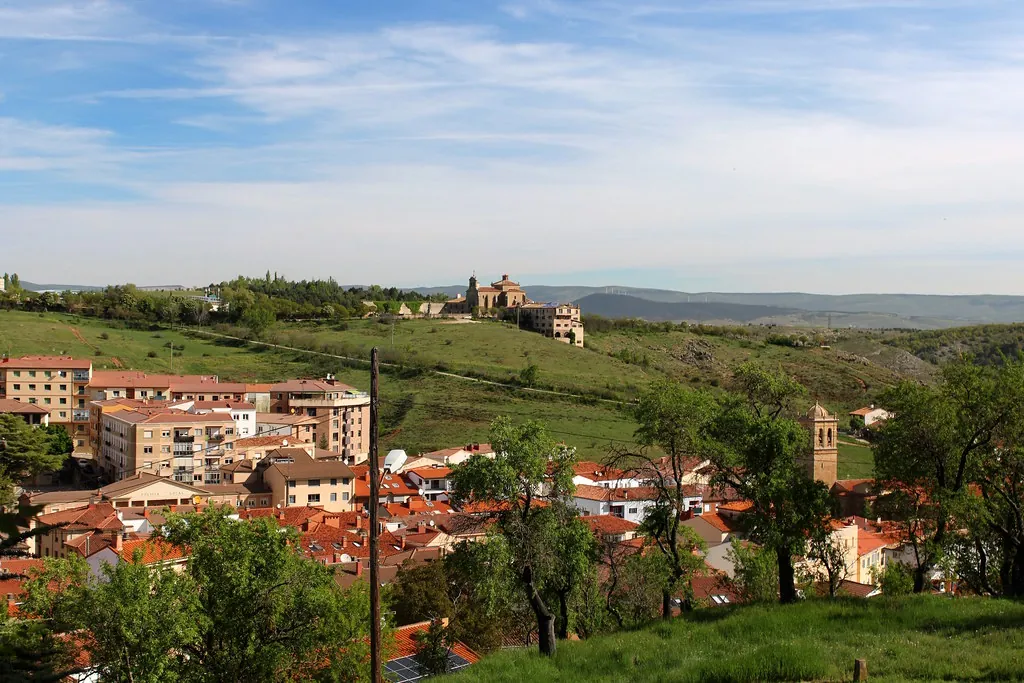
At 945 metres above sea level, Revilla Vallejera sits high enough for the air to carry a faint smell of cut barley even before the village comes into view. The first thing you notice is the church tower—no great Gothic affair, just a plain stone rectangle that has watched the same fields change colour for four centuries. From the road it looks almost suspended, a darker notch against the rolling cereal plains that stretch east towards Miranda de Ebro.
A Place That Never Learned to Whisper
Castile can be eerily quiet, but not here. Tractors start at six, dogs answer each other across the streets, and in late June the combine harvesters drone until the light finally fails after ten o’clock. The village keeps the acoustic habits of a working farmyard: metal gates clank, grain loaders rattle, someone is always calling a name down the lane. Visitors expecting a rural idyll sometimes flinch; locals apologise for nothing. Sound, like weather, is simply part of the calendar.
The altitude does strange things to that calendar. Frost can nip well into April, delaying sowing by weeks; on clear August nights the temperature plummets so fast that dinner on the plaza requires a fleece. British gardeners will recognise the climate: part East-Anglian breeze, part Pennine chill. What you won’t recognise is the dryness—barely 600 mm of rain a year, most of it squeezed into sudden spring storms that vanish as quickly as they arrive.
Stone, Adobe and the Honest Gaps Between
There is no old-town loop, no ticketed monument. Instead you get a crash course in rural Castilian building materials. The oldest houses are stone up to the first floor, adobe above, the bricks hand-moulded from local clay and straw. Rooflines sag like well-used sofas; timber balconies, once painted ox-blood red, have faded to the colour of dried thyme. Here and there a 1970s concrete balcony sprouts, ugly but honest about the decade it arrived. Half-restored façades stop abruptly where money ran out, leaving fresh lime mortar next to weather-beaten stone—an accidental patchwork more truthful than any heritage brochure.
The parish church of San Andrés keeps its doors unlocked. Inside, the air smells of candle wax and damp stone; the single nave is wide enough for a tractor tyre, narrow enough that the priest can preach without raising his voice. If you climb the tower (ask at the house opposite; Señora Eugenia keeps the key in a biscuit tin) you get the full measure of the plateau: a golden chessboard of wheat and barley, the occasional white dot of a lamb, and the dark smudge of the Montes de Oca thirty kilometres east.
Paths That Remember Shepherds
Footpaths strike out from the upper edge of the village, following drove roads older than the map. One track, the Cañada de los Pasiegos, drops north-east for 12 km to Medina de Pomar, descending only 180 m—perfectly flat by British standards, yet enough here to shift the vegetation from brittle cereal stubble to greener sheep fields. Another, less trodden, climbs three kilometres to an abandoned stone hut known as the Choza de la Reina. Bring water; there is no bar, no fountain, and in July the only shade is what you can crouch under a lone holm oak.
Signposting is sporadic. A yellow dash on a gatepost may vanish where farmers have repainted the metal. Download the free IGN Spain app before you leave Burgos; phone signal is strong on the plateau, and the 1:25,000 layer shows every boundary wall. Stout trainers suffice in dry weather; after rain the clay paths glue themselves to soles until you walk on mini-stilts of mud.
Lamb, Lentils and the Monday Market
Revilla Vallejera itself has one food shop, two bars and a bakery that opens when the dough feels like it. The serious provisioning happens in Medina de Pomar, fifteen minutes down the BU-550. Monday morning sees a modest street market: two fruit vans from Murcia, a van selling chorizo sliced to order, and a stall heaped with dried pulses—locally grown lentils, tiny and mottled green, cook in twenty minutes without soaking. Ask for “una arroba de lentejas” and you’ll get the traditional measure, roughly twelve kilos, tipped into a feed sack. The vendor will assume you own both a cauldron and a large family.
Back in the village, Bar Cristina grills chops from lechal lamb, milk-fed and no more than five weeks old. The meat is paler than British spring lamb, the flavour delicate enough to taste the milk. A plate of three chops, chips and a basic salad costs €12; bread is extra, olives come whether you asked or not. They stop serving food at four sharp—kitchen staff head home to prep the family meal, and no amount of pleading will reopen the grill.
When the Village Doubles in Size
Fiestas begin on the last weekend of August, timed to catch returnees before school terms start elsewhere. The population swells from 120 to nearer 400; British visitors sometimes panic at the sudden queue for the bakery. Events are low-key: Saturday evening brass band, Sunday morning procession with the statue of San Andrés carried shoulder-high, then a communal paella cooked in a pan wide enough to require a canoe paddle for stirring. Outsiders are welcome to buy a €5 ticket; you get a paper plate, a plastic spoon and as much rice as you can balance. Fireworks are modest—more bangers than starbursts—because dry fields sit only metres away.
The other date to note is 30 November, Saint Andrew’s proper feast. Winter has usually arrived by then; night frosts whiten the stubbles and the air smells of wood smoke. A midday mass is followed by anchoas al estilo (salt anchovies dressed with garlic and vinegar) in the bar, served free because the day is considered part of the church calendar rather than a commercial event. Bring gloves; the plaza faces north and the sun drops behind the rooftops before three.
Getting There, Staying Sane
Burgos is the nearest city, 65 km west on the A-1. From the UK, Ryanair flies into Burgos twice weekly April–October; otherwise fly to Bilbao and drive 90 minutes south. Car hire is essential—public transport is a school bus at dawn and a return run at four, neither aimed at tourists. Roads are good but narrow; meet a combine harvester on a bend and someone will be reversing half a kilometre.
Accommodation within the village is limited to one casa rural sleeping six (book through the Castilla y León tourism site; £90 a night for the house, minimum two nights). More options lie in Medina de Pomar: Hotel Camino de la Mota has doubles from £55, sturdy Wi-Fi and a pool that catches the evening sun. Petrol stations close at ten; fill up before you leave the motorway services.
What the Brochures Leave Out
August weekends can feel like a motorway lay-by. Day-trippers from Bilbao use the BU-550 as a rat-run to the Ebro valley, and convoys of hatchbacks sluice through at 100 km/h. The village speed limit is 30 km/h; nobody obeys it, so walking the main street requires the survival instincts of a urban pigeon. Winter, by contrast, is silent to the point of spooky. If snow blocks the pass at La Lora, 35 km away, the delivery lorry may not arrive; bread sells out by nine and the bar shuts early because the owner can’t restock beer.
Phone coverage is excellent—4G from every Spanish carrier—yet the only public Wi-Fi is in the plaza, courtesy of a mast erected by the regional government. It works until the bandwidth fills with teenagers uploading TikTok videos of themselves jumping off the stone bench. After that, switch to roaming and accept the roaming charge as the price of solitude.
Leave before dusk in October and you’ll see why the place still matters: the sun flattens into a bronze disc, combines kick up dust that hangs like pale smoke, and the church bell rings once, not for prayer but to mark the hour. No one is trying to sell you that moment; there isn’t a gift shop. The village simply gets on with harvesting, and for a short while you are part of the routine—something no heritage centre can fake, and no amount of crowd-management can spoil.