Full Article
about Revillarruz
Ocultar artículo Leer artículo completo
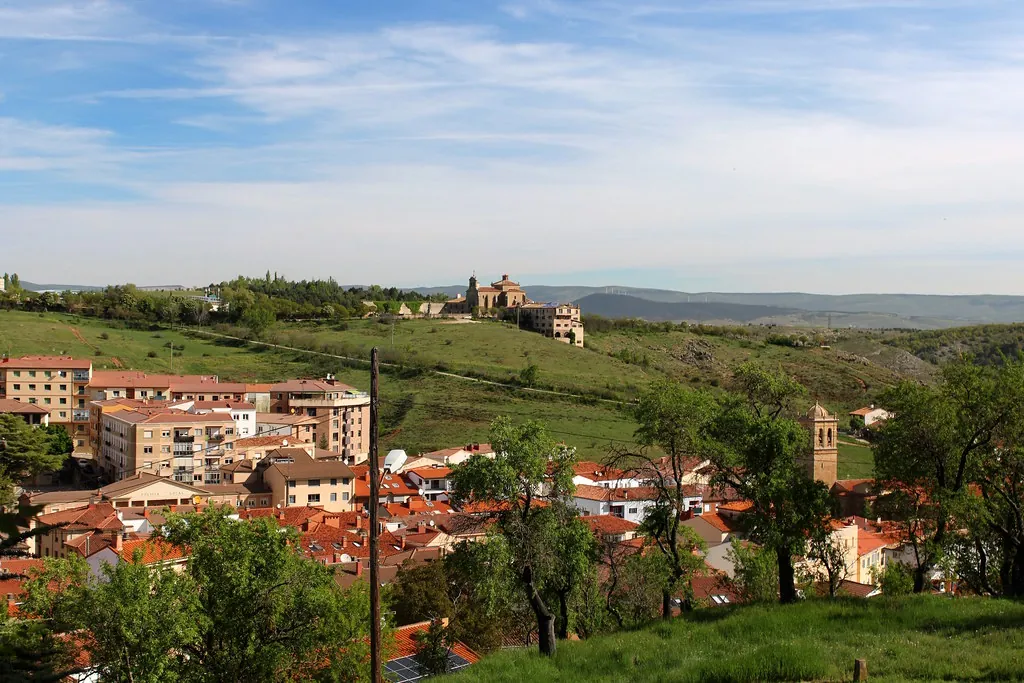
The church bell strikes seven and the tractor starts on cue. In Revillarruz, 800 metres above sea level on the northern rim of Spain’s central plateau, mornings begin with diesel and devotion. No mountains frame the view—just the meseta rolling east towards Burgos, its wheat stubble catching the first light like brass filings scattered across brown felt.
This is cereal country, where the altitude matters more than any landmark. At 800 m the air thins just enough to sharpen the light; winter nights drop to –8 °C while July midday hovers at 34 °C. The village sits on a slight swell of land, high enough that mobile reception flickers when the wind swings north, low enough that snow seldom lingers beyond a day. Locals claim you can watch a storm travel forty kilometres across the plain, black sheets of rain dragging like furniture being moved in the distance.
Stone, Brick and the Occasional Adobe
Revillarruz never had a noble estate to anchor it, so the houses march in a modest grid of ochre stone and brick the colour of dried chilli. Rooflines dip and rise because each generation added a room rather than knock down and rebuild. Wooden balconies—more Galician than Castilian—survive on three façades; their rails are painted the same municipal green as the road signs. Walk Calle del Medio at 11 a.m. and the sun bounces wall-to-wall, turning the street into a narrow solar oven. By dusk the same walls radiate stored heat, so pensioners shuffle out in slippers to argue about football while the temperature free-falls.
The parish church of San Pedro is the only thing that breaks the horizontal rule. Its tower, raised in 1642 and repaired after lightning in 1897, is square and blunt, more fortress than belfry. Inside, the nave smells of candle wax and grain dust—parishioners still bring a handful of wheat at harvest for the priest to bless. The retablo is nineteenth-century gilded pine, flaking in appetising chips that reveal earlier blues and vermilions. No tickets, no ropes; push the heavy door and you’re in.
Walking the Grid Roads
Every road out of Revillarruz is ruler-straight because they follow the old wheat-droving routes. The camino north to Villamedianilla is 4.3 km of gravel so even a city bike copes. Along the verge you’ll see calandra larks rising in pairs, and if the farmer has left a strip of fallow, stone curlews stand motionless like discarded carvings. The meseta feels flat until you check a GPS: the path actually climbs 60 m, enough for the village water tower to shrink to a toy. Turn back when the antenna disappears and you’ll clock 8 km with no gradient nastier than a motorway bridge.
Spring brings the most comfortable hiking window—mid-April to mid-May—when daytime peaks at 19 °C and the stone walls echo with house martins. September works too, after the harvesters have gone and the stubble releases a sweet, malty smell that lingers until dusk. Summer walks demand a 7 a.m. start; by 1 p.m. the tracks shimmer and lizards sprint for any scrap of shade. Winter daylight is short but crystalline—bring a windproof; the plateau wind has no hills to slow it and can knife through fleece at 30 km/h.
What You’ll Actually Eat
There is no restaurant in Revillarruz itself. The bar on Plaza Mayor opens at 7 a.m. for coffee and churros, serves a single plato combinado at lunch (€9, usually egg, chips and jamón), then closes when the owner feels like it. Instead, phone ahead to the next village, a six-minute drive east: Casa Toñi in Sotopalacios does roasted milk-fed lamb (€18 half ration) and a bowl of alubias pintas beans with chorizo that could stop a draught. If you’re self-catering, the mobile shop visits Tuesday and Friday at 11 a.m.; its van sells excellent local morcilla spiced with onion and cinnamon, vacuum-packed so customs won’t confiscate it on the way home.
When the Village Swells
For eleven months Revillarruz hums at about 120 permanent residents. Each August it doubles. The fiestas patronales begin on the 15th with a procession behind a brass band that has clearly done this repertoire since Franco’s day. Rocking chairs appear on doorways, teenagers drink litre bottles of calimocho on the football pitch, and the village square hosts a paella for 400 cooked in a pan the size of a satellite dish. Accommodation is impossible without prior booking—most visitors bunk with cousins on fold-out beds. If you crave atmosphere, come for the weekend; if you want silence, arrive a week later when the litter bins are emptied and the only sound is the irrigation pump throbbing like a distant bass line.
Getting There, Staying Warm
Burgos is 32 km west on the CL-101 and the road is fast except for one inexplicable 40 km/h zig-zag through a hamlet of twenty houses. Car hire from the city starts at £28 a day in low season; public transport does not exist. The nearest accommodation is in Villalbilla de Burgos, 12 km north: Hotel Monasterio de San Fermín occupies a converted grain warehouse, doubles from £55, heating included—necessary because even May nights can dip to 6 °C.
Pack layers. Altitude makes weather theatrical: a 24 °C afternoon can collapse into hail within an hour if a norte wind barges in. Mobile coverage is Vodafone or nothing; download offline maps before you leave the ring road. Finally, carry cash. The bar’s card machine works “when the weather is polite,” which, on the meseta, is a polite way of saying almost never.
The Anti-Postcard
Revillarruz will not change your life. You will not tick off a UNESCO site or brag about a secret tapas bar. What you get is a slice of Castilian routine played out 800 metres closer to the sky: grain trucks grinding gears, old men in berets arguing over the price of barley, and a horizon so wide the sunset needs twenty minutes to finish. Stay a night, walk the grid roads, taste the dust, and you’ll understand why half the young people who leave still come back to bury their grandparents on the hill where the view is free and the wind never stops.