Full Article
about Rezmondo
Ocultar artículo Leer artículo completo
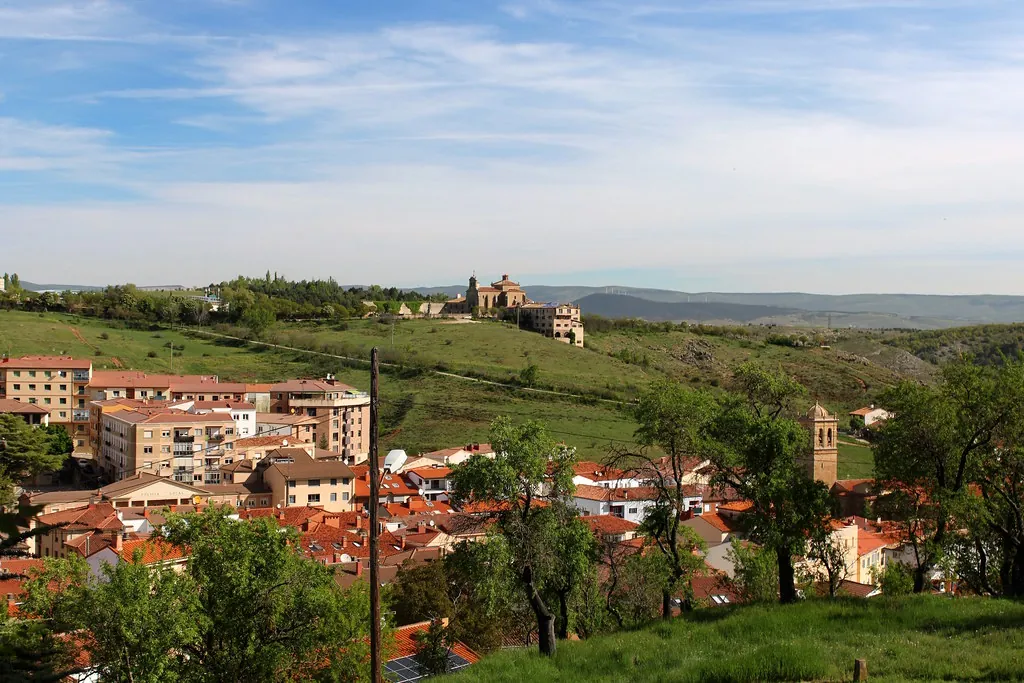
The wheat stops only because the road does. At 945 m above sea level, Rezmondo sits on the northern rim of the Meseta, the high plateau that tilts gently towards the Bay of Biscay 100 km away. You smell the distance in the air: a faint salt note riding the wind that scours the stone houses, reminding you that the Cantabrian coast is closer than Madrid. Yet the Atlantic is a rumour here, not a presence; the real master is the cereal cycle, and the village calendar still pivots on the day the combine harvesters start to drone.
Driving in, you pass more grain silos than people. The 2019 census lists 43 inhabitants, a figure that swells to perhaps 90 when the summer returnees arrive for the fiestas. That honesty is refreshing after the marketing gloss of so many Spanish “pueblos con encanto”. Rezmondo makes no claim to enchantment; it offers instead a working lesson in how Castilla survives when the young leave for Burgos or Santander and the old keep pruning their tomatoes.
Stone, adobe and silence
The single main street—no name, simply “la carretera”—runs for 300 m between low houses the colour of dry biscuit. Walls are stone to waist height, adobe above, the whole capped with terracotta tiles whose frost-bitten edges map 200 winters. You can walk the grid of three side lanes in ten minutes, yet the details reward slowing down. A bread oven projects like a stone igloo from one gable; a wooden hatch covers the drop to a bodega dug three metres into the clay, still used to store the young red that arrives in 20-litre plastic “garrafas” from Valdejalón. Knock and, if Aurelio is about, he’ll lift the lid so you can inhale the damp-earth smell of tempranillo ageing in bulk, not barrels.
The parish church of San Pedro keeps its doors open, a courtesy disappearing in bigger towns. Inside, the single nave smells of paraffin and beeswax; the 17th-century retablo is folk-Baroque, gilded but not gaudy. Weekday mass at 19:00 draws eight widows and a farmer who arrives in his tractor, engine left ticking over outside in case the priest is swift. The bell still rings the Angelus by hand—no automated clockwork—so if you hear three uneven peals at noon, someone is pulling the rope.
What the land gives
Rezmondo is ring-fenced by a patchwork of wheat, barley and vetch that changes colour faster than the British sky. In late April the fields glow an almost violent green; by July the stalks have turned blonde and brittle, the colour of a lion’s mane. After harvest the stubble is burnt off, and the earth shows its true chalky face, white as Cretan limestone. These are not the photogenic terraces of Andalucía; they are broad, unshaded, tractor-friendly rectangles that roll to the horizon. Bring a hat—shade is as rare as public toilets.
Footpaths exist, but they are farm tracks rather than way-marked trails. The most useful leaves the village at the top silo, drops past an abandoned threshing floor, then follows a livestock drift for 4 km to Villamartín de Treviño. OSM mapping on your phone works; signposts don’t. Gradient is negligible, so a steady walker can do the out-and-back in two hours, returning in time for the lunchtime opening of the only bar. Stout shoes are enough; boots are overkill unless the clay is wet, when the surface clings like cold toffee.
Eating, or not
There is no restaurant. The socioeconomic miracle of rural Spain is that places smaller than a Tesco Metro still manage to support a bar, and Rezmondo clings to this rule. Casa Félix opens at 08:00 for coffee and churros if Félix feels like it, shuts around 15:00, then reopens at 20:00 for beer and tapas. The menu is whatever María bought yesterday in Melgar de Fernamental: often migas—fried breadcrumbs with garlic and chorizo—plus eggs from her own hens. A plate costs €4; a caña of lager €1.50. Cards are accepted, but the machine is prehistoric: carry cash. If the shutter is down, the nearest alternative is in Sasamón, 12 km east.
Serious eating means driving. In Melgar (20 min) Asador Oter serves lechazo—milk-fed lamb roasted in a wood oven—at €22 per quarter. The house red is a robust crianza from Ribera del Duero; ordering water marks you as either a local or a Calvinist. Book at weekends; half of Burgos province seems to lunch there on Sunday.
Sleeping under the eaves
Accommodation is limited to one licensed casa rural: El Sembrador. The 19th-century grain store has been sliced into four apartments sleeping two to five. Walls are 80 cm thick, so nights are cool even in August; heating is by pellet stove, with back-up radiators for winter when the plateau can hit –8 °C. Each flat has a kitchen, but the nearest supermarket is in Melgar, so stock up before you arrive. High-season weekend rate is €90 for two; mid-week drops to €65. British guests note: towels are provided, but not the fluffy bath-sheet variety—expect the practical sort your Spanish aunt would recognise. There is no Wi-Fi; 4G from Vodafone reaches two bars on the upstairs windowsill if you hold your phone like a divining rod.
When to bother, when to stay away
April–May and mid-September to mid-October give soft light, working farms and temperatures in the low 20s °C. In spring you may catch sheep being driven along the road for transhumance; the bleating echoes between the stone walls like a badly tuned orchestra. Autumn smells of straw and wood smoke; the communal threshing area becomes a classroom where the old men teach the one local teenager how to sharpen a scythe he will probably never need.
August is hot, often 34 °C by 15:00, and the landscape has the bleached look of overcooked toast. The fiestas (15–17 August) bring temporary bars, a foam machine for children and a Saturday-night dance that finishes when the wine runs out—about 05:30. If you crave silence, avoid that weekend; if you want to see the village almost lively, book early.
Winter is brutal. Daylight shrinks to nine hours, the wind carries Arctic bite and most houses keep their shutters bolted. Photography converts to monochrome by default; the reward is hearing your own footsteps bounce off the stone like a metronome. Come then only if you enjoy the sensory austerity of a Beckett stage set.
Getting here, and away
The drive from Santander airport takes 90 minutes: A-67 to Aguilar de Campoo, then A-231 south to Sasamón, finally a 12 km hop on the BU-610. Petrol stations are scarce after Burgos; fill up. Bilbao adds 30 minutes but usually has cheaper hire-car rates. There is no bus; the nearest railway halt is in Villarcayo, 35 km north, served by a regional line that links Bilbao with León twice daily. Taxis refuse to come this far into the emptiness unless pre-booked and paid in advance—about €50.
Rezmondo will never feature on a “Top Ten Cute Villages” list, and the locals would be baffled if it did. It is a place to pause, not a destination to conquer. Walk the perimeter at sunset when the grain silos turn gold, buy a beer in the only bar, listen to the wheat rustling like distant applause, and leave before you start thinking silence is normal.