Full Article
about Royuela De Rio Franco
Ocultar artículo Leer artículo completo
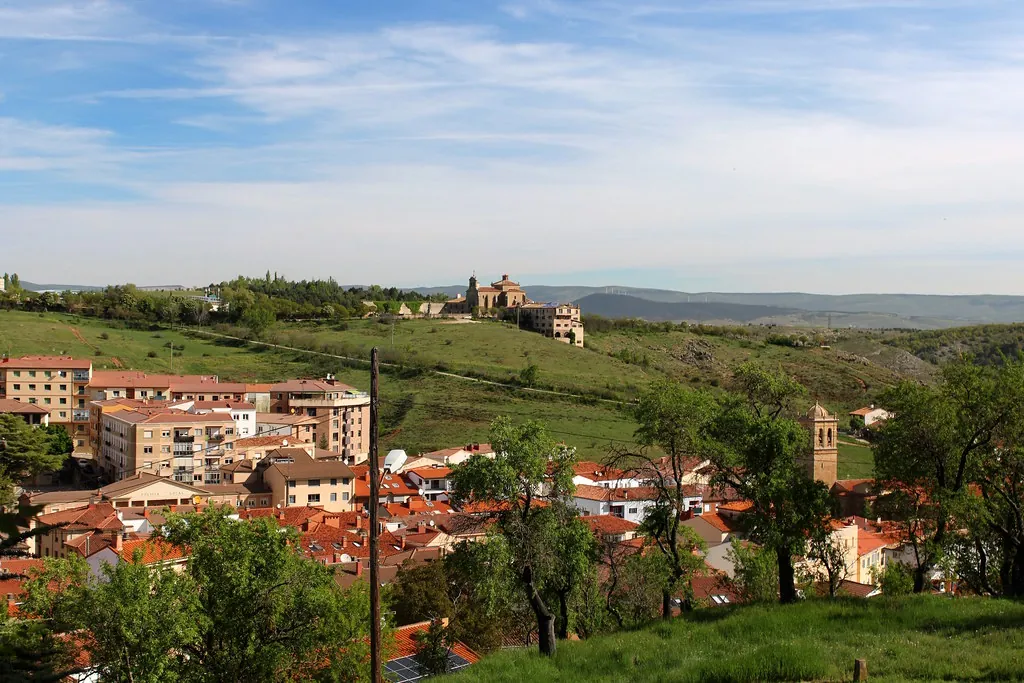
The church bell tolls twice. Nobody hurries. A tractor idles outside the single bar, its driver inside drinking a caña that costs €1.20 and comes with a plate of chorizo sliced so thin you can read the newspaper through it. This is Royuela de Río Franco, halfway between Burgos and Soria, where the map turns beige and the silence has weight.
At 917 metres above sea level, the village sits on the northern lip of the Meseta, Spain’s central plateau. The air is thinner, the sky wider, the wheat fields rolling away like a beige ocean. In April the green shoots are soft enough to bruise with a fingernail; by late July the same stalks stand chest-high and rustle like dry paper. There is no coast, no mountain drama—just horizon, larks and the smell of warm stone.
Stone, Adobe and the Smell of Bread at Dawn
Royuela’s houses are the colour of the earth they stand on: ochre plaster, grey limestone corners, timber beams darkened by four centuries of winters. Many still have the original wooden doors, iron-studded and small enough to make a six-footer duck. Look up and you’ll see haylofts with slots for doves, and underneath, bodegas sunk into the ground where families once made enough wine to last the year. The older residents remember when every household kept a pig and the slaughter in November was a village event; today only one family continues the tradition, selling morcilla to neighbours from a chest freezer on their porch.
The 16th-century parish church of San Andrés squats at the top of the rise, its tower a navigation point for anyone who has wandered too far into the stubble fields. Inside, the air is cool and smells of candle wax and damp sandstone. The altar is plain, the gold leaf long stripped by Napoleonic troops or local creditors—no one is quite sure. What remains is a single Romanesque capital reused as a holy-water stoup, the carving of acanthus leaves still sharp after 900 years of thumbs.
A Road Map that Says “Keep Going”
Getting here is simple, provided you like driving. From Madrid-Barajas it is 173 km on the A-1, then 35 km of empty secondary roads that snake through the Sierra de la Demanda. In March the passes can still carry snow; the provincial gritters are efficient, but winter tyres are sensible insurance. Burgos airport is closer—48 km—but has no direct flights from the UK, so Madrid is the only realistic gateway for British visitors. There is no bus, no train, no Uber. Hire-car fuel receipts become souvenirs.
Once arrived, park on the rough ground beside the football pitch; the streets are too narrow for anything wider than a Fiat 500. Mobile coverage is patchy: Vodafone picks up one bar if you stand on the stone bench outside the ayuntamiento; EE gives up entirely. This is not a glitch—it is the appeal.
What Passes for Action
Royuela does not do “attractions”. The nearest museum is 43 km away in Burgos (the Cathedral treasury, €7, closes at 19:00). Instead, the day’s entertainment is self-propelled. At sunrise the cereal fields turn rose-gold and the tracks that grid the plateau are firm enough for trainers. A 5-km circuit south to the abandoned hamlet of Río Franco passes an Iron-Age hill fort—just a double ditch, but enough to make you wonder who else paused here 2,500 years ago. Take water: there are no fountains and summer temperatures touch 34 °C by 11 a.m.
Photographers do well at dusk when the sky bruises purple and the stone walls glow pink. The lack of street lighting means the Milky Way is visible on any moonless night; Orion hangs so low you feel you could snag your coat on his belt. In October the annual meteor shower draws a handful of amateur astronomers who park camper vans on the ridge and share bottles of Ribera del Duero with bemused farmers.
Food is what the land yields. The village has no restaurant, but the bar will fry you a plate of pimientos de Padrón if you ask before noon. Otherwise, shop in Salas de los Infantes, 12 km north, where the Día supermarket stocks crusty barra bread and vacuum-packed lamb shoulder labelled “lechal—milk-fed, 21 days”. The local cheese is queso de Burgos, white and mildly tangy, closer to ricotta than Cheddar; spread it on toast with honey made from the village’s own hives. If you crave Michelin stars, drive to Aranda de Duero (40 min) for Lechugana’s roast suckling pig; if you want honesty, stay here and accept whatever the neighbours offer.
When the Calendar Says Fiesta
For 51 weeks of the year Royuela is quiet enough to hear a bicycle chain rust. Then, usually the second weekend of August, the population quadruples. Sons and daughters who left for Bilbao or Barcelona return with folding chairs and cool-boxes. The fiesta begins with a sung mass accompanied by a brass trio that has played the same three chords since 1978. Afterwards, the plaza fills with long tables and bowls of caldereta, a lamb stew thick enough to stand a spoon in. At midnight a fairground erects a single ride—a centrifugal spinner that looks alarmingly homemade—and someone rigs up coloured bulbs between the plane trees. The dancing keeps going until the generator runs out of diesel at 05:30. By Monday the square is swept, the visitors gone, and the bell tolls twice again.
The Honest Truth
Royuela de Río Franco will never feature on a “Top Ten” list. There is no gift shop, no pool, no Wi-Fi worth the name. What you get is space, silence and the occasional conversation with someone who remembers when British planes bombed the nearby railway during the Civil War. Come if you need to finish a novel, teach a child that grain grows on stalks, or simply reset your circadian rhythm to the pace of a place that refuses to hurry. Pack groceries, download offline maps and bring a coat—even in May the wind off the plateau can slice through denim. If that sounds like effort, stay on the coast. The wheat will still ripen without you, and the bell will still toll twice, whether anyone is listening or not.