Full Article
about Rublacedo De Abajo
Ocultar artículo Leer artículo completo
The church bell tolls at noon, and every dog in Rublacedo de Abajo seems to answer back. From the single bench in Plaza Mayor, watch them yap at nothing in particular while their owners emerge from stone doorways, wiping lunch from their mouths. This is village theatre at its most honest—no tickets, no timetable, just the daily rhythm of 500 souls who've learned to measure time by wheat fields rather than clocks.
The Edge of the Plateau
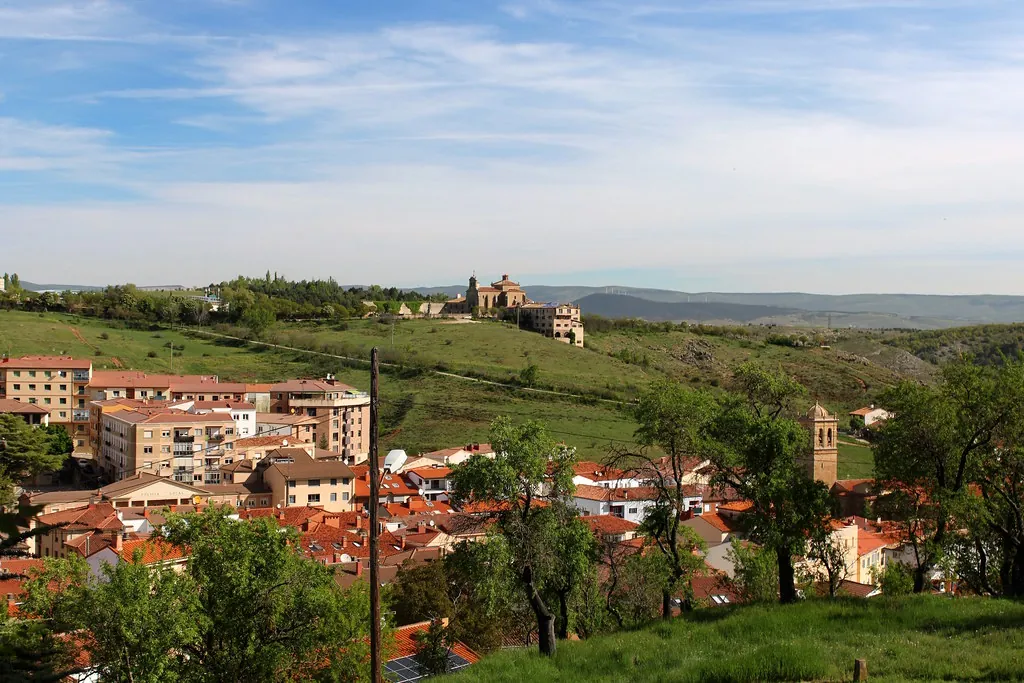
At 945 metres above sea level, Rublacedo sits where the Cantabrian mountains finally surrender to the meseta. The air carries that particular Castilian thinness that makes afternoon shadows sharper, colours bleached yet somehow more defined. On clear days—and most are—the horizon stretches forty kilometres east to Miranda de Ebro, west towards Burgos. No hills interrupt the view. Just wheat, barley, and the occasional wind turbine rotating with mechanical patience.
The altitude matters more than you'd expect. Summer mornings start cool enough for a jumper, but by 2pm the mercury's touching 35°C and shade becomes currency. The village's single-row street plan wasn't aesthetic choice but survival—houses built shoulder to shoulder, creating narrow corridors where even July's sun can't penetrate. Winter reverses the equation. When Atlantic storms roll across the plateau, Rublacedo cops the full force. Temperatures drop to -8°C, and the wind finds every gap in your clothing. The locals respond by simply staying indoors. They're not being rude. They're being sensible.
Walking the Agricultural Calendar
There's no tourist office, no map board, no suggested routes. Better that way. Start at the iglesia parroquial—nineteenth-century rebuild on medieval foundations—and follow whichever street points away from the main road. Within three minutes you're among the wheat. The tracks are farm access routes, not footpaths, but nobody minds walkers. Just stick to the edges and close gates.
Spring brings the most dramatic transformation. By late April, emerald shoots carpet the fields, contrasting against the village's honey-coloured stone. The air smells of wet earth and fertiliser—agricultural perfume that city dwellers pay farmers' market premiums to forget they're buying. Come June, the green fades to gold. Harvest starts earliest here than anywhere else in Burgos province; combines work through the night, their headlights creating alien crop circles in the darkness.
Autumn disappoints photographers expecting New England colours. Castilla doesn't do autumn. The stubble fields turn grey-brown overnight, and suddenly you're walking through a charcoal sketch. Winter's the surprise package. Frost transforms the stubbled landscape into something almost Arctic. Photographers arrive for dawn shoots, discovering that minus temperatures feel colder here than Alpine ski resorts. The dryness strips moisture from skin; lip balm isn't vanity but necessity.
Eating What's Available
The village bar—name changes depending who's running it, currently just "Bar" in fading paint—opens at 7am for tractor drivers and closes when the last customer leaves. They serve coffee that could strip paint, plus basic raciones: tortilla the size of cartwheels, chorizo that actually tastes of paprika rather than food colouring, and lechazo (roast suckling lamb) on weekends. A plate feeds two hungry walkers for €12. Wine comes in glasses or bottles, no pretension about vintages. The red's from Ribera del Duero, forty minutes west, and costs €2.50 a glass.
For self-caterers, the Tuesday mobile shop parks outside the church 10am-1pm. Stock up on local cheese—queso de Burgos, mild and slightly salty, nothing like the supermarket version—and morcilla that contains enough rice to qualify as a complete meal. The bakery van arrives Thursday afternoons. Their empanadillas, filled with tuna and red pepper, survive hiking trips better than any energy bar.
The Accommodation Reality Check
Let's be honest about sleeping arrangements. Rublacedo has one rental property worth booking: El Autillo, a converted grain store on the village edge. Paula, whose family have farmed here since records began, has created something genuinely special—exposed beams, wood-burning stove, views across fields that make you understand why Castilian painters became obsessed with horizons. It books solid April-October, costs €120 nightly, and the nearest alternative is twenty kilometres away in Miranda de Ebro.
Camping's technically possible but practically miserable. The plateau's exposure means winds that'll flatten tents not pegged with industrial stakes. Wild camping's tolerated if you're discreet and leave by dawn, but water sources are non-existent beyond the village. Better to day-trip from Burgos, forty minutes by car.
When to Bother Making the Journey
April and May justify the detour. Temperatures hover around 18°C, wildflowers—yes, actual colour—appear in field margins, and villagers emerge from winter hibernation sociable rather than suspicious. September works too, though harvest dust hangs in the air like brown fog.
July and August attract Spanish families returning from cities, meaning the bar stays open later and someone might actually be around to ask directions. The heat's brutal but manageable if you adopt local timing: walk 7-10am, siesta through midday, venture out again 6pm-dusk.
Winter visits require specific motivation. Landscape photographers love the crystalline light, but everyone else finds the village shuttered and silent. Snow's rare but when it comes, the province's limited gritting resources focus on the A-1 motorway. Side roads become ice rinks. Bring chains or don't come.
Getting Here Without Losing Your Sanity
No trains. No buses. Rublacedo's served by the N-1 Madrid-Irun road, which sounds grander than the dual-carriageway reality. From Bilbao airport, it's ninety minutes south on the A-68, then twenty minutes of country roads that'll test your sat-nav's optimism. Burgos, with its high-speed train connection to Madrid (2.5 hours), provides the nearest rail link—then you're renting a car anyway.
The drive itself offers compensation. The BU-550 approach road lifts you onto the plateau gradually, wheat fields replacing pine forests until suddenly you're level with distant mountains that seemed impossible an hour ago. Pull over at the mirador three kilometres out. The village appears as a dark smudge interrupting infinite pale gold. It's only then you understand why Castilian writers become obsessed with concepts of vastness.
The Honest Verdict
Rublacedo de Abajo won't change your life. It might, however, recalibrate your sense of scale. In a country where medieval cities and coastal resorts compete for attention, this is somewhere that simply exists for its own reasons. Come for the walking, stay for the bar conversations that start with weather and end with your life story translated through phrasebook Spanish. Just don't expect entertainment. Expect space. Expect silence punctuated by church bells and tractor engines. Expect to understand, finally, why Castilians measure distance in horizons rather than kilometres.