Full Article
about San Juan Del Monte
Ocultar artículo Leer artículo completo
Dawn on the Meseta
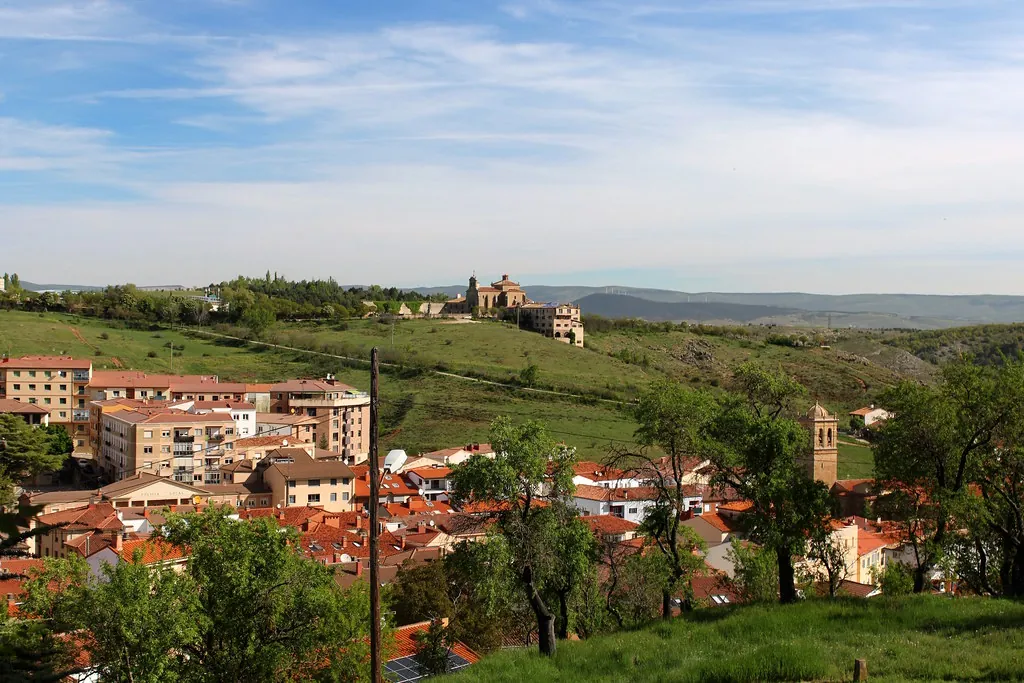
At six-thirty on a still-April morning the only sound is the grain dryer humming in a farmyard on the edge of San Juan del Monte. Then comes the rasp of a diesel engine as a lone tractor heads out to the wheat, its headlamps floating across the dark like twin moons. By seven the first swallows are stitching the sky above the church tower, and the village bakery—really just a counter in someone’s front room—has sold its first batch of bizcochos to men in overalls who leave engine oil on the waxed paper. This is everyday theatre in the northern corner of Burgos province, where the high plateau begins to wrinkle towards the Cantabrian hills and where, if you arrive expecting postcard Spain, you will leave either disappointed or oddly relieved.
Stone, Adobe and Satellite Dishes
No single monument demands attention. Instead, the village unrolls as a loose chain of stone houses, ochre plaster and galvanised roofs that glint when the sun climbs. The parish church of San Juan Bautista keeps its doors locked unless mass is due; knock at the presbytery opposite and the sacristan will shuffle over with a key the size of a courgette. Inside, the retablo is a sober Baroque affair paid for by wheat profits in 1734, but most visitors remember the smell—beeswax and centuries of incense ground into the pine floorboards—more than the carving.
Walk the back lanes and you’ll see how the place has adapted without bothering to advertise it. Adobe walls that once housed livestock now shelter Wi-Fi routers; satellite dishes bloom like grey sunflowers above 18th-century lintels. A house on Calle Real has fitted plate-glass windows into the old stable arches, so the family car sits where the manger used to be. The overall effect is neither quaint nor jarring—just practical, the way rural Castilla has always been.
Clocking Off Early
Afternoons belong to the fields. By two o’clock the streets empty, shutters clatter down and even the bar-cum-shop pulls its metal grille to half-mast so the owner can sneek a siesta on the pool table. This is the moment to follow the farm tracks that radiate west towards the Arroyo del Valle. The paths are not way-marked; instead you navigate by telegraph poles and the concrete huts that store irrigation pipes. Within twenty minutes the village sinks behind a rise and you are alone with skylarks and the low thock-thock of a centre-pivot sprinkler. Bring water—shade is scarce and the nearest fuente is a cattle trough whose float valve sticks.
Spring brings acid-green wheat and blood-red poppies; September turns the horizon bronze and fills the air with chaff. Either season delivers skies so wide that weather approaches in slow motion: first a slate smudge on the rim, then an hour later the crack of thunder and rain hopping off the dust like quicksilver. Photographers do well at dusk when the stubble burns and the smoke drifts sideways in the last light.
What Passes for Nightlife
Evenings restart around seven. The bar reopens, television blaring the regional lottery, and a card table appears as if materialised by magic. Order a caña (€1.40, served in a straight glass rinsed in a plastic basin) and you’ll be expected to comment on the wheat price or the latest EU subsidy form. Food is whatever Marga, the owner, has stewed that day—perhaps patatas con chorizo (€6) or a plate of roast peppers topped with anchovy. Vegetarians should not hope for substitutions; at best you’ll get an omelette without the jamón.
If you need a proper restaurant you drive ten minutes north to the N-622 where a roadside grill serves lechazo—milk-fed lamb roasted in a wood-fired brick oven. Half a lechazo feeds two greedy adults and costs €24; house wine arrives in a plain bottle with no label and tastes of blackberries and aluminium. Book at weekends or join the queue of extended families who treat Sunday lunch like a semi-religious rite.
Festivals and Other Disruptions
Normal hush shatters during the fiestas patronales of 24 June. The population doubles as descendants flood back from Burgos city, Madrid and, increasingly, Bilbao. A marquee goes up in the football field, a Cuban orquesta is hired (booked online, paid by village whip-round) and suddenly every caliente sold out of a cool box costs three times the usual rate. The single policeman imported for the occasion looks overwhelmed as fireworks ricochet off stone walls at three in the morning. Accommodation? Forget it unless you reserved the previous autumn, and even then your room may be re-let to someone’s second cousin.
Visit a week earlier and you can watch the preparatory tension: women whitewashing their thresholds, men arguing over who will carry the saint’s platform, teenagers practising pasodobles on trumpets with sticking valves. The morning after the feast the streets look bombed—streamers, chicken bones, one lost sandal—and by lunchtime the village has slunk back to its default tempo as if nothing happened.
Beds, Bogs and Buses
San Juan del Monte holds no hotel. There are two casas rurales: one sleeps six around a courtyard with a leaking wisteria, the other is a smarter conversion on the main drag offering underfloor heating and an espresso machine (€90 per night, two-night minimum). Both give you a front-row seat to agricultural noise—expect grain lorries at dawn and dogs whose sense of dawn is flexible. The nearest public loo is inside the town hall, open only when the clerk remembers; otherwise rely on bar facilities and purchase a drink first.
Getting here without a car demands patience. ALSA runs one daily bus from Burgos at 15:20, returning at 07:10 next day. The journey takes fifty minutes across flat farmland so featureless you could nap through it and wake up doubting your coordinates. Trains do not stop—the line was lifted in 1987. Drivers should leave the A-1 at junction 221, then follow the CL-122 for 12 km; the turn-off is unsigned except for a dented metal bull silhouette that spins in the wind.
When the Wind Turns
Castilla’s weather is a fickle landlord. Winter brings la escarcha: hoar frost that turns the ploughed earth into a field of white scales, and mist that can sit for days like a lid. Summer, on the other hand, hammers. Daytime highs of 38 °C are routine in July, and the village fountain dries to a trickle by August. Come then and you will share the shade with elderly men who discuss rainfall records as if they were football scores. English speakers are rare; a greeting of “Buenas” earns a nod, but attempts at conversation quickly expose the limits of phrase-book Spanish.
Still, effort is repaid. Ask permission before photographing anyone in a field—farmers suspect drones are assessing their subsidies—and you may be invited to watch a mechanical harvester strip a hectare in twenty minutes, the grain pouring like marbles into the trailer while the driver listens to heavy metal at full volume through cab speakers.
Last Orders
Leave in the evening and the place contracts to a string of yellow streetlights against the black plateau. A last tractor crawls home, indicator blinking for a turn no one else will see. San Juan del Monte offers no souvenir shops, no view-point carpark, no audio guides—just the slow pulse of a community that measures distance in sowing seasons rather than kilometres. If that sounds like too little, pick the coast instead. If it sounds like just enough, come before the wheat turns gold again.