Full Article
about Santa Cruz De La Salceda
Ocultar artículo Leer artículo completo
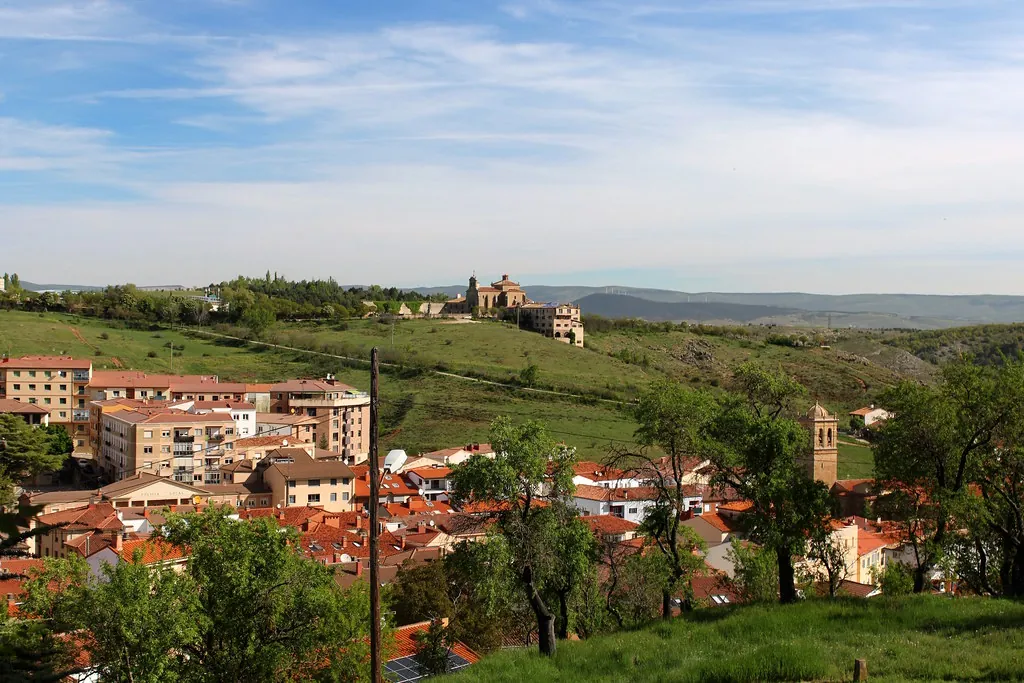
The wheat stops here. Halfway between Burgos city and the Aranda del Duero wine belt, the A-1 motorway slices across an ocean of cereal fields so flat you can watch weather systems walk towards you for half an hour. Then, suddenly, the land wrinkles. A shallow ridge rises, oak scrub appears, and the GPS tells you to leave the fast lane. Five minutes later you are in Santa Cruz de la Salceda, population 140, elevation 943m, silence 100%.
This is not a village that rescues you with views. The church tower is the highest point for kilometres, and from the tiny plaza you look out across ploughed rectangles that shimmer gold or green depending on the month. What the place offers instead is a lesson in scale: how big the sky can feel when nothing interrupts it, how far a boot crunch travels on a gravel track, how long a bottle of cold lager lasts when the only bar open is run by Marisol, who also sells postage stamps and tractor oil.
Stone, Mud and Oak Beams
The oldest houses are built from whatever was underfoot – limestone blocks the colour of digestive biscuits, packed with mud mortar the shade of builder’s tea. Their roofs drop almost to shoulder height, weighted with hand-split oak beams blackened by two centuries of grain dust. A few have been patched with modern brick and bright shutters, but most stand quietly deteriorating, their wooden doors bolted from the inside by owners who moved to Burgos or Madrid decades ago. Peek through a gap and you may see a 1950s calendar still pinned to the wall, the ink faded to the same ochre as the neighbouring field.
There is no formal heritage trail; the village is small enough to circumnavigate in fifteen minutes. Yet details reward the nosey: a stone trough still fed by a spring, a bread oven converted into a toolshed, a crumbling coat of arms above a doorway that once belonged to the local hidalgo. The parish church of Santa Cruz keeps Spanish hours – unlocked for Mass at 11 a.m. Sunday, otherwise you must ask for the key at number 14. Inside, the air smells of candle wax and sun-baked plaster; the single nave ends in a retablo gilded so dimly you need a moment for the cherubs to emerge from the gloom.
Walking the Invisible Frontier
Santa Cruz sits on the frontier between the central plateau and the northern mountains, and the landscape changes within a stride. Leave by the eastern track and you are on the Cidacos River footpath, a 7km loop that dips into a thicket of juniper and ash where nightingales rehearse at dawn. Head west and you are on the Páramo de Santa Cruz, a high steppe where skylarks vanish into their own song and the only shade is your own shadow. Both routes are way-marked with splashes of yellow paint that someone refreshes every spring; gradients are gentle, but carry water – at 943m the sun has bite even in April.
Serious hikers use the village as a staging post on the 21km ridge walk to Mambrilla de Castrejón, a route that passes three abandoned pajares (grain stores) perfect for a windy picnic. Mountain boots are overkill; decent trainers suffice, though the clay path cakes like chocolate fondant after rain. Expect to meet more kestrels than people.
Eating (and Not Eating) Locally
Food is where Santa Cruz’s size catches up with it. The single bar, Casa Marisol, opens at seven for coffee and churros, shutters at three, reopens at eight for beer and tapas. On fiesta weekends Marisol’s husband fires up the wood oven and produces lechazo (milk-fed lamb) at €18 a quarter, crisp skin giving way to meat so tender it parts from the bone like warm fudge. Otherwise you will get tortilla, patatas bravas, and a plate of local chorizo whose smokiness reminds you that every farmhouse roof here once had a hanging matanza.
For choice you drive 13km to Aranda de Duero. The underground wine cellars beneath the town square offer Ribera del Duero tastings for €8; the suckling-lamb restaurants along Calle Isilla do full spreads for €35 a head, wine included. Book ahead on Sundays – half of Valladolid drives over for lunch.
When to Come, When to Stay Away
April and late-September give you 22°C days, cool nights, and wheat fields striped green and gold like a Paul Smith shirt. In July the thermometer kisses 37°C by noon; the village empties except for two retired farmers who sit in the portal shade playing dominoes with tiles bleached almost white. Winter is a different bargain: skies the colour of Tupperware lids, mercury down to –7°C, and the occasional dusting of snow that turns the mud walls into iced gingerbread. Roads are gritted promptly – this is Castile, not the Picos – but bring layers and expect central heating fuelled by olive stones rather than constant warmth.
Accommodation is the perennial problem. There are no hotels inside the municipality; the nearest beds are in Aranda, a 15-minute drive. Two holiday cottages advertise on Spanish rental sites, both restored with stone floors, wood burners and Wi-Fi that flickers whenever the wind nudges the antenna. They charge €90 a night minimum, less if you stay a week, and you will be handed the keys in the bar after Marisol finishes her shift.
Soundtrack of a Siesta
By two o’clock the plaza falls silent enough to hear a lizard scuttle across the church steps. The only movement is the shadow of the bandera de España above the ayuntamiento, snapping in the breeze like a slow metronome. This is the moment that defines Santa Cruz: not what you do, but what you stop doing. No traffic lights, no playlists, no espresso machines – just the hush of a place that has been losing inhabitants since 1950 and sees no reason to fake a recovery.
Come evening, the returning tractors grind up the main street, headlights carving tunnels through the dust. Farmers greet each other with a raised hand, the same gesture their grandfathers used when this was still Castile’s breadbasket. You could drive on to the next vineyard, the next Michelin-listed asado, the next boutique hotel. Many do. But if you stay until the sky turns from brass to bruised violet, you will understand why some villages do not need to be “discovered”. They simply continue, and for a night or two that is enough.