Full Article
about Santa Ines
Ocultar artículo Leer artículo completo
The church bell strikes noon and the only response is a tractor's diesel rumble. In Santa Inés, population five hundred, time doesn't stop so much as stretch itself across the wheat fields until it becomes indistinguishable from the horizon. This is Castile without the coach parties, where the silence carries the weight of centuries and the nearest traffic jam involves sheep rather than cars.
The Geometry of Empty Space
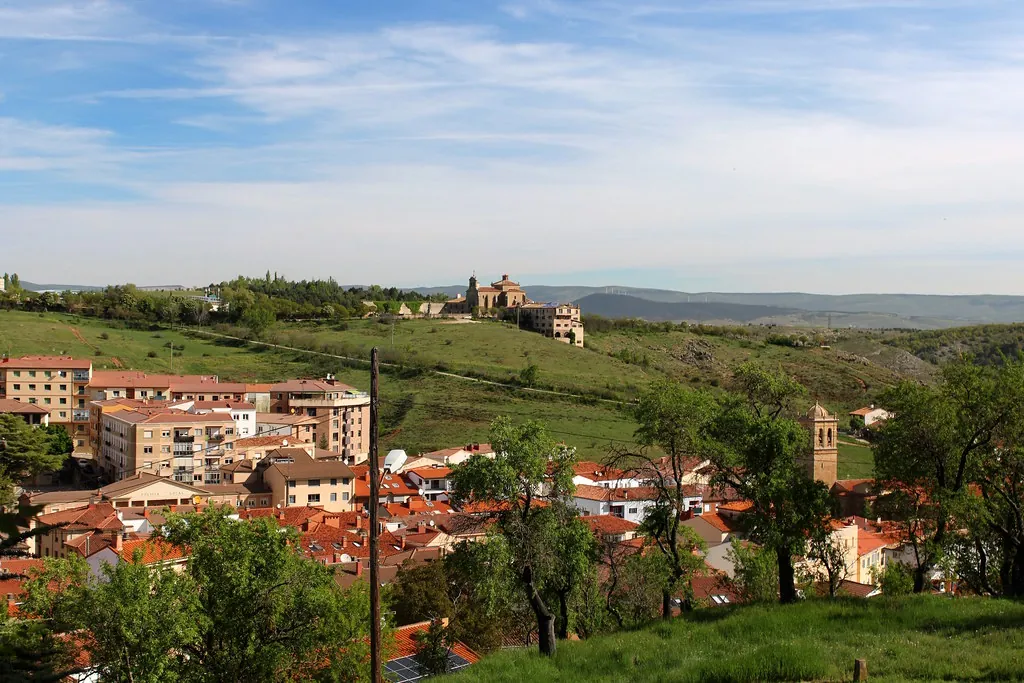
Forty minutes south-east of Burgos city, the A-1 motorway peels away and the landscape flattens into something approaching infinity. Santa Inés sits at 865 metres above sea level, high enough that the air carries a sharp edge even in May, but low enough that the village merges seamlessly with the surrounding plains. There's no dramatic approach, no sudden reveal. One moment you're travelling through fields of gold stubble, the next you're navigating streets barely wider than a combine harvester.
The parish church of Santa Inés dominates the modest skyline, its sandstone tower visible from kilometres away across the cereal monoculture. Built in the 16th century and modestly refurbished in the 18th, it's neither grand nor particularly ornate. What makes it remarkable is its absolute centrality to village life – both geographically and socially. The bells still mark the day's rhythm, calling the faithful to mass and everyone else to lunch at 2 pm sharp.
Stone and adobe houses cluster around the church in an irregular pattern that suggests organic growth rather than planning. Many stand empty now, their wooden doors painted government-issue green, ironwork rusting quietly. Others have been meticulously maintained by families who've lived here for generations, their small courtyards visible through gateways just wide enough for a donkey and cart. The architectural details reward close attention: medieval stone lintels carved with crosses, 19th-century ironwork, the occasional heraldic shield hinting at forgotten noble connections.
Working the Land, Working the Clock
This is farming country without romance. The fields surrounding Santa Inés produce wheat, barley and legumes on an industrial scale. Modern machinery has replaced the traditional ox teams, but the fundamental relationship between village and land remains unchanged. During harvest season in July, the air fills with dust and the smell of diesel. Grain lorries rumble through streets never designed for vehicles larger than a Citroën 2CV, squeezing past houses with millimetres to spare.
The village maintains its agricultural cooperatives, where local farmers gather to discuss commodity prices and weather patterns over coffee strong enough to etch steel. The morning gathering at the cooperative bar – yes, there's a bar inside – functions as an unofficial information exchange. Weather forecasts are dissected with the intensity others reserve for football results. EU subsidy payments are debated with the passion of religious doctrine.
For visitors, this offers an authentic glimpse into rural Spain's economic reality. Land prices hover around €6,000 per hectare for decent arable ground. A medium-sized holding of 100 hectares supports perhaps two families in modest comfort, though increasingly the next generation chooses Burgos or Madrid over inheriting the struggle against global commodity prices and climate change.
The Seasons Write Their Own Rules
Spring arrives reluctantly in March, when green shoots appear like a promise that winter's ochre palette will eventually fade. By May, the fields blaze with poppies and wild chamomile, creating accidental gardens between the wheat rows. This is perhaps the finest season to visit, when temperatures reach 20°C and walking the farm tracks doesn't require either sun armour or arctic gear.
Summer proper begins in June and doesn't release its grip until late September. Temperatures regularly exceed 35°C, and the landscape shimmers in heat haze. Shade becomes a precious commodity – the plaza's few plane trees suddenly essential infrastructure. Farmers adjust their schedules accordingly, starting field work at 5 am and finishing by midday, then resuming at 7 pm as temperatures moderate.
Autumn brings harvest and the annual fiesta patronal, usually held in late August or early September depending on agricultural workload. For three days, the village quadruples in population as former residents return. The plaza fills with makeshift bars serving €2 cañas of beer and plates of morcilla de Burgos. Traditional dancers perform in costumes that weigh several kilos, their faces set in concentration against the late summer heat. The church bell rings more in these three days than the rest of the year combined.
Winter arrives early and stays late. From November through March, the landscape reverts to browns and greys, broken only by the occasional irrigation reservoir reflecting winter sky. Temperatures drop below freezing most nights, and the famous Castilian wind – the solano – sweeps across the plains with nothing to slow it down for fifty kilometres. This is when the village reveals its harshest face: many houses weren't designed for modern heating systems, and the cost of keeping 18-inch stone walls warm challenges even comfortable pensions.
Practicalities for the Curious
Getting here requires commitment. There's no train station – the nearest railhead is Burgos, 47 kilometres distant. From there, hire cars navigate the N-I eastbound before turning south on the BU-530, a road that seems to grow narrower with every kilometre. Buses run twice daily from Burgos, timed for shopping expeditions rather than tourism, arriving at 11 am and departing at 5 pm. Miss the return and you're spending the night.
Accommodation options within the village itself remain limited to say the least. The Casa Rural Santa Inés offers three rooms in a restored 19th-century house, charged at €60 per night including breakfast featuring local honey and membrillo. Alternatively, Burgos provides numerous options within commuting distance, though this rather defeats the purpose of experiencing village life after the buses depart.
Eating presents similar challenges. The village bar serves basic tapas – tortilla, local cheese, the inevitable morcilla – but closes unpredictably when custom dwindles. The nearest proper restaurant lies twelve kilometres away in Miranda de Ebro, making self-catering advisable for extended stays. The village shop stocks essentials but operates on hours that seem designed to frustrate: open 9-11 am, closed for siesta, reopening 5-7 pm. Sunday? Forget it.
When Silence Becomes the Attraction
Yet for those seeking Spain beyond the Costas and the Camino, Santa Inés offers something increasingly rare: authenticity without performance. There's no tourist office because there's no tourism. The elderly gentleman who tips his beret isn't playing a role – he's acknowledging a neighbour, even if he doesn't recognise your face. The woman sweeping her doorstep at dawn isn't creating atmosphere – she's maintaining standards inherited from her grandmother.
Photographers discover that the quality of light here possesses an almost Dutch clarity, particularly during the golden hours when shadows stretch dramatically across the plain. The absence of light pollution makes night photography spectacular – the Milky Way visible on clear nights in a way that's impossible anywhere near Britain's conurbations. Bring a tripod and prepare for silence so complete it becomes audible.
Walkers find that the network of farm tracks connecting Santa Inés to neighbouring villages offers gentle routes through agricultural landscapes that change character with the seasons. Spring brings wildflowers and birdlife – larks, stone curlews, the occasional hoopoe. Summer requires early starts and plenty of water. Autumn offers harvest activity and comfortable temperatures. Winter demands proper gear and realistic expectations: this isn't bucolic, it's bone-chilling.
The village won't suit everyone. Those requiring constant stimulation, sophisticated dining or boutique shopping should probably stop in Burgos. But for travellers interested in understanding how rural Spain functions when the tour buses aren't watching, Santa Inés provides an unvarnished glimpse into a way of life that predates the tourist industry and will probably outlast it.
The bell strikes six and the tractor returns home. Somewhere a dog barks once, then thinks better of it. In the plaza, the evening gathering begins – men on one bench, women on another, discussing the day's small events in accents thick enough to slice. The sun sinks towards the horizon, painting the stone walls gold and reminding visitors that some of Spain's most profound experiences happen far from the monuments and museums, in places where the greatest luxury is simply being left alone to observe.