Full Article
about Santa Maria Del Mercadillo
Ocultar artículo Leer artículo completo
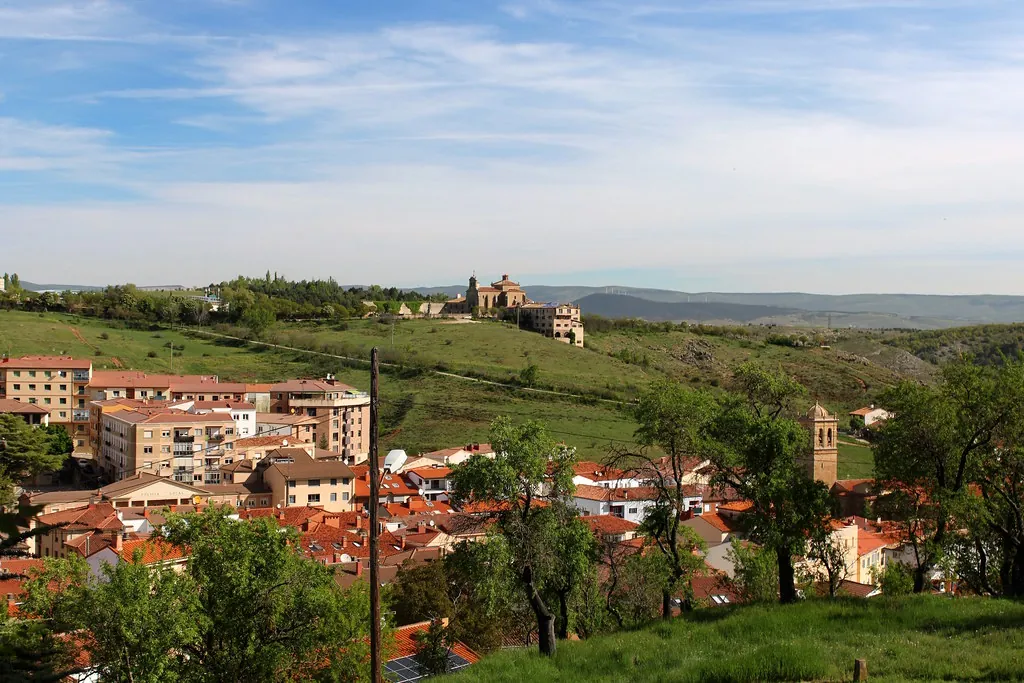
The church bell strikes noon and nobody quickens their pace. A woman in a blue housecoat waters geraniums on a stone sill; two old men finish a game of dominoes with the unhurried rhythm of people who have known the score since 1978. Santa María del Mercadillo, 500 souls scattered across the high plateau of Burgos province, refuses to dance to the modern tempo. That is precisely what makes it worth the detour.
A Plain That Forgets to Be Flat
Drive 45 minutes south-east from Burgos city on the CL-127 and the land begins its optical trick. The meseta appears level until the road dips, revealing folds of cereal fields that shimmer like watered silk. The village sits on one such gentle rise, low houses the colour of dry biscuits huddled round a sandstone church tower. No dramatic sierra backdrop, no river gorge—just space, wheat and sky in proportions that make the Victorian notion of “sublime” feel fussy.
This is Spain’s grain barn. From late April the green wheat strokes the knees; by July it stands chest-high and turns metallic under the solstice sun. Footpaths—really just tractor wideners—radiate out for three or four kilometres. Walk them at dawn when the dew still holds the dust down and you’ll share the track with crested larks and the occasional harrier drifting over the verges. Binoculars help: great bustards sometimes feed beyond the second rise, though they flush at the sound of a car door slamming.
Stone, Adobe and the Smell of Bread at Three
The centre is two streets and a plaza small enough to throw a tennis ball across. Houses are built from whatever came to hand—lower courses of limestone, upper ones of adobe brick the colour of ginger cake—giving façades a two-tone honesty you rarely see in the region’s more manicured heritage towns. Timber doors are pegged together from oak planks wide enough to show the tree’s rings; many still wear iron studs shaped by smiths who never heard the word “artisan”.
The parish church of Santa María keeps Romanesque bones beneath an 18th-century skin. Push the south door at about half past eleven on a weekday morning and the sacristan, if he’s around, will lift the rope barrier for a quick look. Inside, the air carries incense, candle smoke and something greener—wet stone, perhaps—while the single nave echoes with the faint tick of an electric clock. No explanatory panels, no audio guide, just a retablo gilded so thickly that the saints seem to be standing behind firelight.
Opposite, the panadería opens only when the baker feels like it, usually Tuesdays and Fridays. Buy a 1.20 € loaf while it’s still too hot to break; the crust shatters like burnt sugar and the crumb tastes faintly of the millet that shares the fields with wheat.
What Passes for Excitement Here
Market day vanished centuries ago—hence the village’s slightly ironic suffix—so groceries arrive in a white van that toots its horn at ten o’clock on Thursdays. Locals emerge with canvas bags; visitors sometimes mistake the scene for a power cut or a lost tourist coach. The nearest supermarket is in Aranda de Duero, 22 minutes down the road, so if you’re self-catering stock up before you arrive.
Evenings revolve around the bar at the Casa de la Villa, the only licensed premises. It closes on Mondays without apology, serves wine from Ribera del Duero at 2 € a glass and offers a short menu: roasted peppers, morcilla de Burgos, lamb chops that arrive sizzling in their own fat. Portions are built for people who spent the day threshing; one plate feeds two polite Britons. Order the cheese plate and you’ll get a slab of queso de oveja that smells faintly of farmyard but tastes like grass-fed sunshine.
If you need entertainment beyond conversation, check the fiesta calendar. The patronal weekend, usually the first Saturday of August, fills the plaza with brass bands and improvised bar counters under fairy lights. It’s the one time the village doubles in population as emigrants return from Bilbao and Barcelona. Book accommodation early—there are only three rental flats and the single hostal with six rooms, all above the bakery. Prices stay sensible (about 55 € a night) but showers run lukewarm when every cousin decides to rinse the road dust off at once.
When Silence Gets Noisy
Spring and autumn deliver the kindest light. In May the fields turn a green so bright it almost hums; poppies stab red holes through the wheat and the thermometer hovers around 22 °C. October brings stubble and the smell of straw, plus migrating cranes high overhead. Winter, on the other hand, is not romantic. The wind that scours the plateau can drop the feels-like temperature to –10 °C; grey frost clings to the adobe walls and the village feels suspended in a freezer cabinet. Come then only if you crave absolute solitude and remember to request the extra-thick duvet.
Summer weekends draw cyclists from Burgos who ride the empty roads in tight pelotons. They refill water bottles at the plaza fountain and disappear, leaving silence that feels almost metallic. Otherwise you may share the parish only with a retired teacher who walks his Yorkshire terrier at the speed of continental drift.
Getting Here, Staying Put, Leaving (Maybe)
There is no railway. From the UK, fly to Bilbao, collect a hire car and head south on the A-68, then the CL-127. The final 12 km are single-lane; pull into the gravel lay-bys when a tractor bears down with a trailer wider than your SEAT León. Allow two hours from Bilbao airport, three from Madrid if you land there instead.
Accommodation is limited. The hostal above the bakery (Hostal el Mesón) offers clean tiled rooms, Wi-Fi that forgets the password after rain and a breakfast of coffee, juice and churros for 4 €. The three village flats listed online have tiny kitchens and balconies just big enough for one chair facing the wheat. Bring books, downloaded films, walking boots and a sense that staring at the horizon is a legitimate pastime.
Leave on a weekday morning if you can. By ten the sun has burned off the dew and the road back to the motorway unfurls like a grey ribbon between gold or green, depending on the month. You’ll probably meet no one for twenty minutes. That, in the end, is the village’s modest boast: it still measures distance in silence rather than kilometres, and time in harvests instead of gigabytes.