Full Article
about Santibanez De Esgueva
Ocultar artículo Leer artículo completo
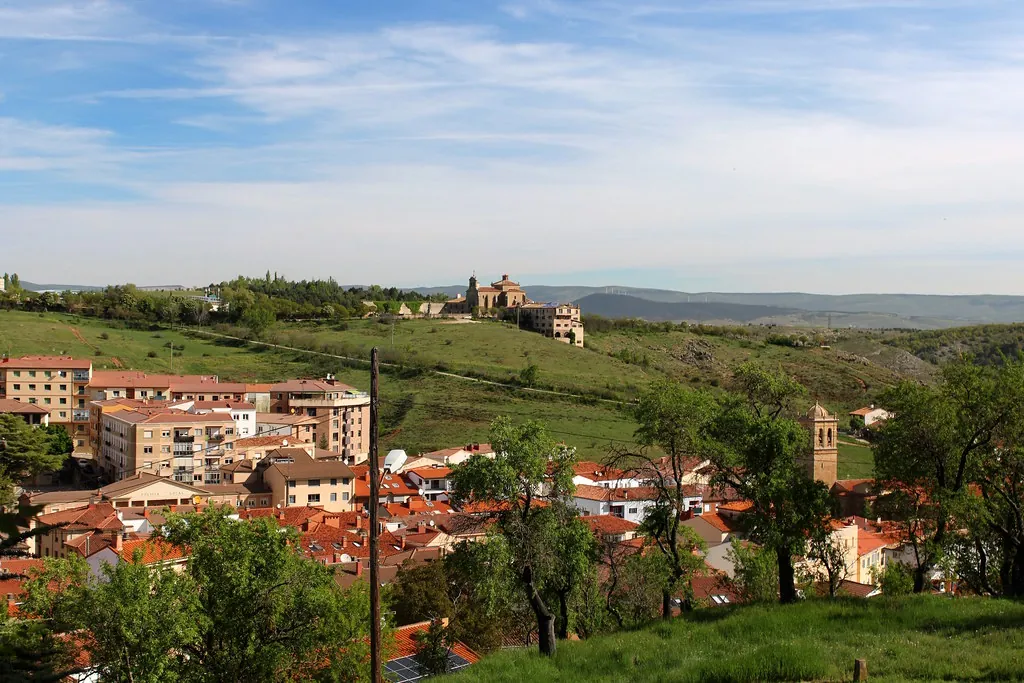
The chimneys poke from the earth like stone periscopes. Thirty-odd "zarceras" rise between vineyard rows, each marking a subterranean cellar where tempranillo breathes in clay jars. In Santibáñez de Esgueva, this is normal architecture: the village sits atop a honeycomb of 19th-century bodegas dug into the hillside, their ventilation shafts creating a miniature stone forest amid the vines.
Five hundred people live here, spread along a ridge that overlooks the Esgueva River as it snakes towards the Duero. The maths is simple: roughly one cellar for every fifteen residents. Many are still in use; others stand abandoned, their entrances barred by rusting iron doors that rattle in the winter wind coming off the Meseta.
Underground Cathedrals and Adobe Walls
Start at the church—always start at the church in Castilla. The 16th-century parish of San Juan Bautista squats at the village's highest point, its squat tower more fortress than bell-tower, built to withstand the region's brutal temperature swings. From here the settlement tumbles downhill in a jumble of ochre walls and terracotta roofs, the colours shifting with the season as vines on every spare patch turn from emerald to copper.
The real museum lies beneath your feet. Local farmer José Luis Martín (you'll find him most mornings at Bar Alameda) keeps the key to the best-preserved cellar complex. For €3 he'll lead you down stone steps into tunnels that stay a constant 12°C year-round. Clay tinajas the height of a man line the walls; some still hold wine from the 1990 harvest, the surface dark with flor. The tour takes twenty minutes and ends with a glass of crianza that tastes of graphite and baked black fruit—Ribera del Duero in its purest form.
Above ground, the architecture is modest but honest. Adobe houses three storeys high crowd narrow lanes just wide enough for a tractor. Wooden balconies—some dating to the 1700s—project overhead, their supports carved with grape motifs. Look closely and you'll spot medieval grape presses built into cellar walls, the stone worn smooth by centuries of foot-treading.
Between Two Rivers, Between Seasons
Santibáñez sits at 860 metres, high enough that spring arrives two weeks later than in nearby Aranda. Frost can strike well into May, sending vineyard workers scrambling for smudge pots. Summer brings relief: dry heat tempered by Atlantic breezes, perfect for cycling the quiet road that follows the Esgueva valley to Peñafiel 18 kilometres south. Autumn is show-time—vines blaze against lead-grey skies, and the air smells of crushed tempranillo skins as tractors hauling gondolas crawl through the lanes.
Winter is when the village reveals its harsh side. The thermometer regularly drops below -5°C; snow isn't unusual. Several cafés shut from January to March, and that riverside bike ride becomes a bone-chilling ordeal. Come prepared: central heating isn't universal in 300-year-old houses.
What You're Actually Going to Eat
Forget tasting menus. The daily set lunch at Casa Macario costs €12 and arrives on heavy pottery plates: lechazo (milk-fed lamb) roasted in a wood-fired oven until the skin crackles like pork, served with potatoes that absorb the dripping. Morcilla de Burgos appears as a starter—rice-based black pudding, crumbled over roasted peppers. Vegetarians get tortilla española or... tortilla española. The wine list is short and local: choose between Martín's crianza or his neighbour's joven, both poured from unlabelled bottles that cost €2.50 a half-litre.
Breakfast is taken standing at Bar Alameda's counter: strong coffee and toasted mollete (soft roll) spread with fresh cheese and honey made from vines that grow wild along the riverbank. The honey carries a faint bitterness—think grapefruit marmalade without the citrus.
Timing Your Visit (and Why August Might Be a Mistake)
The vendimia (grape harvest) happens mid-September to early October depending on the year's heat. There's no formal programme, but turn up at Bodegas Martín Luz on a weekday morning and you'll likely be handed pruning shears and invited to join in. Payment comes in bottles, not euros—expect to leave with armfuls of tank-fresh tempranillo.
Late August brings the fiestas patronales. The population swells to 1,200 as expats return from Bilbao and Barcelona. Brass bands parade at 3am; fireworks echo off stone walls; the single cash machine runs dry by Saturday afternoon. Accommodation triples in price and every spare room fills with cousins. Unless you enjoy sleeping to a soundtrack of cuatro-beat pasodobles, book elsewhere.
Spring works better. May sees the countryside neon-green before the serious heat arrives. Wild asparagus grows along field edges—locals forage it at dawn, then scramble it with eggs back in their kitchens. Hotel occupancy hovers around 40%; you can usually negotiate a discount on the spot.
Getting Here Without Losing the Will to Live
The village sits 40 minutes north of Valladolid by car. A92 south to Tudela de Duero, then take the CL-610 towards Aranda—signs appear after 12 kilometres. Public transport? Forget it. The last bus left in 2011 when rural subsidies dried up. Valladolid's bus station does run twice-daily services to nearby Peñafiel; from there a taxi costs €30 each way. Hiring a car remains the only sensible option—book in Valladolid, not at the airport, to avoid the €80 "out-of-hours" surcharge.
Where to sleep depends on tolerance for church bells. La Casita de Luisita in Castronuevo (6km west) offers underfloor heating and proper mattresses—rare luxuries round here. Expect to pay £85 a night for a two-bedroom cottage that sleeps four. Closer to the action, two village houses rent rooms on Airbnb from €35, but check whether bathrooms are shared; en-suite remains a foreign concept.
When to Leave (And What to Take Home)
Stay three days maximum. After 72 hours you've walked every lane, tasted every vintage, and heard every story about the 1953 frost that killed half the vines. Buy wine directly from the cellar door—Martín charges €4 a bottle for his reserva, one-third of London prices. The local co-op also stocks morcilla vacuum-packed for travel; declare it at customs and hope the officer likes Spanish food.
Drive out at sunrise when mist pools in the valley and the stone chimneys emerge like exclamation marks above the sea of vines. Santibáñez won't change your life, but it might change how you think about Rioja's quieter cousin—and about Spanish villages where the underground architecture matters more than what's above.