Full Article
about Sequera De Haza La
Ocultar artículo Leer artículo completo
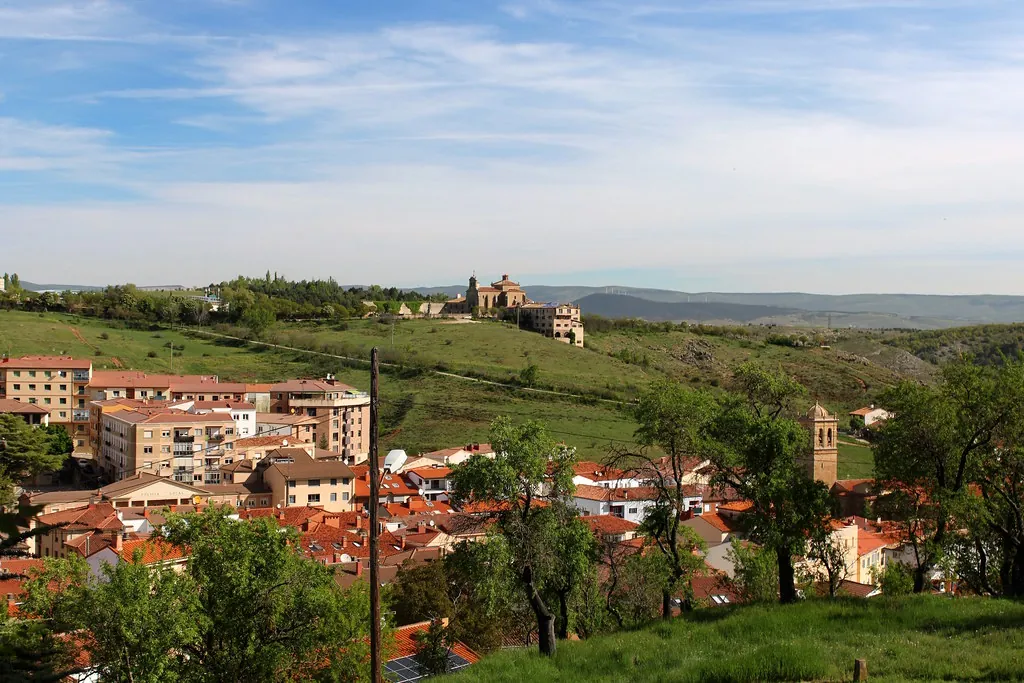
The church bell strikes noon and nobody quickens their step. In La Sequera de Haza the working day is already calibrated to the September heat; harvesters returned from the vines at eleven, the bakery shut at ten, and the single bar is quiet enough to hear the espresso machine sigh. This is rural Castile at its most candid: no gift shops, no interpretative centre, just 500 souls, a tower visible for miles across the plateau, and an instinctive understanding that anything urgent can wait until the shadows lengthen.
Adobe, adobe everywhere
Adobe walls two feet thick shoulder against narrow lanes, their ochre plaster patched where winter frosts have nibbled. Most houses grew over centuries rather than being built, rooms added as families expanded, so rooflines stagger like uneven teeth. Timber beams—oak, chestnut, sometimes old vine poles recycled—jut beneath eaves, darkened by centuries of wood-smoke. Peer through an open gate and you may spot the stone spiral that drops to a bodega, a hand-dug cellar whose temperature lingers around 12 °C whatever the meseta throws at it. Some still hold barrels; others store bicycles or nothing at all. There is no formal trail, but if you ask in the plaza the owner of the green door will usually fetch a key and show you his, proud that the thick aroma of tempranillo still clings to the walls.
The Iglesia de San Juan Bautista presides from the highest point, its tower a handy compass for walkers who lose orientation among the cereal fields. Inside, the air smells of beeswax and extinguished candles; an eighteenth-century retablo depicts the Baptism in terracotta and dusty gold. Visits are free, but the priest only unlocks for Sunday Mass and on request at the town hall opposite. Turn up at random and you may wait twenty minutes while the clerk finishes her coffee, yet the hush once you step inside feels older than the wait.
A wine district that refuses to perform
Ribera del Duero is famous for bold reds priced eye-wateringly in London, yet La Sequera keeps its production firmly in the background. Bodega Valle de la Ora, four kilometres south towards Adrada de Haza, opens for tastings but insists on 24 hours’ notice; groups are capped at eight and the tour is a brisk twenty minutes before you’re deposited at a pine table with one reserva and one crianza. €12 buys the flight, €25 adds a shoulder of local lamb carved to order. There is no gift shop, just a ledger to jot down how many bottles you want shipped—cheaper than UK retail even after VAT is added at Dover.
Vineyard tracks radiate from the village like spokes. They are farm tracks, not footpaths: hard-packed clay dotted with chalky stones that slide under city trainers. A circular wander south to the ruined ermita de Santa Ana and back takes ninety minutes; you’ll share it with the occasional tractor and a disproportionate number of storks. Spring brings calf-high crimson poppies between the rows, October a smell of crushed grapes fermenting on the tarmac. Maps are unnecessary—keep the tower in sight and you can’t get lost—but carry water: at 840 m altitude the air looks humid and isn’t.
Roast lamb and other Monday problems
Gastronomy here is calendar-driven. Lechazo (milk-fed lamb) appears on weekends and fiesta days only; mid-week the oven stays cold because nobody sees the point of firing it for two tables. The single restaurant, La Casa de Haza in Adrada, solves the problem by taking pre-orders: ring before 10 a.m. and the lamb goes in; turn up unannounced and you’ll get migas—fried breadcrumbs with pancetta and grapes—plus cheese from a flock that grazes the roadside berm. Prices hover around €14 for a main, wine included, which softens the inconvenience. Vegetarians face the eternal Castilian compromise: tortilla or… tortilla. Bring a car and you can self-cater from Aranda de Duero’s Saturday market twenty minutes away; the village shop closed in 2018 and the mobile grocer’s van honks its horn on Thursday mornings before most visitors have surfaced.
When to come, how to reach, why you might leave
Spring and early autumn are kindest. In May the night temperature can dip to 5 °C, but days are 22 °C and birdlife frantic. July and August bake; businesses in neighbouring villages shut entirely and La Sequera’s only bar shortens hours to 08:00-11:00 and 19:00-22:00. Winter is iron-cold, the meseta wind scraping across bare vines; snow is rare but when it arrives the access lane from the N-I is cleared last, after the school bus route.
There is, frankly, no public transport. Burgos airport (45 min) offers Saturday-only flights from London Stansted off-season; Valladolid (90 min) has daily connections but car hire desks close for siesta. Without wheels you are marooned. Accommodation is equally sparse: La Casa de Haza runs four rustic rooms at €70 including breakfast, and the nearest alternative is a casa rural in Haza five kilometres away whose owner WhatsApps directions because satnav sends you into a ploughed field. Book ahead in harvest month; wine tourists who can’t secure a bed in Aranda often radiate outward and rooms disappear.
Even with transport, the village tests patience. Wi-Fi is patchy, the pharmacy van visits on Tuesdays, and you will be woken at dawn by grain lorries rattling past. Yet that same insularity gives the place its pull: a reminder that Europe still contains corners where life is negotiated face-to-face, where the loudest sound after midnight is the church clock counting you towards another slow tomorrow. Come prepared to adapt—bring cash, a phrasebook, and an unhurried watch—and La Sequera de Haza offers something no coastal “hidden gem” can: the rare, slightly unsettling realisation that the world continues perfectly well without you, and might let you observe if you resist the urge to speed it up.