Full Article
about Solarana
Ocultar artículo Leer artículo completo
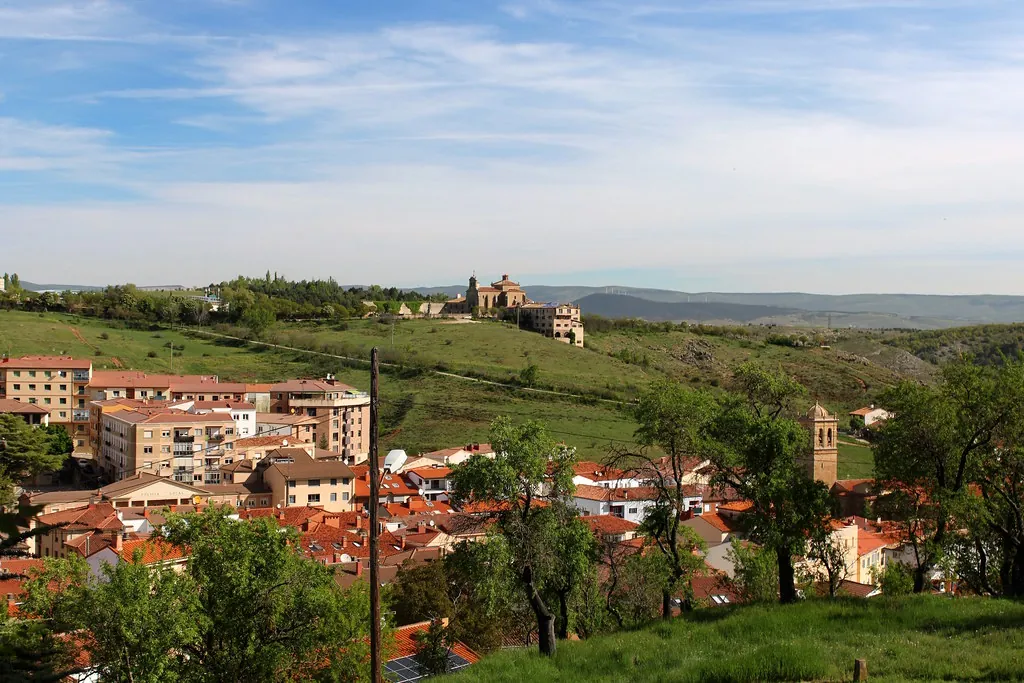
The church bell strikes eleven and the only other sound is a tractor turning earth in the distance. Solarana doesn't do dramatic arrivals—no sweeping views, no honey-coloured arcades—just a scatter of stone houses, a single bar with its metal shutter half-open, and the sudden realisation that the horizon has crept fifty kilometres closer than it was in Burgos.
This is the western edge of Spain's northern plateau, where the cereal ocean begins to ripple. At 945 m the air is thinner than the map suggests; even in May you'll want a jumper once the sun drops. The village sits on a low rise, enough to let you survey the patchwork of wheat, barley and fallow that runs uninterrupted to the clouds. It is, deliberately, nowhere special—yet that is precisely why bird-watchers, burnt-out Madrileños and the occasional British couple use it as a breathing space between the better-known towns of the Arlanza valley.
A street that forgets to end
Solarana's main thoroughfare has no name on Google Maps; locals call it la calle de arriba because it gently climbs past the church towards the cemetery. Walk it slowly and you'll clock the village biography in twenty minutes: adobe walls softening at the corners, a 1697 coat of arms bolted onto a 1970s breeze-block extension, a bricked-up doorway where someone once carved a cross to ward off the plague. Half the houses are weekend homes for descendants who left for Valladolid factories in the 1960s; the rest belong to farmers whose family holdings stretch so wide they measure them in fanegas—an old Castilian unit most guidebooks don't bother to translate.
There is no ticket office, no interpretation centre, no brown sign pointing to "medieval charm". Instead you get an architectural honesty lesson: buildings allowed to age without cosmetic surgery, their stone the same colour as the soil they stand on. The 16th-century parish church of San Pedro keeps its original Romanesque feet but sports a Baroque hat added after a 1754 lightning fire. Push open the heavy door (it sticks in damp weather) and the interior smells of wax and damp grain sacks—someone stores the harvest surplus in the side chapel because the village lost its last warehouse to a roof collapse in 2021.
Lunch at the shuttered bar
The only public food outlet is Casa Petra, a front-room bar run by the mayor's cousin. Opening hours are negotiable: if the shutter is down at 13:30, knock and Petra will appear wiping flour from her hands. A hand-written board offers three choices: sopa de ajo (garlic soup with poached egg), judiones (giant butter beans stewed with chorizo) or tortilla made that morning. Expect to pay €9 for the lot, including a glass of Arlanza rosé that arrives slightly too cold—locals chill it because British visitors once complained it was "a bit warm". Vegetarians do better here than in most Castilian hamlets: ask in the morning and Petra will hold back a slice of tortilla before it cools; she keeps a separate pan for morcilla-free beans if you request it.
Cash is king. The nearest ATM is 18 km away in Lerma and the card machine has been "broken since the fiestas"—a phrase you will hear repeated about everything from the village fountain to the street-lighting timer. Stock up on water and snacks before you arrive; the tiny grocery corner sells tinned tuna, UHT milk and not much else.
Walking without waymarks
Solarana is criss-crossed by agricultural tracks that don't feature on the national mapping agency's 1:25,000 sheets. Farmers drive their tractors down the middle, so the paths are wide, flat and easy on knees. A thirty-minute loop south of the village leads to an abandoned cortijo where white storks nest on the chimney; take binoculars and you can tick off calandra lark, black-bellied sandgrouse and, in winter, flocks of bustards that most British twitchers have to wait for Extremadura to see. The land is private but Spaniards tolerate walkers who stick to the verge; close every gate because livestock rules are enforced with a €300 fine if the guardia civil are passing.
If you fancy a longer hike, follow the dirt road north-east towards Retuerta. After 5 km the cereal gives way to a shallow limestone gorge where griffon vultures ride thermals at eye level. There is no shade—carry at least two litres of water per person from April onwards—and mobile coverage vanishes after the first kilometre. Download an offline map; the only signpost is a rusted Faro de Vigo newspaper plate nailed to a fencepost in 1997.
When the fields catch fire (metaphorically)
Visit in late May and the wheat is thigh-high, green turning gold under a sky the colour of Oxford stone. By mid-July the same fields look like a Turner painting left in the sun too long: brittle, bleached, crackling underfoot. August is hot—34 °C is normal—but the air is so dry that shade actually works; sit under the church portico and you'll need a jumper by 21:00. Winter is a different contract: night temperatures drop to –8 °C, the wind whips across the meseta like a sand-blaster, and the village smells of wood smoke because central heating is still considered a luxury. If you come between December and February, book La Casa de la Abuela Petra (the only accommodation) which has proper insulation and a pellet stove; the weekend rate is €55 for a double, breakfast included, but she closes entirely from 15 January to 15 February—"even the dogs leave," she jokes.
A fiesta that refills the houses
Solarana's population swells from 85 to 400 on the third weekend of July when the fiestas patronales reverse fifty years of rural exodus. The village square hosts a paella popular on Saturday night; Petra borrows school chairs so everyone has a seat. At midnight a battery-powered sound system plays 1980s Spanish pop while teenagers who normally live in Burgos sip calimocho (red wine and cola) and complain there's no 5G. Sunday morning is serious: a sung mass followed by a procession where the statue of San Pedro is carried anti-clockwise so the sun stays off the priest's face—an agricultural tweak older than the irrigation schedule. Visitors are welcome but there's no programme in English; just follow the brass band and try not to stand between the bearers and the bar when they stop for anise shots at 11:30.
Getting here, getting away
The simplest route from Britain is to fly Ryanair to Santander, pick up a hire car and head south on the A-67. After 70 km leave at junction 118, then thread along the BU-901 for 19 km of empty road where you'll meet more red kites than cars. The last 3 km are tarmac but potholed after winter frosts; drive slowly or the suspension will remember. Total journey time from the airport is 90 minutes, assuming you don't stop for photos when the Arlanza valley suddenly appears.
Public transport is fiction. ALSA coaches run from Madrid to Lerma twice daily; from there a taxi costs €25 if you can persuade the driver to come out—book through the Lerma tourist office before you leave the capital. Cycling is possible but brutal: the approach road climbs 300 m in 12 km and the wind is either against you or so much with you that braking becomes optional.
Leave Solarana when the silence starts to feel like pressure rather than peace. One night is usually enough to reset urban lungs; two if you need to finish the book you brought. Check out before Petra goes to mass—she locks the bar and the house keys inside, and the next mobile signal is twelve kilometres down the road.