Full Article
about Sordillos
Ocultar artículo Leer artículo completo
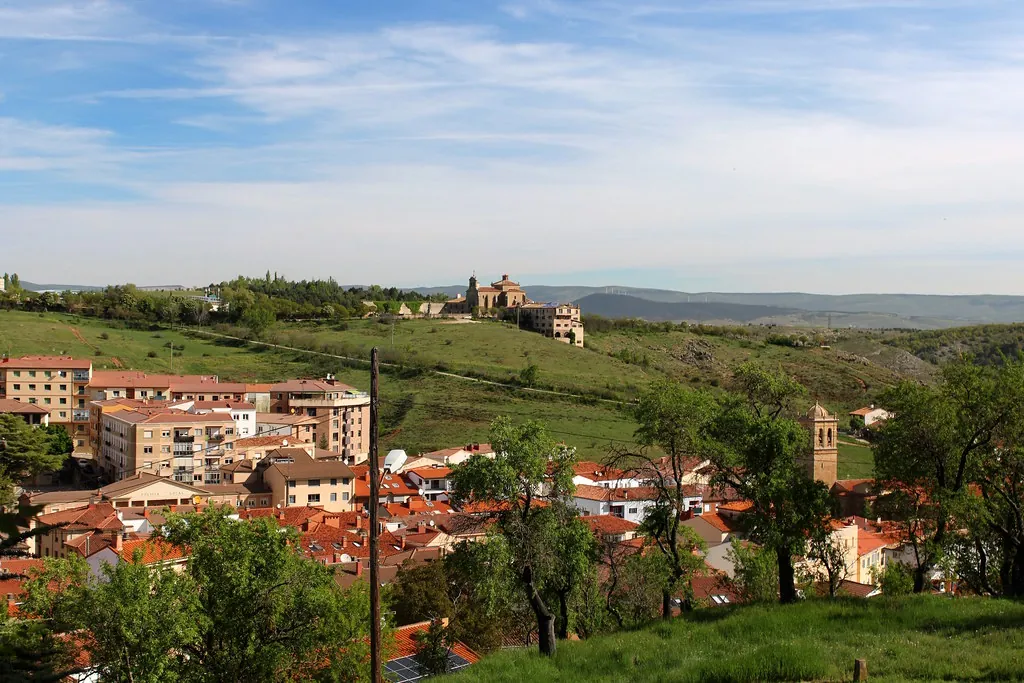
The cereal fields north of Burgos stop being flat exactly where Sordillos begins. One moment you are driving a ruler-straight road between wheat and barley; the next the horizon tilts, the tarmac dips, and a scatter of stone houses appears on a low ridge like a ship that has run gently aground. This is the geographical afterthought where the Spanish meseta remembers it once had muscles and decides to flex them towards the Cantabrian cordillera still 100 km away.
At 967 m above sea level, the village feels the full Castilian weather report: skin-cracking dryness in July, knife-sharp wind in February, and spring mornings when the thermometer can fall below zero while skylarks still sing. Locals joke that you get all four seasons before lunch; pack layers even in May and do not trust the forecast further than you can throw a bale of straw.
Stone, Straw and Silence
Every building here is the colour of the earth it stands on. Granite blocks the shade of wet sand lock together without flourish; roofs wear the same curved Arab tile you will see from Salamanca to Soria. Nothing rises above two storeys except the modest parish tower, which means the village keeps the human scale it had when Philip II was borrowing money from Antwerp. Some houses are immaculate, with geraniums on wooden balconies and fresh limewash around the door. Others have surrendered to time: a collapsed hayloft here, a front wall patched with corrugated iron there. The contrast is not picturesque; it is simply alive, evidence that people still weigh repair against expense rather than Instagram appeal.
There is no interpretative centre, no branded “Ruta de…” anything. Instead you get the soundtrack of your own footsteps echoing off stone, plus the occasional tractor that clatters down the single main street just wide enough for its tyres. Expect to say hello first; once eye-contact is made, most residents will stop and answer whatever practical question you have invented to break the ice.
Walking Until the Sky Gets Bigger
Three farm tracks leave the upper square, each marked only by a hand-painted number on a cement post. They were built for combine harvesters, not hikers, so the gradient is gentle and the surface firm enough for road-bike tyres if you have brought your own. Take the middle track at sunset: after 25 minutes the village shrinks to a dark comb on the ridge behind you, while in front the wheat rolls away like a calm yellow ocean. There is no shade; carry water and a hat that will not take off in the wind.
Serious walkers can stitch together a 14 km loop that links Sordillos with the even smaller hamlet of Revenga de Campos before dropping into the Pisuerga valley, but signposting disappears with the asphalt. Download the 1:50,000 Burgos provincial map to your phone beforehand; the paper version sold in Burgos cathedral shop weighs less than a paperback and works when the battery sulks.
What You Will Not Find (and What You Will)
No bar stays open all day. The grocery that doubles as the village’s social club unlocks at 09:00, closes for lunch, and may reopen at 18:00 if the owner’s granddaughter is visiting. Buy the 1.20 € loaf of pan de pueblo while it is still warm; it tears into rough, chewy chunks that taste of wheat and wood smoke. Cold beer appears only when someone remembers to restock the fridge, so order red wine from Aranda del Duero (15 km east) and do not flinch when it arrives at room temperature—cellars here are naturally 14 °C even in August.
There is no cash machine. The nearest is in Montorio, 8 km down the BU-630, beside a pharmacy that shuts on Thursday afternoons. Fill your wallet in Burgos before you set out.
What you will find is a sky so dark that the Milky Way looks like someone spilled sugar on slate. Between 23:00 and 02:00, when the village lights are voluntarily dimmed, amateur astronomers set up tripods on the disused threshing floor south of the church and track satellites without telescopes. Bring a red-filter torch and expect unsolicited but accurate advice on shutter speed from a retired maths teacher.
Lamb, Lentils and the Long Lunch
Food is cooked for neighbours, not for critics. The closest restaurant is in Corconte, twelve minutes by car, where Asador Oter serves lechazo—milk-fed lamb roasted in a wood-fired clay oven—at €22 a quarter. The meat arrives bronzed, shrunken and already carved; eat it with the edge of your fork and mop the juices with coarse white bread. A bowl of sopa castellana (garlic, paprika, ham bone and a poached egg) costs €6 and is considered summer fare, proof that Castilians treat comfort food as a year-round necessity.
If you are self-catering, the Saturday market in Burgos (07:00-14:30, Plaza de la Libertad) sells cured beef cecina at €38 a kilo and piquillo peppers jarred by nuns from Santo Domingo de Silos. Both survive the drive back to Sordillos without refrigeration and improve a picnic of bread and tomatoes eaten on the bonnet of the car.
Beds Under Beams
Accommodation is scarce and scattered. Hotel Rural El Majuelo in Montorio has eight rooms built into a 19th-century hay loft; beams are original, Wi-Fi is patchy, doubles run €75 including breakfast (strong coffee, churros, homemade quince jam). Book by phone—+34 947 39 60 00—because the website booking form occasionally eats emails. Closer to Burgos, the four-star HQ La Galería occupies a converted textile warehouse and offers underground parking, useful when hail the size of chickpeas is forecast.
Back in Sordillos itself, two village houses have been patched up for holiday lets: Casa de la Tia Pilara sleeps four, has a functioning chimney, and costs €90 per night with a two-night minimum. Bring slippers; stone floors are cold before 10 a.m. whatever the month.
When to Come, When to Stay Away
Mid-April to mid-June is the sweet spot: green wheat, mild afternoons, and the stone curlew calling at dusk. Late July brings the fiesta patronale: temporary bars, a foam machine for children, and a Saturday-night disco that finishes when the Guardia Civil remind the DJ that 400 people still have to drive to mass at 11:00. Rooms within 20 km are booked months ahead; if you hate amplified reggaeton, choose a different weekend.
November is honest—cold, empty, occasionally luminous. The cereal stubble is burned off then, so the air smells of straw smoke and the horizon turns sepia. Some tracks become axle-deep mud after rain; front-wheel-drive hire cars have been towed out by the farmer’s son for €40 and a packet of Ducados.
Getting There Without Tears
From the UK, fly to Bilbao (easyJet from Bristol, Manchester or Gatwick), collect a hire car, and drive south for 90 minutes on the A-68 and A-1. Leave the motorway at junction 230, follow the BU-630 for 18 km, then turn left at the ruined brick factory whose chimney has “1977” picked out in darker bricks. The last 6 km are narrow but paved; meet oncoming grain lorries at walking pace and pull into the verge—solid, not ploughed—when they flash their lights.
Public transport demands patience: ALSA runs one daily bus from Burgos bus station at 14:15, arriving Sordillos 15:55. It returns at 06:50 next morning, a timetable designed for doctors, not drifters. Miss it and a taxi costs €60; the driver will wait while you phone accommodation to confirm someone is actually there to open the door.
Leave before you have seen everything; the place works best when you still have questions. You will depart with dust on your shoes, garlic on your breath, and the realisation that Spain’s emptiest quarter begins where the guidebooks end.